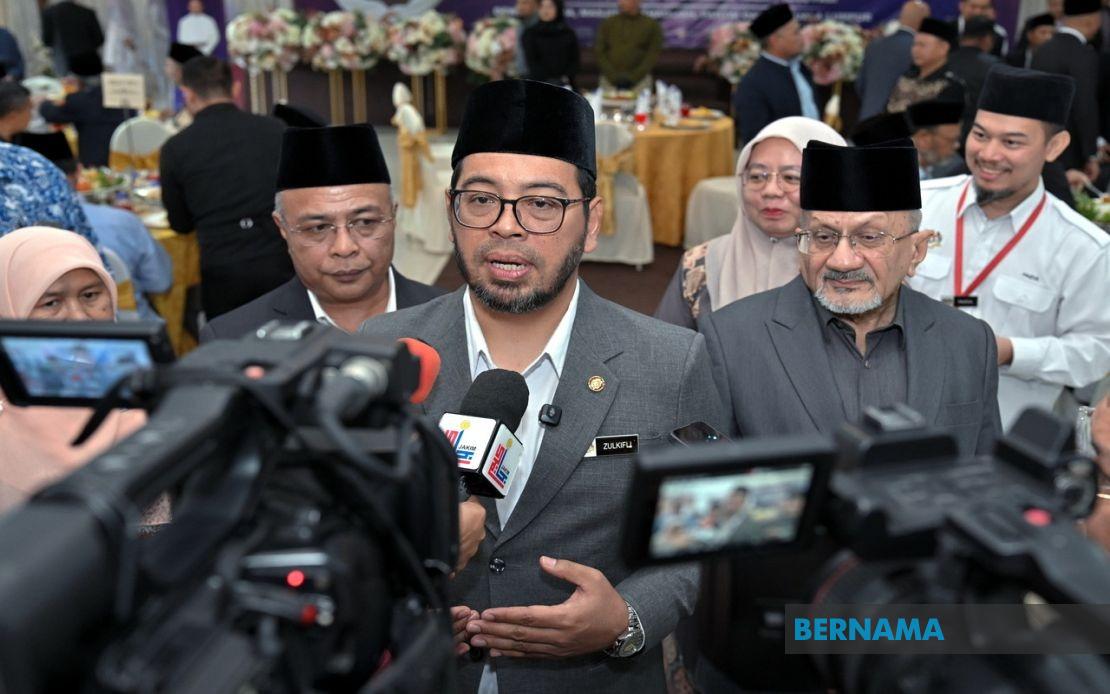
Construction of Masjid Warisan will move ahead as initially planned, according to Minister in the Prime Minister's Department (Religious Affairs) Dr Zulkifli Hasan, who defended the long-standing project during remarks to the media in Kuala Lumpur on June 23. The development, situated in front of the Tun Razak Exchange tower, forms part of a broader initiative to strengthen mosques' standing as anchors of communal well-being and social cohesion across the country.
The minister's statement represents a decisive response to mounting pressure from unnamed parties who have publicly urged authorities to shelve the scheme. Critics have warned that the mosque's construction risks triggering social discord and public dissatisfaction, though specific objections remain largely undisclosed. These concerns have prompted debate within certain segments of the public, adding complexity to what was otherwise presented as a routine infrastructure undertaking.
Dr Zulkifli framed the decision as honouring a commitment made years earlier, emphasising that the project has deep roots within government planning calendars. He acknowledged that implementation depends on divine will, using the phrase "Insya Allah" to express hope that the initiative will materialise on schedule. This language reflects the religious context in which such major developments are often discussed and justified in Malaysia's governance framework.
For those harbouring reservations or seeking clarification about the mosque's construction, the minister suggested direct engagement with the Federal Territories Islamic Religious Council (MAIWP). This institutional pathway offers concerned residents and stakeholders an opportunity to obtain detailed explanations and address particular anxieties through established channels rather than through public controversy.
Drawing on international precedent, Dr Zulkifli observed that cosmopolitan cities worldwide feature mosques as integral architectural and cultural components. He noted that the Islamic call to prayer represents a source of spiritual solace and emotional tranquillity for communities, countering assertions that the presence of such facilities generates friction or disquiet. This perspective underscores how major urban centres accommodate diverse religious expressions without compromising social stability.
The timing of the minister's public commitment follows his earlier participation in an institutional function at Masjid Al-Khadijah in Kampung Pantai Dalam. During this ceremony, he distributed appointment letters to members of the Federal Territories Mosque and Friday prayer surau committee designated for the 2026-2029 operational term. This administrative task highlights ongoing efforts to strengthen governance structures within the religious infrastructure sector across Federal Territories.
The appointment process itself reflects the rigorous vetting mechanisms now embedded within Malaysia's mosque administration framework. Authorities received 3,010 nominations across 91 mosques and 124 Friday prayer surau locations throughout Federal Territories for the forthcoming committee term. After comprehensive integrity screening involving the Royal Malaysia Police, the Malaysian Anti-Corruption Commission, and the Insolvency Department, selection panels approved 2,914 candidates.
This stringent verification procedure demonstrates government commitment to maintaining ethical standards and preventing individuals with questionable backgrounds from gaining influence within religious institutions. The multi-agency approach involving law enforcement, anti-corruption bodies, and financial oversight agencies ensures that mosque committees operate with credibility and public confidence. Such measures represent an evolution in how authorities manage religious governance, moving beyond traditional appointment methods toward systems incorporating modern accountability mechanisms.
The Masjid Warisan project carries significance beyond its immediate architectural footprint. As a prominent facility adjacent to the Tun Razak Exchange development, the mosque will serve as a visible symbol of religious accommodation within Malaysia's modern financial landscape. Its completion would demonstrate how contemporary urban planning can incorporate spiritual and cultural facilities alongside commercial infrastructure, a balance increasingly important as cities expand.
For Malaysian religious affairs observers, the project's advancement signals official resolve to pursue long-planned religious infrastructure despite external pressure. The decision also reflects broader government positioning on religious matters, establishing that established policies will not be derailed by unsubstantiated public opposition. The minister's defence of the project through reference to international norms and spiritual values attempts to reframe the discussion away from conflict toward institutional normalcy.
The controversy surrounding Masjid Warisan, though not extensively detailed in official statements, appears symptomatic of broader tensions within Malaysian society regarding religious expression in increasingly diverse urban environments. That certain factions felt compelled to petition for cancellation suggests underlying apprehensions about religious visibility or resources in contested public spaces. However, official government response prioritises proceeding with established plans while offering institutional dialogue pathways for legitimate concerns.
Moving forward, the success of Masjid Warisan will likely depend on effective community communication from MAIWP and related authorities. Demonstrating how the facility will serve broader communal functions beyond religious observance—such as disaster relief, educational programming, and social services—may help alleviate residual concerns among sceptical segments. For Malaysia's multicultural context, such projects offer opportunities to showcase how religious institutions operate as inclusive community assets.

