President Ferdinand Marcos Jr has signalled unwavering faith in the Armed Forces of the Philippines despite revelations that the National Bureau of Investigation is examining active uniformed personnel as persons of interest in an alleged assassination conspiracy targeting the head of state. The discovery emerged during testimony at the impeachment proceedings of Vice President Sara Duterte, adding another layer of intrigue to an already contentious political confrontation in Manila.
NBI Director Melvin Matibag disclosed the investigation during his appearance at the Vice President's impeachment trial on Wednesday, revealing that law enforcement authorities are scrutinizing individuals within the military ranks for potential involvement in the alleged plot. His statement represented a significant development, as it suggested that the conspiracy might have reached into the institution traditionally viewed as a guarantor of constitutional order and presidential safety. The investigation extends beyond military circles; Matibag also identified a member of the Vice President's security detail as another person of interest in the case.
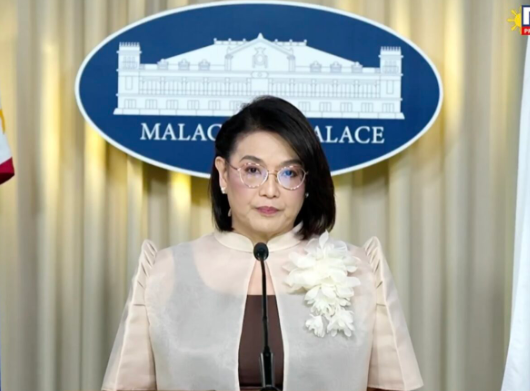
Despite these troubling indications, Palace Press Officer Claire Castro moved quickly to reinforce the President's institutional confidence in the armed forces. During a press briefing conducted in Filipino, Castro articulated a carefully calibrated message that acknowledged the investigation while maintaining that Marcos retained full trust in the military establishment. Her statement reflected the delicate balance required when addressing allegations of potential betrayal within an institution whose loyalty is fundamental to presidential security and governmental stability.
Castro's framing suggested that any military personnel who might deviate from their constitutional duties would ultimately be identified and held accountable. She characterised potential wrongdoing as individual acts of disloyalty rather than systemic failure, emphasising that those seeking to manipulate state institutions for personal gain should face exposure. This rhetorical approach allowed the administration to acknowledge investigative concerns while avoiding wholesale indictment of the military as an institution.
The Palace spokeswoman further clarified that the President is aware of which individuals and sectors merit his confidence, suggesting that while the broader military organisation retains presidential support, specific individuals within it may face scrutiny. Castro explicitly stated that no loyalty verification programme is currently underway across the armed forces, framing the matter as a responsibility for security sector leadership and military command rather than presidential initiative. This positioning allows the military's own leadership to manage internal accountability without appearing to subject the institution to wholesale presidential distrust.
During her impeachment hearing testimony, Vice President Duterte made dramatic allegations regarding her own safety concerns. She claimed to have given explicit instructions to an associate, detailing individuals who should be killed alongside her should she become a target for assassination. Her statement, delivered emphatically and marked by repeated assertions that she was speaking seriously rather than joking, named President Marcos, businesswoman Liza Araneta, and House Speaker Martin Romualdez alongside herself. The reference to Araneta and Romualdez, both closely associated with the President's political circle, suggested Duterte viewed the alleged plot within a broader context of factional struggle.
Duterte's dramatic courtroom testimony reflected the extraordinary tensions surrounding her impeachment proceedings and the broader political divisions affecting Philippine governance. Her apparent suggestion that she possessed protective arrangements hinted at networks of loyalty that transcended official security structures, speaking to the personalised power dynamics that characterise Philippine politics. The Vice President's willingness to make such statements publicly, and in the solemn context of impeachment proceedings, underscored how deeply polarised the political environment had become.
Following Duterte's testimony, the NBI took the formal step of issuing a subpoena requiring her appearance for further questioning. However, the Vice President did not comply with this directive, setting up a confrontation between investigative authorities and one of the nation's highest officials. Her non-compliance raises questions about the enforceability of investigative procedures against constitutional office-holders and suggests deepening institutional tensions within the Philippine government.
The situation reflects broader challenges facing presidential security and institutional trust in the Philippines during a period of significant political turbulence. The alleged involvement of active military personnel in any conspiracy would represent a profound challenge to constitutional governance, as the armed forces remain central to presidential protection and the maintenance of state authority. Even with Marcos's public expressions of confidence, the revelation of such investigations necessarily creates uncertainty about the cohesion of security structures.
For Malaysia and the broader Southeast Asian region, developments in Philippine governance carry relevance beyond simple bilateral relations. Political instability in a major regional economy and fellow ASEAN member state can affect regional security calculations, investment flows, and the stability of democratic institutions across the Southeast Asian community. The question of whether democratic institutions and rule of law can withstand assassination conspiracies and high-level political conflicts remains pressing for all nations in the region navigating complex transitions.
The interplay between presidential trust in institutions and the reality of investigative findings creates a paradox at the heart of Philippine governance. Marcos's insistence on military confidence must coexist with acknowledgment that specific individuals within that institution may pose security threats. How the government resolves this tension—identifying and prosecuting alleged conspirators while maintaining institutional confidence—will test both the robustness of Philippine democratic safeguards and the military's capacity for self-correction and accountability.

