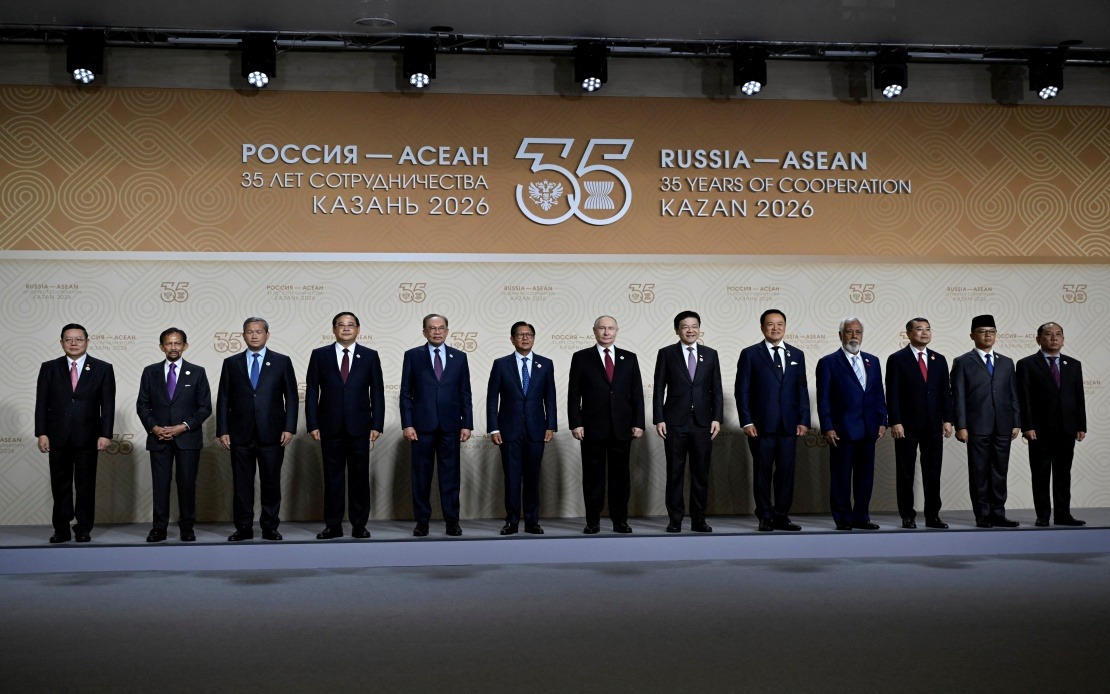
Following his participation at the ASEAN-Russia Commemorative Summit in Kazan, Philippine President Ferdinand R. Marcos Jr has articulated a compelling vision for reinvigorating the regional bloc's relationship with Moscow. Speaking to Russia Today, Marcos observed that while ties between the two parties have matured over the past three decades, the partnership remains substantially underdeveloped relative to what both sides could achieve through coordinated effort and strategic planning.
The Philippine leader's assessment reflects a nuanced understanding of ASEAN's internal dynamics. He acknowledged that while the regional organisation has experienced steady advancement in its Russian engagement, progress has been uneven across member states. Some ASEAN nations have pursued considerably deeper bilateral ties with Moscow than others, suggesting that collective potential remains fragmented and partially dormant. This disparity underscores both the challenges facing unified ASEAN positioning on external relations and the opportunity for the bloc to harness its collective strength more effectively.
Marcos identified a critical gap in historical cooperation frameworks, emphasising that traditional economic relationships have not adequately encompassed emerging technological domains. He specifically highlighted artificial intelligence, advanced technology development, data centre infrastructure, and power generation as sectors where ASEAN and Russia could establish substantially more robust partnerships. The recognition that Russia possesses growing capabilities and expanding involvement in these fields suggests Moscow could serve as a consequential partner for regional modernisation and economic diversification initiatives.
The Philippine president's comments reflect broader geopolitical reorientation occurring within Southeast Asia. He characterised ASEAN as entering a maturation phase in which the bloc is consciously expanding its diplomatic and economic partnerships beyond traditional Cold War-era alignments. This deliberate diversification strategy acknowledges that regional prosperity increasingly depends on relationships with multiple global powers rather than exclusive orientation toward any single partner or bloc. The shift represents pragmatic recognition that ASEAN's strategic autonomy requires engaging constructively with diverse international actors.
Particularly significant is Marcos's framing of this moment as a "new day" in regional relations. His language suggests ASEAN leadership perceives an inflection point where previous constraints on cooperation with Russia—whether historical, geopolitical, or institutional—are loosening. The emergence of entirely new cooperation domains in science and technology provides neutral ground where partnerships need not replicate or contradict existing regional relationships, potentially facilitating deeper engagement that serves ASEAN interests without triggering domestic political resistance.
The momentum Marcos referenced extends beyond bilateral Philippine-Russian ties. He positioned ASEAN's evolving engagement strategy within a broader context of global power diffusion. As traditional bipolar international structures fragment and multiple power centres emerge, regional actors like ASEAN possess greater latitude to craft independent foreign policies. This structural shift simultaneously creates opportunities and obligations for ASEAN to articulate clear priorities and pursue partnerships aligned with concrete developmental objectives rather than ideological commitments.
The Kazan summit itself yielded substantive documentation that institutionalises this reorientation. The adoption of the Kazan Declaration 2026 alongside a comprehensive action plan spanning 2026–2030 provides operational frameworks for deepening cooperation across multiple sectors. These documents move beyond rhetorical commitment toward establishing measurable benchmarks and institutional mechanisms that can translate political will into tangible outcomes benefiting ASEAN and Russian populations alike.
Energy cooperation represents a particularly consequential dimension of the expanded partnership. As Southeast Asia navigates energy transition challenges—balancing development demands against climate imperatives—Russian expertise in power generation and capacity could provide valuable technical and strategic partnerships. Similarly, ASEAN's expanding digital economies require robust data infrastructure, an area where Russian technological capabilities could align productively with regional growth trajectories.
Cultural cooperation initiatives included in the summit outcomes underscore that deepening relations extends beyond narrow commercial interests toward mutual understanding and people-to-people connections. Such softer aspects of bilateral engagement often prove durable, creating constituencies within both regions invested in maintaining constructive relationships across changing political circumstances.
For Malaysian readers and Southeast Asian observers, Marcos's articulation carries direct implications. Malaysia's own strategic positioning benefits from ASEAN cohesion in external partnerships. If the regional bloc successfully mobilises collective potential in technology and energy cooperation with Russia, Malaysian firms and institutions could access new markets, technology transfer opportunities, and investment channels. Conversely, fragmented ASEAN engagement may see individual members pursue parallel strategies that undermine collective bargaining power.
The implications extend to competing great power strategies within the region. China and the United States have long sought to shape ASEAN alignment toward their respective interests. Russia's potential enhanced role in technology and energy sectors provides Southeast Asia with additional strategic options, reducing dependency on any single external partner. This expanded choice set strengthens ASEAN autonomy, though only if the bloc coordinates effectively rather than allowing individual members to pursue divergent paths.
Marcos's recognition that cooperation potential exists in sectors that "simply did not exist" in previous decades reflects the accelerating pace of technological change reshaping international relations. ASEAN's ability to recognise and capitalise on these emerging opportunities depends on institutional capacity to identify trends, assess partnership viability, and execute coordinated strategies. The current summit outcomes suggest ASEAN leadership perceives such capacity exists and intends to exercise it in pursuing deeper Russian engagement.
Ultimately, Marcos's vision articulates a mature approach to regional engagement in which ASEAN neither subordinates itself to external powers nor retreats into isolation. Instead, the bloc seeks to leverage its strategic position at a critical intersection of global commerce, technology flows, and geopolitical competition. Whether ASEAN successfully operationalises this vision depends on sustained commitment across member states and capacity to translate political declarations into institutional structures capable of delivering concrete benefits to ASEAN peoples while maintaining the regional unity essential for credible external engagement.

