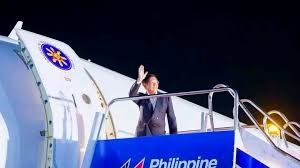
Philippine President Ferdinand R. Marcos Jr. departed for Kazan, Russia, late on Tuesday, June 16, to represent the Philippines at the Asean-Russia Commemorative Summit and conduct bilateral negotiations with Russian President Vladimir Putin. The presidential aircraft left Villamor Airbase in Pasay City shortly after 11.55 pm, carrying Marcos and his delegation. The visit carries significant diplomatic weight, marking not only the 35th anniversary of Asean-Russia relations but also the golden jubilee of Philippine-Russian diplomatic ties, which were formally established on June 2, 1976.
For Manila, this summit represents a carefully calibrated diplomatic engagement at a moment when Southeast Asia faces mounting pressures on its energy and food supply chains. The Philippines currently chairs Asean, positioning Marcos as the chief interlocutor between the regional bloc and Moscow during a period of heightened global geopolitical tension. His leadership of these discussions underscores the broader challenge facing Southeast Asian governments—how to maintain pragmatic dialogue with all major powers while protecting regional interests and upholding Asean's fundamental principle of centrality in regional affairs.
The bilateral agenda between Manila and Moscow will concentrate on concrete areas of mutual benefit, with energy and food security taking centre stage. These topics reflect the pressing concerns of ordinary Filipinos, who continue to face volatile fuel prices and food cost inflation. Russia's significant position as a global energy producer and major grain exporter makes these conversations particularly relevant for a nation that imports substantial quantities of food and remains vulnerable to commodity price shocks in global markets.
Marcos emphasised in his departure statement that the summit provides an opportunity for Asean leaders and Putin to comprehensively review three decades of bilateral cooperation and chart pathways for deeper engagement. The gathering is expected to produce substantive documents outlining future cooperation frameworks across multiple sectors. Beyond the bilateral dimension, the summit agenda encompasses an expansive range of issues affecting the region, including peace and security architecture, trade and investment mechanisms, science and technology partnerships, digital transformation initiatives, educational exchanges, tourism development, and people-to-people engagement programmes.
The Philippines' approach to this engagement reflects its stated commitment to what Marcos terms "Asean centrality"—ensuring that the regional organisation remains the primary architect of regional affairs rather than being sidelined by great power competition. This principle has become increasingly important as major powers seek to expand their influence in Southeast Asia. By leading Asean in direct engagement with Russia, the Philippines demonstrates that Southeast Asian nations maintain agency in their foreign policy choices and will not be forced into binary geopolitical alignments.
The logistical constraints of the visit underscore the diplomatic intensity the Philippines has prioritised. Despite a combined flight duration of approximately 26 hours, Marcos will spend only around 38 hours in Russia. First Lady Liza Araneta-Marcos highlighted on social media that this compressed schedule reflects the importance placed on these discussions, noting that conversations addressing energy prices and food security directly impact Filipino households and their daily economic circumstances. This messaging strategy frames the summit not as abstract geopolitical theatre but as practical governance addressing tangible problems affecting ordinary citizens.
The timing of the summit occurs as governments worldwide navigate complex calculations regarding energy security and supply stability. Global energy markets remain turbulent due to ongoing geopolitical tensions, particularly the conflict in Ukraine, which has disrupted supply chains and contributed to price volatility. For an archipelagic nation like the Philippines, which depends heavily on imported energy and agricultural products, securing stable relationships with major suppliers like Russia represents a legitimate national interest. The summit provides a platform to discuss mechanisms that could improve energy access and price predictability for Southeast Asian economies.
Marcos has anchored the Philippines' Asean leadership around the theme "Navigating Our Future, Together," emphasising unity, inclusivity, and adherence to international law and rules-based frameworks. This framing attempts to position Asean not as a bloc choosing sides in great power competition but as a collective force advocating for principles that benefit all members regardless of their individual bilateral relationships. By pursuing dialogue with Russia while maintaining existing partnerships with Western nations and China, the Philippines exemplifies the balanced approach that has historically characterised Asean diplomacy.
The Asean-Russia Commemorative Summit scheduled for June 17 and 18 in Kazan represents a formal institutionalisation of engagement between the regional grouping and Moscow. The expected adoption of key documents and cooperation frameworks will establish benchmarks and mechanisms for future bilateral and multilateral interaction. For Malaysian observers and policymakers, the summit's outcomes will be particularly relevant, as Malaysia shares many of the Philippines' concerns regarding energy security, agricultural imports, and the need to maintain stable relationships with major global powers while preserving Southeast Asian autonomy.
This diplomatic engagement also reflects broader strategic calculations within Asean regarding the post-Cold War order. Rather than accepting simplified narratives of inevitable conflict between competing blocs, Southeast Asian nations continue to pursue diversified partnerships that serve their specific development needs. The Philippines' decision to lead Asean in Russia demonstrates that the region's largest economies intend to remain active agents in their foreign policy, engaging with all significant powers on issues of mutual benefit while defending principles of sovereignty and non-interference.
The summit emerges at a critical juncture for regional stability and economic cooperation. As Southeast Asia faces mounting pressures from global supply chain disruptions, energy insecurity, and food price volatility, the ability of regional governments to maintain constructive dialogue with major powers becomes increasingly important. Marcos' mission to Russia, framed around practical economic concerns rather than ideological positioning, suggests that pragmatism continues to guide Asean's approach to great power relations, even as the international environment becomes more contested.