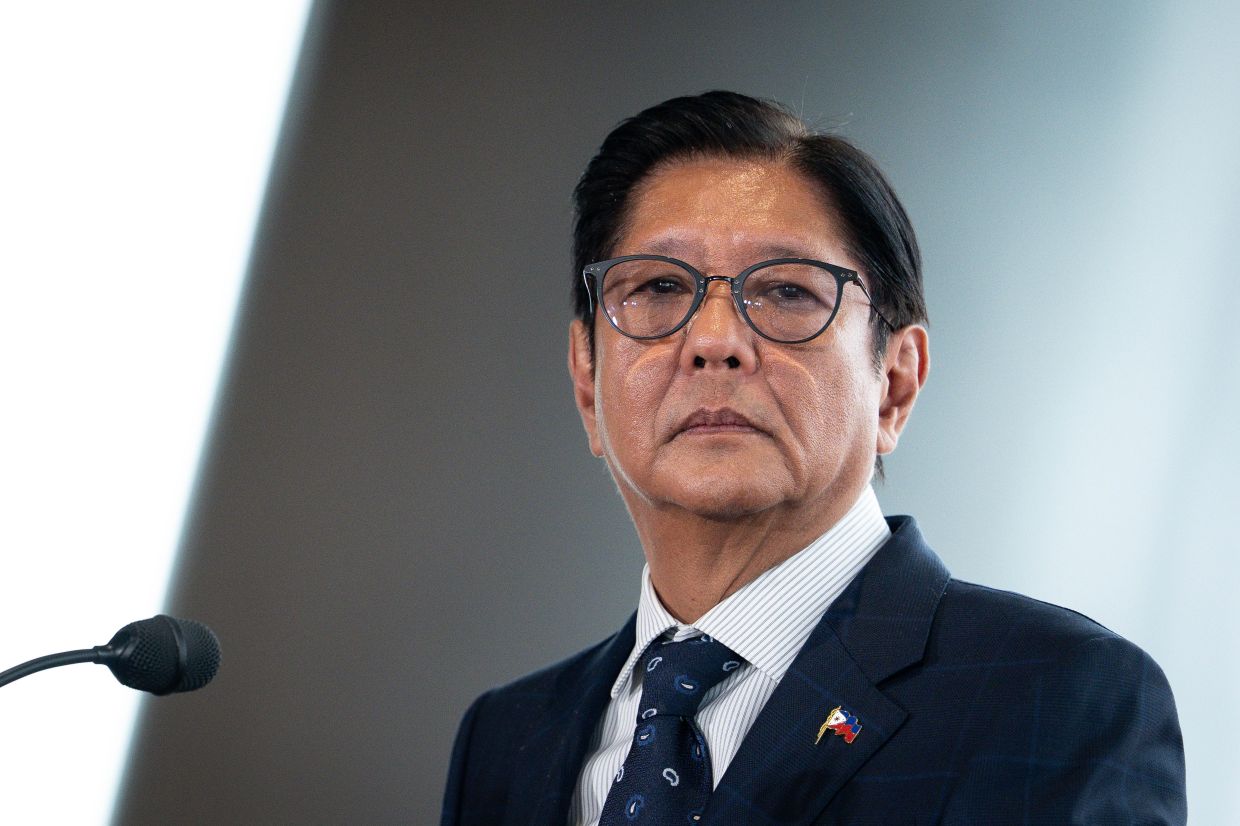
Philippine President Ferdinand Marcos Jr faces mounting pressure to demonstrate decisive leadership and concrete progress on his most pressing challenge: reviving an economy stalled by a massive corruption scandal. When he delivered his annual address to Congress a year earlier, the revelation of billions of dollars in graft linked to flood-control infrastructure schemes sent shockwaves through the nation, prompting businesses and households to retrench spending and slowing project implementation across multiple sectors. Now, as he prepares to address legislators on July 27, his administration recognises that this speech represents a crucial opportunity to reset public narrative, rebuild investor confidence, and salvage both economic momentum and his own political credibility with less than two years remaining in his six-year term.
The timing underscores the precarious state of Marcos's presidency. A self-described champion of anti-corruption efforts whose late father became synonymous with decades of dictatorship and stolen wealth, Marcos now confronts a deeply sceptical public that views his response to the graft revelations as insufficient. Hansley Juliano, political science instructor at Ateneo de Manila University, observes that Marcos remains overshadowed by "the lack of progress and accountability on the flood-control scandal, inflation impacts and people's still-vulnerable economic power," emphasising that the president requires "more explicit, decisive action and greater visibility" to regain traction. The contradiction between his anti-graft messaging and perceived inaction has become a defining weakness undermining public trust.
Beyond corruption concerns, Marcos navigates treacherous internal political dynamics that have fractured his governing coalition. Vice President Sara Duterte currently stands trial in the Senate on graft allegations and accusations of threatening to assassinate him—charges she denies—while simultaneously positioning herself as a potential 2028 presidential frontrunner. Meanwhile, his own sister, Senator Imee Marcos, frequently distances herself from his policies, signalling cracks within the ruling establishment. According to Rodel Taton, dean of San Sebastian College-Recoletos Graduate School of Law, "the administration is currently mired in multiple political battles" that have "strained the cohesion of the ruling coalition." These internal fractures distract from policy implementation and weaken the administration's ability to project unified direction on economic recovery.
The economic deterioration remains starkly evident in hard data. The Philippine stock index has declined 1.5% since his previous State of the Nation address in July 2025, while the peso has depreciated nearly 8% against the US dollar. More troubling for long-term prospects, economic growth decelerated sharply from 5.5% expansion in the quarter before last year's address to merely 2.8% in the first three months of 2026—placing the Philippines behind neighbouring Malaysia and Singapore. The government subsequently slashed its 2026 growth forecast to between 3.5% and 4.5%, down dramatically from earlier projections of up to 6% before geopolitical tensions intensified. This slowdown reflects both the domestic impact of the corruption scandal and external headwinds from Middle East instability that have elevated global oil prices, of particular consequence for a nation sourcing over 90% of petroleum requirements from that region.
Inflation and cost-of-living pressures compound public frustration with Marcos's economic stewardship. Citizens report feeling the squeeze of elevated prices across essential goods and services, yet perceive minimal government intervention to provide relief. The Management Association of the Philippines has urged the administration to "fight corruption decisively" while ensuring that anti-graft efforts "do not become a brake on economic growth," capturing the delicate balance required. Investors, meanwhile, demand concrete clarity regarding infrastructure spending anomalies and prosecution timelines for alleged perpetrators, including a senator and former public works secretary implicated in the schemes. April Lynn Tan, chief equity strategist at COL Financial Group Inc., articulated investor expectations: clarity on addressing high oil price impacts, mechanisms for permanent inflation control, and strategies to attract foreign investment.
The flood-control scandal itself remains a visceral symbol of administrative failure in the minds of those most vulnerable to natural disasters. In Calumpit, located 50 kilometres from Manila, a broken dike remains unfixed while a critical sheet pile project to mitigate flooding has barely commenced. Local official Sergio Miranda's blunt assessment—"at the rate it's going, our bodies will become immune to floodwaters before this project is finished"—captures the bitter frustration of communities that depend on these infrastructure commitments. The juxtaposition of revealed graft paired with stalled remedial works crystallises public anger and undermines claims of competent administration.
Broader structural weaknesses in the Philippines' economic position add urgency to Marcos's recovery agenda. The nation attracted less than 5% of Southeast Asian investment flows in the preceding year, according to DBS Bank economist Radhika Rao, who argues that "addressing domestic governance and project execution priorities will improve the investment climate." The country risks being sidelined from regional supply chain integration and manufacturing hubs as investors redirect capital toward more stable jurisdictions. This regional competitive disadvantage demands urgent demonstration of improved governance and project execution capacity.
The symbolism and logistics of Monday's address amplify the political stakes. The gathering coincides with the anniversary of the Iglesia ni Cristo's founding, with hundreds of thousands of members expected to converge in Manila. The church has recently organised prominent anti-Marcos demonstrations that disrupted the capital, with its headquarters located only kilometres from Congress. More than 21,000 police personnel will be deployed to manage security and potential disturbances. Beyond the Iglesia ni Cristo constituency, organised labour and civil society groups including Sanlakas plan demonstrations, with secretary-general Aaron Pedrosa contending that marginalised communities—workers, farmers, and vulnerable sectors—have become "more impoverished, more disempowered, more disenfranchised" under Marcos's tenure.
Marcos's own statements suggest he intends to emphasise policy successes, telling reporters Friday that his speech would demonstrate how his administration has "navigated this very difficult period in our history, where we are buffeted by all of these external forces." This framing invites scrutiny regarding his willingness to acknowledge administrative responsibility for domestic governance failures versus external shocks. Analysts anticipate focus on economy-related measures and infrastructure anomaly corrections, with particular attention to prosecution timelines and accountability mechanisms. The challenge lies in articulating a credible recovery vision while convincing markets, civil society, and ordinary Filipinos that his administration possesses both the political coherence and technical capacity to execute a coherent economic programme.

