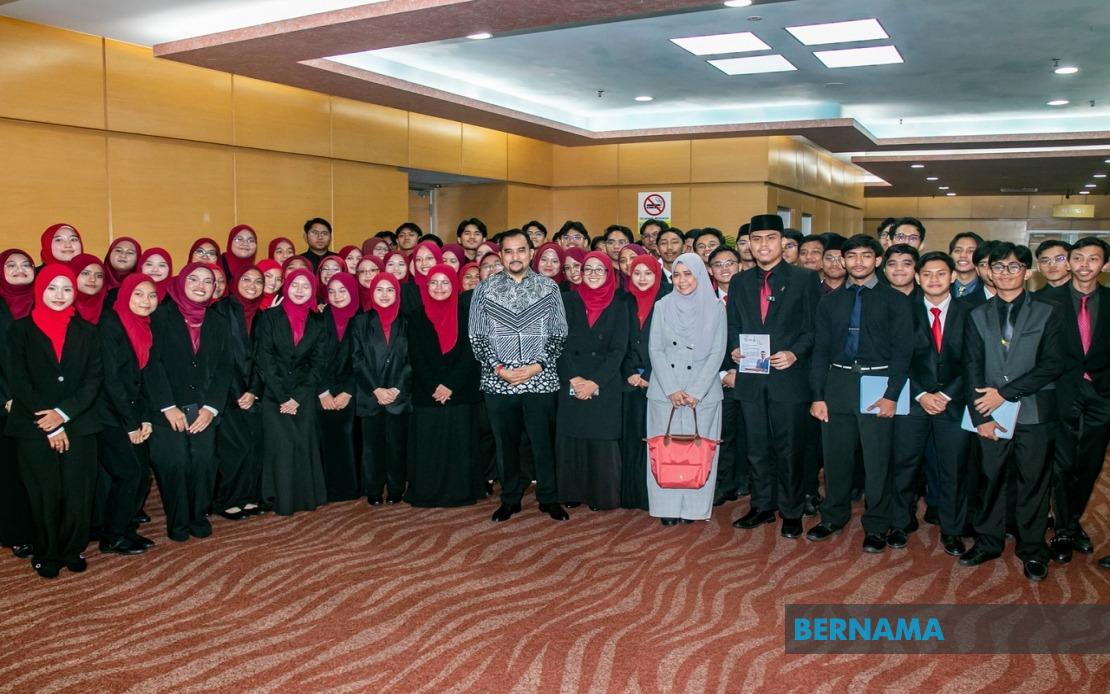
Malaysia's premier scholarship body, Majlis Amanah Rakyat (MARA), has revived its medical education partnership with Egypt's Al-Azhar University, marking a significant expansion of overseas training opportunities for Malaysian scholars. The agency has enrolled 78 medical students for the programme's inaugural intake since its reinstatement, resuming operations that had been dormant since 2019 when the initiative was halted. The decision represents a strategic pivot towards leveraging international medical education networks while maintaining cost-effectiveness for the nation's talent development pipeline.
Chairman Datuk Dr Asyraf Wajdi Dusuki revealed that the Cabinet's approval was instrumental in enabling the programme's restart, with the decision reflecting government commitment to affordable medical training pathways. He emphasised that the timing of the announcement came during a pre-departure briefing for hundreds of MARA-sponsored scholars preparing for placements across multiple continents. The revival signals MARA's confidence in Al-Azhar's medical curriculum and teaching standards, particularly given the university's historical prominence in Islamic medical education throughout the Middle East and beyond.
A decisive financial advantage underpins the programme's economic rationale. Each student's five-year course entails a total investment of RM350,000 inclusive of accommodation, a figure substantially reduced through a fifty percent discount negotiated with Al-Azhar University. This pricing structure represents roughly half the expense of pursuing medical degrees within Malaysia's private institutions, where fees can accumulate to between RM700,000 and RM800,000 per graduate. The mathematics favour efficient resource allocation, particularly important given Malaysia's ongoing need to expand physician supply and the competing budgetary pressures across healthcare and education portfolios.
The broader MARA overseas scholarship initiative extends well beyond the Al-Azhar medical programme. A cohort of 600 students completing their studies at three preparatory colleges—Kolej MARA Seremban in Negeri Sembilan, Kolej MARA Banting in Selangor, and Kolej MARA Kuala Nerang in Kedah—will commence their university studies internationally beginning the following week. These scholars are distributed across multiple destination nations reflecting MARA's strategic partnerships, encompassing New Zealand, Canada, Australia, South Korea, the United Kingdom, and Egypt. The staggered departure schedule indicates logistical coordination designed to provide appropriate support systems and integration for each cohort.
Premier Institute placement outcomes underscore the calibre of MARA's selection and preparation processes. Imperial College London, consistently ranked among the world's finest engineering and science institutions, has admitted 11 MARA-sponsored students for the current academic year alone. More expansively, MARA reports that 40 sponsored students have secured positions at universities featuring within the global top 10, while a broader 107 students have been accepted by top-20 ranked institutions worldwide. These placements reflect rigorous entrance competition and demonstrate that MARA scholars remain academically competitive within the most selective higher education markets.
The Al-Azhar programme revival carries particular resonance for Malaysia's Muslim-majority population and its cultural orientations. Al-Azhar University, founded in 970 CE, stands as one of Islam's oldest and most respected institutions of learning, with its medical school reflecting centuries of scholarly tradition alongside contemporary medical science. For Malaysian Muslim students, the institution represents not merely an educational destination but a connection to scholarly heritage and Islamic intellectual traditions. The programme thus addresses educational aspiration while aligning with the values and identities of substantial portions of MARA's constituency.
For Southeast Asian context, this initiative reflects broader regional trends toward leveraging educational partnerships beyond traditional Western universities. Egypt's position as a regional educational hub, combined with competitive pricing and established quality standards, has attracted students from across the Middle East and increasingly from Asia. Malaysia's renewed engagement with Al-Azhar positions the nation within this educational ecosystem while maintaining fiscal discipline. The move also demonstrates pragmatic diversification away from over-reliance on Anglo-American educational systems, distributing scholarship flows across multiple knowledge networks.
The financial architecture supporting these scholarships merits examination in Malaysia's broader human capital strategy. MARA, established to facilitate bumiputera advancement through education, continues evolving its mission to reflect contemporary labour market demands and demographic shifts. Medical education abroad represents targeted investment in sectors where Malaysia faces skilled labour constraints and where international qualification carries portable value. Unlike disciplines confined to specific national regulatory environments, medical degrees from recognised international institutions enable graduates to practise in multiple jurisdictions, enhancing Malaysia's capacity to retain talented physicians while facilitating regional professional mobility.
Prime Minister Datuk Seri Anwar Ibrahim's personal endorsement of the programme's restart, noted by Dr Asyraf Wajdi, signals executive-level priority for MARA initiatives. Such backing typically accelerates implementation, facilitates diplomatic coordination with host institutions, and conveys strong commitment to education portfolios within the broader developmental agenda. The government's willingness to approve substantial expenditure on overseas medical training during a period of fiscal consolidation suggests confidence in the programme's returns on investment and alignment with strategic human resources objectives.
Looking forward, the Al-Azhar medical programme's re-establishment may herald further initiatives to expand offshore scholarship offerings in high-demand fields. As Malaysian universities continue enhancing their research and teaching capacities, overseas partnerships increasingly function as complementary rather than substitutive, with graduates often returning to strengthen domestic institutions. The resumption of the Al-Azhar track thus represents not brain drain but strategic talent circulation, positioned within MARA's broader framework of developing Malaysia's professional cadres through carefully curated international engagement.

