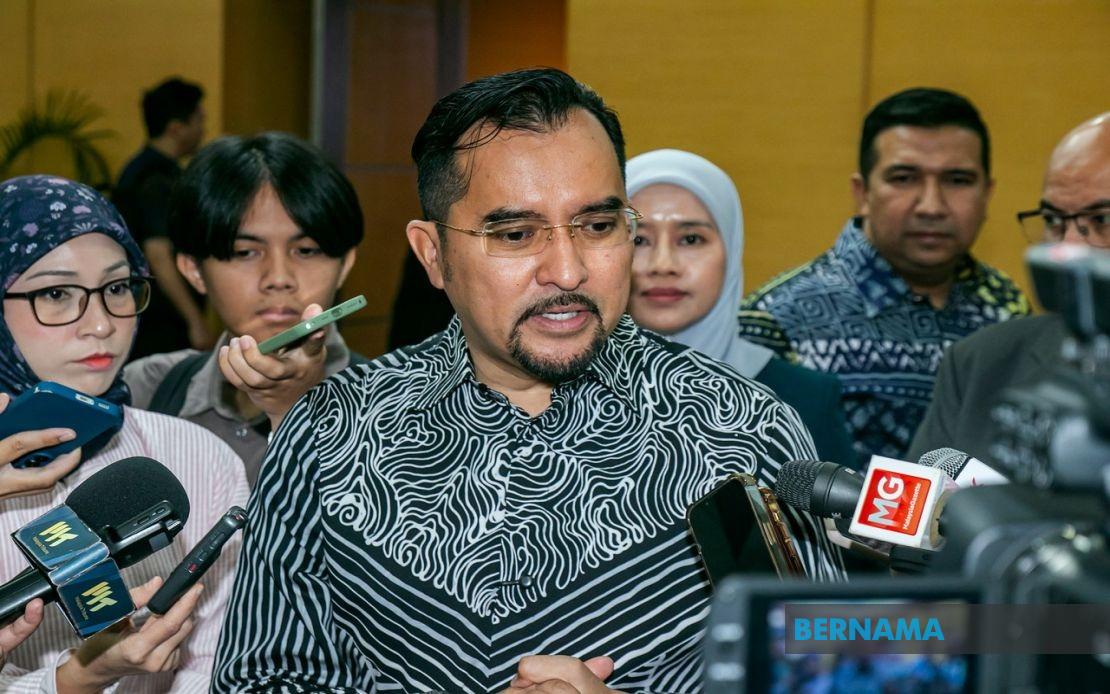
Malaysia's institutional overhaul of the Majlis Amanah Rakyat (MARA) is accelerating, with the long-awaited MARA Bill 2026 now poised for parliamentary presentation this November following Cabinet approval of its policy framework. The comprehensive legislative reform represents a significant modernisation of the agency's governing structure, which has operated largely under the MARA Act 1966 for nearly six decades. MARA chairman Datuk Asyraf Wajdi Dusuki confirmed that the Bill has completed its substantive drafting phase and is positioned for imminent tabling, marking a watershed moment for an institution entrusted with advancing Malay and Bumiputera interests across Malaysia's economic landscape.
The centrepiece of this legislative redesign centres on a fundamental recalibration of executive authority within MARA. According to Datuk Asyraf Wajdi, approximately 80 per cent of the Bill's provisions target governance enhancement in alignment with recognised international standards and established corporate best practices. The most consequential change involves substantially curtailing the chairman's discretionary powers—a deliberate architectural shift away from the concentrated authority embedded in the current 1966 Act. Under the revised framework, the chairman's role narrows to presiding over the Board of Directors or Council and setting overarching policy direction, eliminating involvement in routine administrative operations that previously fell within the chairman's purview.
This deliberate redistribution of power reflects a strategic pivot toward institutional resilience and accountability. The chairman becomes a mechanism for institutional oversight rather than operational command, positioned to serve as a counterbalance within the governance structure. Datuk Asyraf Wajdi articulated this transition explicitly, noting that his tenure represents merely a temporary stewardship of an organisation whose longevity transcends any individual. He emphasised his commitment to establishing legacy foundations of institutional robustness, with governance frameworks sufficiently stringent to preclude corruption, procedural irregularities, financial misappropriation, and operational inefficiencies that might jeopardise MARA's fundamental mission.
The impetus for legislative renewal emerged from documented institutional vulnerabilities. In August, Datuk Asyraf Wajdi identified the driving concerns: preventing recurrence of power abuses, governance deficiencies, misappropriation episodes, administrative irregularities, financial leakages, and misallocation of resources. These specified concerns suggest that MARA confronted identifiable governance challenges requiring systematic remediation rather than incremental adjustment. The Bill represents a comprehensive response architecture designed to eliminate structural vulnerabilities that historically enabled misconduct or organisational drift.
The antiquation of the 1966 legislative foundation provides crucial context for understanding the modernisation imperative. Established during Malaysia's early independence period, the original Act reflected governance assumptions, operational scales, and accountability standards appropriate to that historical moment. However, corporate governance philosophies and regulatory expectations have undergone transformative evolution across subsequent decades. What constituted acceptable institutional practice in the 1960s diverged substantially from contemporary standards by the 1980s, and the gap has widened further into the twenty-first century. Datuk Asyraf Wajdi acknowledged this temporal displacement explicitly, recognising that regulatory frameworks require continuous recalibration to remain functionally responsive to evolving operational environments.
This philosophical orientation toward adaptive governance carries significant implications for Malaysian institutional design more broadly. MARA serves a defined demographic constituency, yet its governance structure carries spillover significance for how Malaysia's state-linked agencies approach accountability and operational transparency. The Bill's emphasis on good governance principles and international standards suggests a broader institutional alignment occurring across Malaysia's public sector, reflecting heightened expectations for fiduciary responsibility and managerial competence regardless of institutional size or sectoral focus. For MARA specifically, implementation of these governance enhancements should theoretically enhance stakeholder confidence and institutional legitimacy among the Malay and Bumiputera communities it serves.
The November parliamentary tabling establishes a definitive timeline for legislative consideration, though the Bill's progression through parliamentary procedures remains subject to legislative scheduling. Successful passage would necessitate parliamentary majority support across both government coalition partners and potentially require navigating any substantive amendments proposed during second or third reading debates. The Bill's governance emphasis and modest chairman power restriction do not appear to carry overtly divisive partisan implications, suggesting reasonable prospects for consensual passage. However, any amendments arising from parliamentary consideration could potentially modify the Bill's intended governance architecture, warranting close observation of legislative proceedings.
Implementation logistics will prove equally consequential as the legislative text itself. The transition from a chairman-centred authority distribution to a more dispersed governance model requires institutional capacity building, procedural documentation, and personnel adjustment. Board structures, committee frameworks, and delegation protocols must be reconfigured to operationalise the legislative intent. Training requirements for governance participants—including board members, committee chairs, and senior management—will likely exceed initial assessments, particularly given the shift toward board-centric decision-making. MARA's administrative apparatus must simultaneously maintain operational continuity while absorbing substantial structural reconfiguration.
For Malaysian stakeholders invested in Bumiputera advancement and institutional accountability, the MARA Bill 2026 represents a test case in whether legislative governance reform translates into meaningful organisational practice improvement. Implementation fidelity will determine whether the governance architecture produces intended effects or devolves into ceremonial compliance. The November parliamentary presentation launches the formal phase of this institutional transformation, positioning Malaysia to observe whether governance modernisation delivers sustained institutional strengthening across a publicly significant agency.

