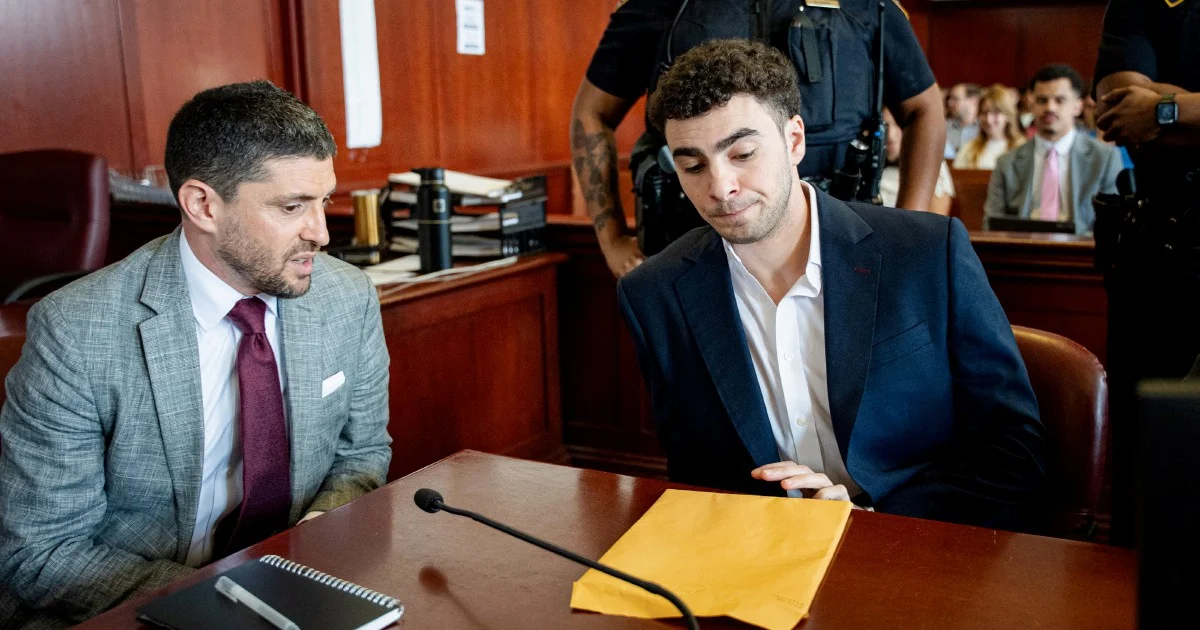
Luigi Mangione, the individual charged with fatally shooting UnitedHealthcare Chief Executive Officer Brian Thompson on a Manhattan street in December, has made a significant tactical decision to shelve his mental health defence strategy for the time being. A legal filing submitted to the court on Friday indicates that Mangione's defence team will not be proceeding with its initial plan to present evidence suggesting he was experiencing an acute psychiatric emergency when the alleged killing occurred.
The withdrawal represents a notable shift in the defendant's legal approach as the case progresses through New York's court system. Rather than argue that Mangione's mental state was compromised at the moment of the offence, his lawyers have opted for a different direction, though the precise strategic reasoning behind this change remains unclear from the publicly available court documents. The decision to step back from psychiatric evidence does not necessarily indicate abandonment of the defence entirely, as such matters can be revisited at later stages of proceedings.
Mangione faces serious charges stemming from the December incident in Midtown Manhattan, where Thompson was shot in what appeared to be a targeted attack. The case drew widespread attention partly due to the prominence of the victim—a high-ranking executive at a major health insurance corporation—and the circumstances surrounding his death. The shooting reignited public conversations about healthcare industry practices and executive accountability, particularly concerning insurance denial decisions that affect patient access to medical treatment.
The decision to withdraw mental health evidence represents a calculated legal gambit. Mental health defences in high-profile cases can be double-edged, potentially offering mitigation while simultaneously presenting opportunities for prosecutors to introduce damaging psychiatric evaluations. By stepping back from this line of argument, Mangione's defence team may be attempting to avoid opening doors that prosecution experts could exploit during cross-examination and testimony phases.
From a legal strategy perspective, the withdrawal suggests the defence may be redirecting its efforts toward other avenues—perhaps challenging the prosecution's evidence directly, questioning witness identification, or attacking the forensic case against their client. This approach often resonates more effectively with juries in cases where the defendant's basic competency or awareness is not in genuine question, focusing instead on establishing reasonable doubt about guilt itself.
The case has significant implications for discussions surrounding mental health in criminal justice systems across the United States. Courts increasingly grapple with questions about how psychiatric evidence should factor into criminal proceedings, balancing compassion for individuals experiencing mental distress against public safety concerns and victim considerations. Mangione's decision, while tactical rather than philosophical, nonetheless affects the broader narrative around mental illness and criminal culpability.
In New York, where this case is being prosecuted, courts have established frameworks for evaluating and presenting mental health evidence. The state recognizes both insanity defences—where mental illness prevented understanding of right and wrong—and broader mental state evidence that relates to specific criminal elements. Mangione's team appears to be calculating that their client's situation fits neither category effectively enough to warrant the risks associated with psychiatric testimony.
The withdrawal also reflects the evolving nature of high-profile criminal defence work in an era of intense media scrutiny. Every motion, filing, and strategic decision becomes subject to public analysis and commentary, creating pressure on defence teams to carefully weigh not just legal considerations but also how various approaches might be perceived by potential jurors exposed to extensive pretrial publicity.
For Malaysian observers following American legal proceedings, this case exemplifies how defence strategy operates within the American adversarial system. Unlike jurisdictions that employ inquisitorial approaches, American criminal trials centre on the defence team's strategic choices about which evidence to present, which to challenge, and which to avoid. This autonomy comes with significant responsibility, as choices made at early stages can have profound consequences when trials commence.
The broader context of UnitedHealthcare and its place in American healthcare discourse cannot be separated from this case. The company has faced considerable criticism over insurance denial policies, and the Thompson murder sparked renewed examination of industry practices. Whether Mangione's legal team believes mental health arguments would gain traction amid this heated public conversation remains speculative, but the withdrawal suggests they have made a strategic assessment that other approaches serve their client's interests better.
Legal observers expect additional court filings as the case progresses, potentially including discovery disputes, evidentiary hearings, and further strategic adjustments. The decision to withdraw mental health evidence may prove temporary, reversible, or permanent depending on how evidence develops and trial preparation proceeds. What appears certain is that Mangione's defence faces the challenge of constructing a compelling narrative within a case that has already captured substantial public attention and sparked national conversations about insurance, accountability, and justice.

