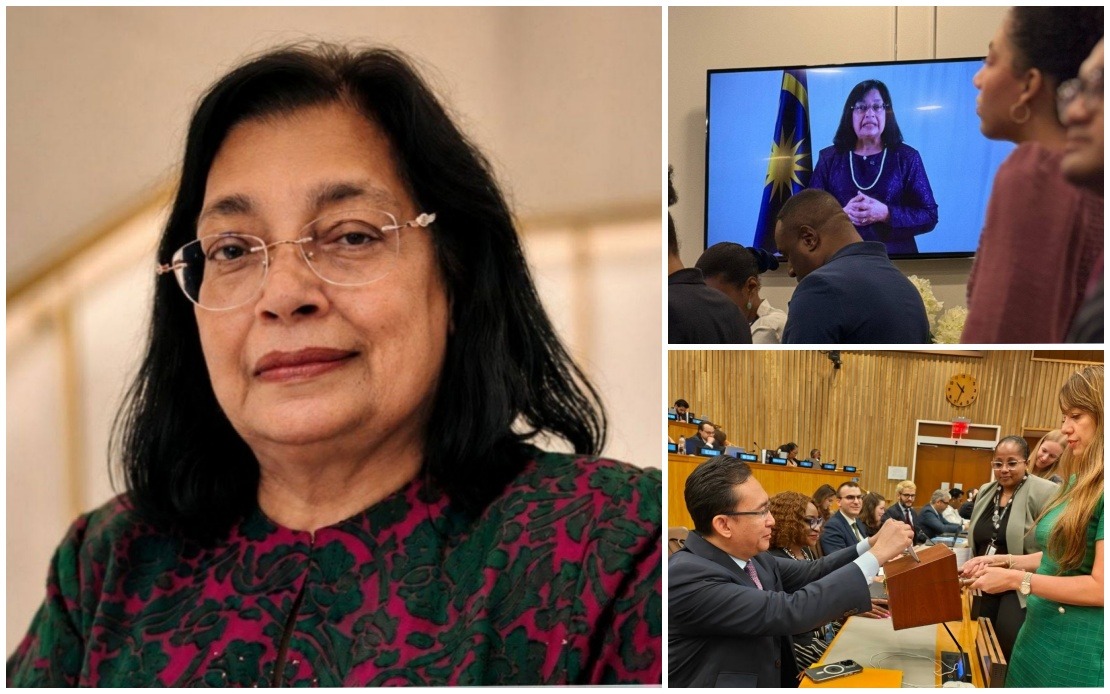
Malaysia has secured another significant seat on the international stage with the election of Datuk Yasmeen Muhamad Shariff to the United Nations Committee on the Rights of the Child, cementing the country's influence in global child welfare discussions. At the 21st Meeting of States Parties to the Convention on the Rights of the Child held at UN Headquarters in New York on Tuesday, Yasmeen garnered 136 votes from the 189 States Parties present and voting, emerging as the candidate with the strongest backing from the international community. The decisive mandate reflects growing recognition of Malaysia's commitment to advancing child protection standards across the developing world.
Yasmeen's appointment represents a return engagement with the committee, having previously served as a member during the 2013–2017 term. Her reselection underscores the value placed by the global community on her technical expertise and sustained dedication to children's welfare issues. The Foreign Ministry highlighted that this achievement demonstrates international confidence in her abilities to navigate complex child rights issues at a time when childhood vulnerabilities are expanding due to digital risks, migration pressures, and post-pandemic challenges affecting education and mental health.
As an independent expert serving in her personal capacity, Yasmeen will shoulder substantial responsibilities within the committee's framework. The role requires monitoring how signatory nations implement the Convention on the Rights of the Child, a foundational international treaty that has been ratified by nearly every country globally. Her duties will encompass facilitating constructive engagement between the committee and participating governments, ensuring that state policies genuinely translate convention principles into tangible protections for vulnerable populations.
The committee's work carries particular relevance for Southeast Asia, where child labour, human trafficking, and inadequate educational access remain persistent challenges despite economic development. Malaysia's positioning of Yasmeen places it in a strategic position to influence regional discussions on child protection standards and to advocate for approaches that account for the specific vulnerabilities facing children in developing economies. Her presence on the committee can facilitate knowledge-sharing between the UN system and ASEAN members, potentially strengthening coordination on transnational child welfare issues.
The ministry emphasized that the election outcome validates Malaysia's broader policy trajectory on child rights. Over recent years, the government has pursued legislative reforms and established programmes designed to ensure that Malaysian children gain access to education, protection from exploitation, and opportunities for healthy development. The international recognition reflected in Yasmeen's strong vote count signals that these efforts are viewed positively by the global community and provides momentum for Malaysia to deepen its commitment to implementing best practices.
Yasmeen's work on the committee will be particularly consequential given the evolving nature of threats to child welfare in the modern era. Beyond traditional concerns such as poverty and inadequate healthcare, children globally now face risks stemming from online exploitation, climate change impacts, and geopolitical instability. The committee must grapple with how the convention's 30-year-old framework can be adapted to protect children in these novel contexts while respecting cultural particularities across diverse societies.
The Foreign Ministry expressed appreciation to the Ministry of Women, Family and Community Development for its instrumental role in supporting Malaysia's nomination campaign. This interdepartmental coordination highlights how child welfare advancement requires integrated government action rather than isolated efforts by individual agencies. The collaborative approach demonstrates institutional maturity and suggests that Malaysia is building sustainable mechanisms for translating international commitments into domestic policy coherence.
Malaysia's success in this election carries implications beyond child welfare forums. It reinforces the country's standing as a responsible UN member state capable of contributing meaningfully to international norm-setting processes. For a nation navigating complex regional dynamics and seeking to enhance its soft power influence, securing appointment to specialized UN bodies represents tangible evidence of diplomatic capability and international respect. Such positions also provide platforms for Malaysian perspectives to reach global audiences during committee proceedings and in official UN documentation.
The ministry stated that in an increasingly intricate global environment, the committee's mandate remains essential for safeguarding child rights and dignity worldwide. This framing acknowledges that child protection cannot be effectively pursued through isolated national efforts alone. The transnational nature of modern challenges—from migration to online harms—requires coordination mechanisms precisely like this UN committee. Malaysia's representation ensures that Southeast Asian perspectives inform these global conversations and that the region's specific contexts receive appropriate attention.
Looking forward, Yasmeen's appointment creates opportunities for Malaysia to champion rights-based approaches that emphasize inclusive development. The committee's influence extends to shaping how international financial institutions, development agencies, and bilateral aid programmes conceptualize child welfare investments. By positioning herself as an advocate for comprehensive, culturally-sensitive protection frameworks, Yasmeen can advance Malaysian and broader Asian interests in ensuring that global child welfare standards remain attainable for developing economies with limited fiscal resources.
The government's commitment to continued engagement with stakeholders on child protection demonstrates recognition that this agenda transcends traditional political divisions. Cooperation with civil society organizations, academic institutions, and international NGOs will be essential for translating Yasmeen's committee work into measurable improvements in Malaysian children's lives. The appointment thus functions simultaneously as international recognition and as domestic political cover for advancing potentially contentious child welfare reforms that face resistance from conservative constituencies.
Yasmeen's re-election signals that Malaysia is successfully positioning itself as a constructive voice in UN processes, capable of bridging perspectives between developed nations and the broader developing world. Her committee work will involve negotiating competing visions of child rights, balancing universal standards with cultural contexts, and finding practical pathways for implementation in countries with varied capacity levels. This diplomatic role strengthens Malaysia's broader influence on international issues and provides diplomatic capital that may prove valuable in other UN forums where Malaysia pursues its strategic interests.

