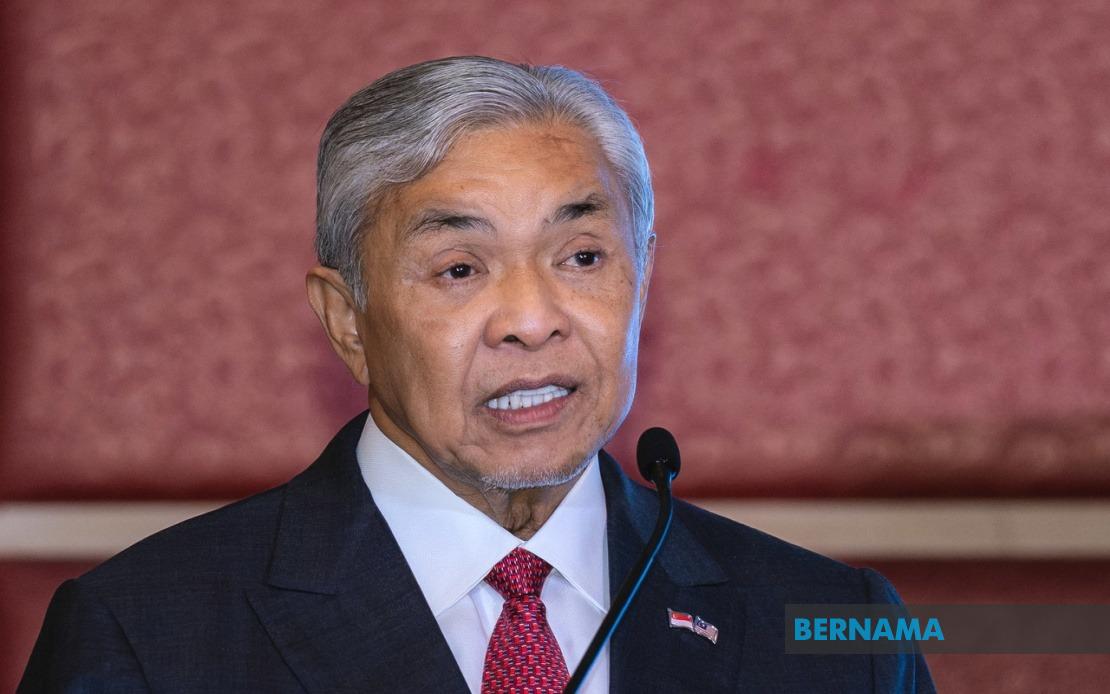
Malaysia's technical and vocational education system is moving towards a model where employment is virtually guaranteed, with Deputy Prime Minister Datuk Seri Dr Ahmad Zahid Hamidi announcing that graduates receive job offers before finishing their courses. The shift represents a fundamental restructuring of how the government approaches skills training, embedding industry needs directly into curriculum design from the outset rather than hoping graduates' qualifications align with market demand after graduation.
The strategy hinges on establishing substantive dialogue between TVET institutions and employers well before students enrol. By consulting with companies and industry stakeholders during course development, the government ensures that curricula remain responsive to evolving workplace requirements. This upstream approach eliminates what Ahmad Zahid identifies as persistent challenges in vocational education: graduates finding their qualifications misaligned with available positions, wage expectations disconnected from market reality, and the frustration of completing expensive training only to face unemployment or underemployment.
According to Ahmad Zahid, who chairs the National TVET Council in addition to his roles as Deputy Prime Minister and Rural and Regional Development Minister, the collaboration has already produced measurable results. He asserts that TVET graduate employability now stands at 100 per cent, a figure that—if accurate—represents a significant achievement in addressing Malaysia's skills gap and youth unemployment. The claim suggests that companies are committing to hiring before students graduate, creating a pipeline that theoretically eliminates the transition period between education and employment.
Beyond immediate job placement, the government is pursuing what it terms High TVET courses, a tier of training designed to produce graduates equipped with advanced competencies that employers actively seek. This elevation of vocational qualifications reflects a broader regional and global trend recognising that technical skills can command competitive wages and career progression comparable to traditional university degrees, particularly in sectors experiencing rapid technological change. For Malaysian students, especially those from lower-income backgrounds, TVET pathways offer an alternative to expensive university education with superior employment certainty.
The timing of Ahmad Zahid's remarks is strategic, coinciding with preparations for WorldSkills Shanghai 2026, an international competition where Malaysia will demonstrate its TVET capability on a global platform. The government is fielding nine competitors from premier TVET institutions—MARA TVET, Universiti Kuala Lumpur, and GIATMARA—across nine skill categories spanning Fashion Technology, Cyber Security, and Electronics. This representation signals Malaysia's ambitions to position itself as a competent vocational education hub within Southeast Asia.
The competition represents more than symbolic value. Hosting Malaysian competitors in Shanghai provides a testing ground for the quality and relevance of local TVET training. International success would validate the government's claims about curriculum alignment and graduate competence, offering both domestic confidence and external credibility to prospective students and employers considering TVET pathways. Conversely, weak performance could expose gaps between official assertions and actual capability.
For Malaysian employers, particularly in manufacturing, hospitality, information technology, and construction sectors facing chronic skills shortages, the TVET model offers relief. By participating in curriculum design and hiring students before graduation, companies reduce recruitment costs and onboarding time while gaining some influence over their future workforce's foundational training. This mutuality distinguishes the current approach from traditional vocational education, where institutions and industry operate largely independently.
The nine-month window between now and the Shanghai competition will test not merely competitors' technical abilities but also the robustness of Malaysia's TVET support systems. Ahmad Zahid's emphasis on mental resilience and emotional fortitude suggests recognition that international competition pressure differs substantially from domestic examinations. His call for enhanced skill development, disciplined preparation, and sustained focus during the final two months before the September competition underscores the intensity required to achieve medals and recognition.
Regionally, Malaysia's TVET positioning carries implications for the broader Southeast Asian labour market. As countries across ASEAN grapple with skills mismatches and graduate unemployment, Malaysia's experiment with guaranteed employment through industry collaboration offers a potential model worth examining. If successful, the approach could influence how neighbouring nations structure their vocational education systems, particularly as automation and digitalisation accelerate demand for workers with specific technical competencies.
Challenges remain, however. Scaling this employment guarantee model across all TVET institutions requires sustained commitment from businesses, particularly small and medium enterprises that lack dedicated human resources capacity to participate in curriculum planning. Regional variations in industrial capacity also mean that students in less developed areas may struggle to access the same industry engagement opportunities as those in Klang Valley or Penang. Additionally, maintaining 100 per cent employability claims presupposes that TVET graduates remain in the sectors for which they train, which real-world experience suggests is not always the case.
The sustainability of the model also depends on continued economic growth and stable labour demand. Economic contractions or sectoral disruptions could undermine employer willingness to commit to hiring graduates not yet trained. Malaysia's experience during previous downturns suggests that vocational graduates, while generally more insulated from unemployment than their unemployed counterparts without qualifications, are not immune to economic shocks.
Nevertheless, Ahmad Zahid's articulation of TVET as a pathway to employment rather than merely as an educational alternative represents a conceptual shift. By embedding industry participation into institutional governance and curriculum development, the government acknowledges that education divorced from employment outcomes serves neither students nor national economic interests. Whether this approach can deliver on its ambitious employment promises while maintaining quality and accessibility will substantially determine Malaysia's competitiveness in attracting talent to technical careers.

