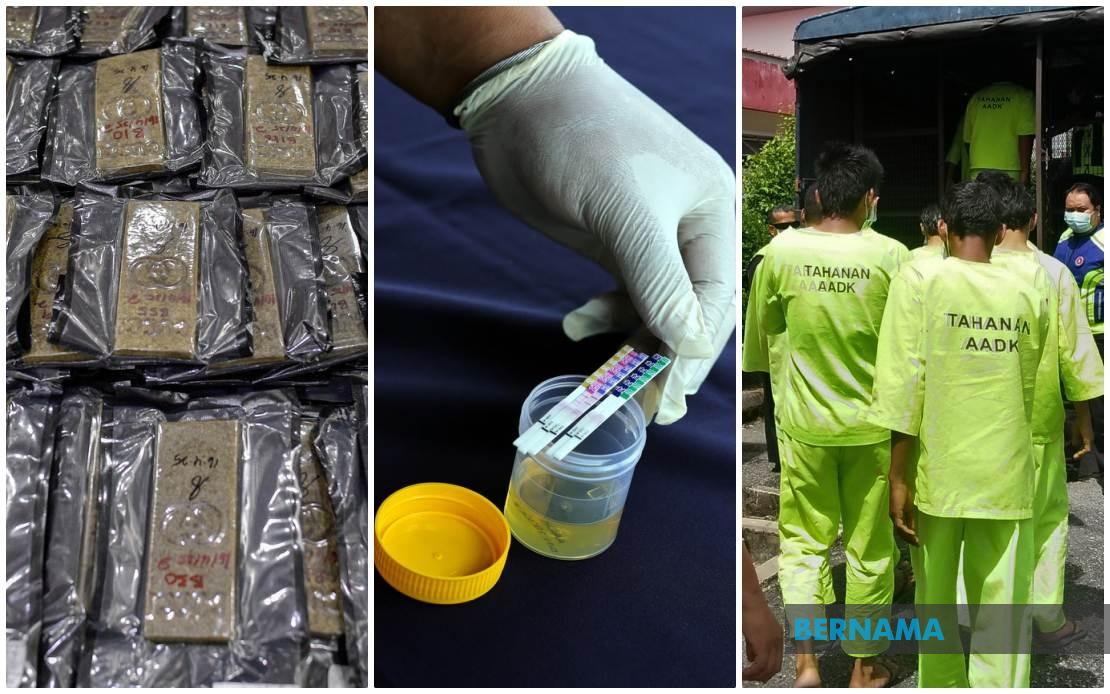
Malaysia's battle against synthetic drug abuse has reached a critical juncture, with more than 141,000 documented cases in 2024 signalling the continued expansion of chemical stimulants across the nation. Home Minister Datuk Seri Saifuddin Nasution Ismail disclosed the troubling figure during parliamentary question time, emphasising that the country faces an escalating public health challenge driven predominantly by amphetamine-type stimulants, or ATS. These laboratory-manufactured drugs now represent approximately 70 per cent of all drug abuse cases nationally, a shift that reflects changing patterns in how Malaysian users access and consume controlled substances.
The trajectory of synthetic drug abuse over recent years reveals a worsening trend that defies conventional enforcement approaches. In 2023, authorities recorded 145,526 cases, but the figure surged to 192,852 by 2024—a striking increase that underscores the rapid proliferation of these substances. What distinguishes synthetic drugs from traditional narcotics is their adaptability and potency. While cannabis, heroin, and kratom once dominated abuse statistics, they have been progressively displaced by cheaper, more addictive chemical variants manufactured in clandestine laboratories. The data compiled from the Ministry of Health, the National Anti-Drugs Agency, rehabilitation centres, and the Royal Malaysia Police paints a picture of a drug market in transition, where demand has fundamentally shifted toward substances engineered for maximum neurological impact.
Geographically, Malaysia's east coast states have emerged as the epicentre of the synthetic drug epidemic. The concentration of cases across the east coast corridor demonstrates that this is not merely an urban phenomenon confined to Kuala Lumpur or Selangor. Within this region, methamphetamine—colloquially known as syabu—has become the dominant substance, indicating sophisticated supply chains operating across state boundaries. Specific districts tell an even more granular story of vulnerability: Pendang recorded the highest per-capita incidence, followed by Kuala Krai, while Bachok, Besut, and Mersing also rank among the hardest-hit areas. These geographical hotspots suggest that enforcement resources have not yet effectively disrupted distribution networks in these regions, and that socioeconomic factors may be rendering certain communities more susceptible to drug availability and use.
Fentanyl's emergence represents perhaps the most alarming development in Malaysia's drug landscape. Recently detected in adulterated vaping products during police operations, fentanyl poses a fundamentally different risk profile compared with other synthetic drugs. The opioid is acknowledged to be dozens of times more potent than morphine, capable of inducing fatal overdoses at minuscule doses. Though the Home Minister indicated that fentanyl's presence remains limited compared with other synthetics, its very appearance suggests that transnational drug trafficking networks are testing Malaysia's market and expanding their product portfolios. The government has swiftly moved to classify fentanyl as a scheduled substance under amendments to the Drug Dependants (Treatment and Rehabilitation) Act and the Dangerous Drugs Act 1952, enabling legal enforcement mechanisms, yet the detection of the drug in seemingly innocuous vaping products highlights how quickly illicit substances can be concealed within legitimate consumer goods.
The demographic dimensions of synthetic drug abuse underline its threat to Malaysia's future workforce and social fabric. Nearly 75 per cent of the 192,000 cases recorded since January 2024 involve individuals aged between 15 and 39, meaning that young adults in their most productive years constitute the bulk of users. This age concentration has profound implications for educational attainment, employment prospects, family stability, and productivity across the economy. The problem extends into Malaysia's correctional system, where approximately 70 out of every 100 inmates have involvement in drug-related offences, whether as convicts or persons on remand. In certain facilities such as Machang prison, drug-related cases constitute nearly the entire inmate population, transforming these institutions into de facto rehabilitation centres rather than traditional penal facilities.
The accessibility of synthetic drugs has been amplified by technological innovation and the digital marketplace. The Home Minister acknowledged that online platforms have fundamentally altered the drug procurement landscape, enabling purchasers to acquire controlled substances with relative anonymity and minimal regulatory oversight. These unregulated digital marketplaces do not conduct due diligence on products, creating a parallel economy where sellers and buyers connect without traditional physical intermediaries that law enforcement has historically targeted. The shift toward online distribution represents a generational change in drug trafficking methodology, one that existing enforcement paradigms struggle to counter effectively. Customs authorities and the National Anti-Drugs Agency must now contend with supply chains that operate largely in the digital realm, complicating interdiction and requiring new technical capabilities and international cooperation.
Government responses to this escalating crisis have been multifaceted but face significant implementation challenges. The National Anti-Drugs Agency has deployed community-based prevention initiatives, educational programmes within schools, and family and workplace intervention strategies. Collaboration between the agency, the Royal Malaysia Police, and the Customs Department represents an attempt at cross-institutional coordination. Yet these efforts appear insufficient given the scale and velocity of the problem. Prevention campaigns must compete against the normalisation of drug use within certain demographic and geographic communities, while education programmes require sustained funding and consistent messaging to reshape attitudes among vulnerable populations. The question of whether current budgetary allocations and personnel commitments match the scale of the challenge remains pertinent.
The implications for Malaysia's regional standing and internal security are substantial. If synthetic drug distribution networks perceive Malaysia as a viable market for expansion—particularly for experimental substances like fentanyl—the country risks becoming not merely a consumption hub but also a transhipment point for broader Southeast Asian trafficking operations. The geographic proximity of the east coast to maritime routes and international waters creates both a vulnerability and an opportunity for law enforcement. Disrupting supply chains at source, whether through international cooperation with producing nations or through enhanced border controls, may ultimately prove more cost-effective than managing demand through treatment and incarceration. The government must reconcile its current approach of prosecution and rehabilitation with the strategic imperative of prevention through supply-side disruption.
Addressing Malaysia's synthetic drug crisis demands a recalibration of national strategy that acknowledges both the structural factors driving demand and the operational sophistication of trafficking networks. The data gathered by the Home Ministry indicates that traditional drug enforcement approaches—street-level arrests and retail dealer prosecution—have failed to meaningfully reduce availability or discourage consumption. A more comprehensive approach would integrate public health perspectives, treating addiction as a medical condition requiring treatment rather than exclusively as a criminal matter. Simultaneously, enforcement agencies require enhanced intelligence capabilities to track digital transactions, intercept chemical precursors destined for clandestine labs, and dismantle the financial infrastructure supporting these networks. The involvement of synthetic drugs across 75 per cent of drug-related crime demands corresponding intensity in Malaysia's counter-measures, yet current resource allocations and institutional frameworks suggest the government remains in a reactive posture rather than adopting a genuinely preventive stance.

