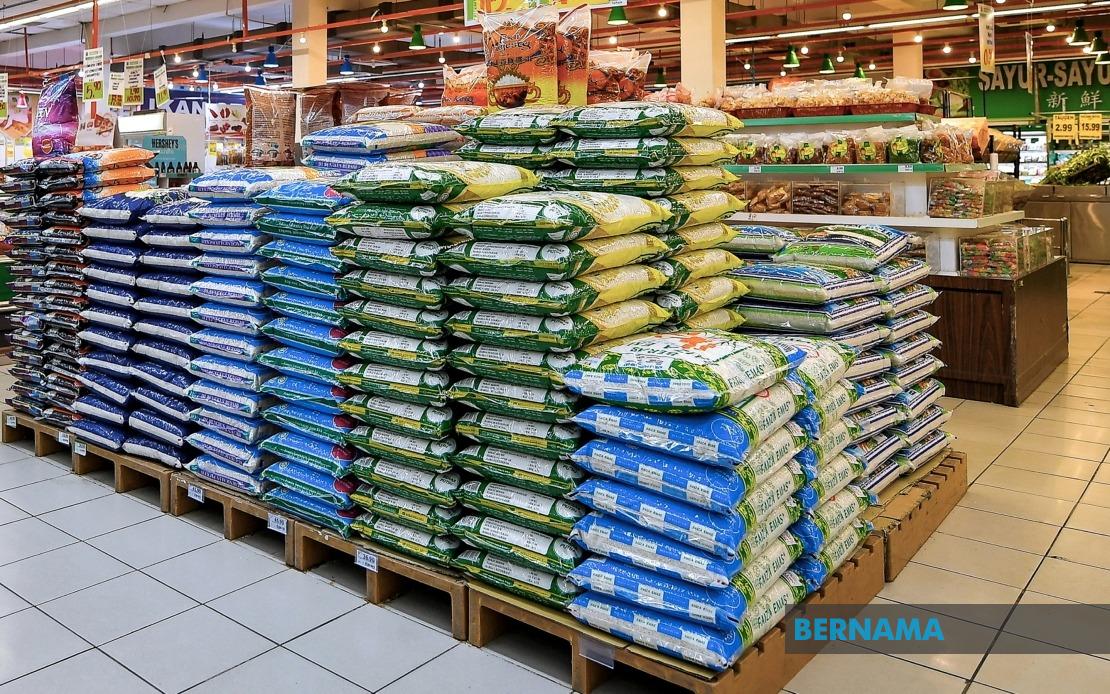
Malaysia's food security position remains resilient despite mounting global supply chain pressures, with government officials confirming that domestic rice stocks are sufficient to meet national demand for the next six months. Economy Minister Akmal Nasrullah Mohd Nasir provided this reassurance during a parliamentary briefing on July 13, emphasising the government's commitment to protecting consumers from price volatility while maintaining agricultural productivity in the face of international economic uncertainty.
The minister's statement reflects ongoing concern about food inflation across Southeast Asia, where rising production costs and climate-related disruptions have forced several neighbouring nations to restrict rice exports or implement price controls. For Malaysia, where rice consumption remains central to household budgets and cultural identity, maintaining an adequate strategic reserve represents a critical policy objective. The six-month buffer stock figure suggests that planners have factored in potential supply interruptions without creating immediate scarcity, though observers note this timeline assumes normal consumption patterns and no major domestic production failures.
Alkmal Nasrullah explicitly committed that the price of Local White Rice (BPT)—the benchmark variety consumed by most Malaysian households—will remain unchanged with no scheduled increases. This pledge carries significant political weight, as rice affordability directly impacts lower-income families and remains a sensitive issue in Malaysian domestic politics. The government's ability to maintain price stability depends partly on the adequacy of these buffer stocks and partly on its willingness to absorb any cost differentials through subsidy mechanisms or controlled procurement agreements with domestic millers.
These food security measures emerged from discussions at a National Economic Action Council (MTEN) meeting chaired by Prime Minister Datuk Seri Anwar Ibrahim at the Parliament building. The council's focus on basic supply protection signals that Malaysia's economic leadership is prioritising household purchasing power and social stability amid the broader post-pandemic adjustment and geopolitical tensions affecting commodity markets. This approach contrasts with some regional neighbours that have allowed greater price movements or implemented more targeted assistance schemes.
Beyond demand-side measures, the government has simultaneously moved to strengthen supply-side resilience by providing direct financial support to paddy farmers. A total of RM45.98 million has been distributed to 118,908 paddy farmers in Peninsular Malaysia through the Paddy Farmers Plowing Incentive scheme. This intervention directly addresses the structural challenges facing Malaysia's agricultural sector, where rising input costs—including fertiliser, fuel, and labour—have squeezed profit margins and discouraged production expansion even as domestic rice demand remains steady.
Climate variability presents an additional pressure on domestic paddy production. Malaysian paddy farmers increasingly face irregular monsoon patterns, flooding in certain regions, and prolonged dry spells in others, creating yield volatility that threatens self-sufficiency targets. By providing plowing incentives, the government aims to maintain farmer participation in the production cycle and prevent abandonment of cultivated land, which could further reduce domestic supply capacity over time. The per-farmer support amount—though modest—represents a concrete acknowledgment of agricultural difficulties and a signal that government policy considers farming economically viable.
Malaysia's rice self-sufficiency rate has historically fluctuated around 70-75 percent, meaning the nation imports roughly 25-30 percent of its consumption from regional sources, primarily Thailand and Vietnam. The emphasis on maintaining buffer stocks and supporting local production reflects strategic thinking about supply chain diversification and reduced dependence on external suppliers whose own export availability may become constrained during global crises. The six-month reserve provides time for alternative sourcing arrangements or domestic production adjustments should regional supply become disrupted.
The timing of these announcements also carries significance for regional food security discussions. Southeast Asia collectively remains a net rice exporter, but individual countries face different supply-demand dynamics. Malaysia's approach—combining import dependence with domestic support and strategic reserves—differs from Philippines strategy, which emphasises rice self-sufficiency, or Singapore's model of price reliance on efficient regional markets. For Malaysian policymakers, the current strategy balances affordability, domestic farm viability, and import flexibility.
Longer-term sustainability of these policies depends on several factors beyond immediate government control. Global rice prices, influenced by major exporter policies in India, Thailand, and Vietnam, will significantly affect Malaysia's import costs if reserves require replenishment. Domestic paddy yields depend on weather patterns, pest management, and farmers' continued willingness to invest in production despite tight margins. Additionally, the RM45.98 million support programme, while helpful, may prove insufficient if production costs continue escalating or if competing land uses become more attractive to smallholder farmers.
For Malaysian consumers and businesses reliant on stable rice prices, the government's commitment provides near-term certainty. Food manufacturers and retailers can plan with confidence in the stable input costs. Households, particularly those spending 15-20 percent of budgets on rice and basic staples, gain protection from immediate price shocks. However, the announcement also suggests that maintaining this stability requires active government intervention through reserves, price controls, and farmer subsidies—a cost ultimately borne by taxpayers and possibly reflected in future fiscal pressures.
The broader context involves Malaysia's ongoing economic navigation between inflation control and growth support. By protecting rice prices while other commodity costs rise, the government effectively implements selective price regulation that benefits vulnerable populations but may create distortions elsewhere in the food system. This balancing act will likely persist as long as global supply uncertainties continue, requiring ongoing coordination between agricultural, economic, and fiscal policy authorities.

