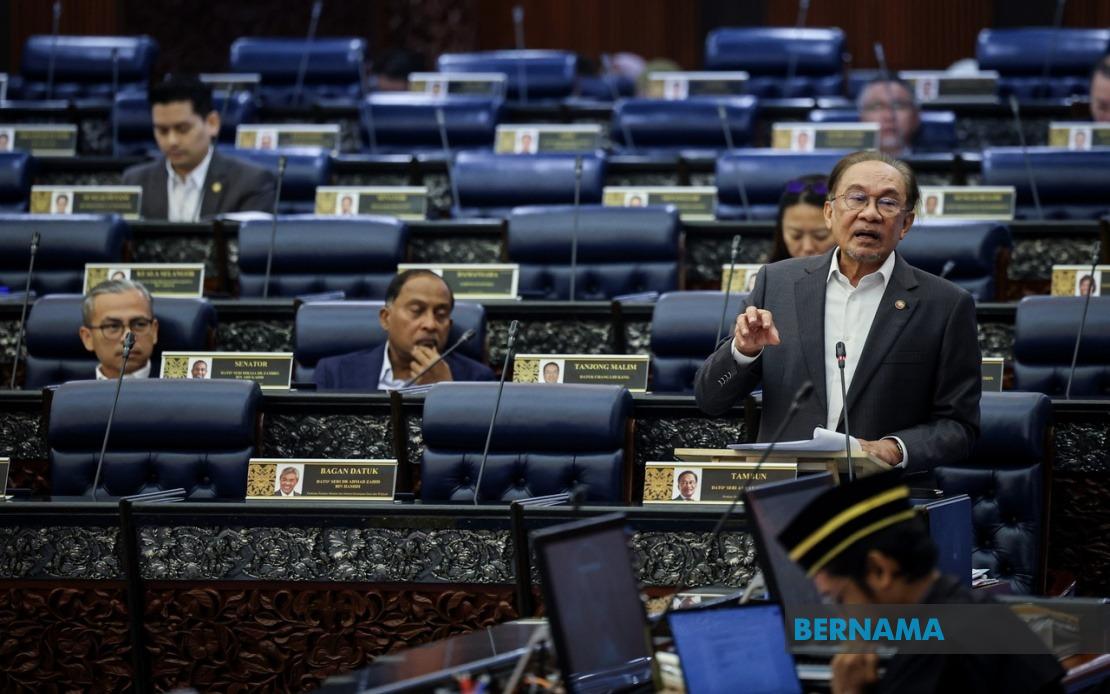
Malaysia's slip from 88th to 95th place in this year's World Press Freedom Index reflects not a crackdown on legitimate journalism or political commentary, but rather the enforcement of established legal boundaries concerning sensitive national matters, Prime Minister Datuk Seri Anwar Ibrahim said in Parliament on July 7. Speaking during ministerial question time in the Dewan Rakyat, the Prime Minister acknowledged that international media watchdogs had interpreted specific enforcement actions as restrictions on press freedom, yet he emphasised the distinction between protecting constitutionally sensitive areas and suppressing democratic discourse.
The government's regulatory interventions, according to Anwar, have centred on three distinct categories of content. The first involves matters touching on religion, race, and the royal institution—collectively known as the 3R issues—which hold particular constitutional significance within Malaysia's federal framework. The second encompasses material that poses potential threats to national security and public order. The third category, though less frequently acted upon in recent cases, includes demonstrably false information that could cause material harm. The Prime Minister stressed that none of these categories are intended to criminalise legitimate political criticism or factual reporting that may prove unflattering to government figures.
Two high-profile cases illustrate the government's approach. Sin Chew Daily faced enforcement action following its publication of an inaccurate illustration of the Jalur Gemilang, Malaysia's national flag. While international observers rapidly characterised this response as press suppression, Anwar noted that the Malaysian government considers the national flag a symbol deserving specific protection under law—a position that reflects the constitutional settlement underpinning Malaysian federalism, even if comparable democracies do not extend equivalent legal safeguards to their own national emblems. Similarly, Sinar Harian encountered regulatory attention over its handling of the Inspector-General of Police's biography. Both cases, though relatively minor in journalistic terms, generated international scrutiny that contributed to Malaysia's deteriorating index ranking, according to the Prime Minister's assessment.
Anwar's remarks underscore a persistent tension between Malaysia's constitutional framework and international press freedom standards. The Malaysian constitution explicitly protects the institution of the monarchy and establishes safeguards against content designed to incite religious or racial discord—protections that reflect the country's plural society and founding constitutional compact. However, international indices such as Reporters Without Borders' World Press Freedom Index evaluate countries against a largely Western-derived standard that privileges minimal state intervention in media affairs. This methodological divergence means that regulatory actions perfectly lawful under Malaysian law—and indeed mandated by the Conference of Rulers, Malaysia's highest constitutional body—necessarily count as demerits in global rankings.
The Prime Minister emphasised that the government had deliberately strengthened protections for political expression through legislative amendment. Modifications to Section 233 of the Communications and Multimedia Act 1998 decriminalised satirical remarks directed at political leaders, including the Prime Minister himself. This reform exemplifies the government's stated intention to distinguish between protecting constitutional sensitivities and permitting vigorous political contestation. The amendment recognises that democracies require space for humour, satire, and sharp criticism of those in power, while maintaining distinct protections for institutions and communities rather than individual politicians.
Anwar further contextualised Malaysia's ranking within the broader methodology employed by Reporters Without Borders, which considers multiple indicators beyond direct government censorship. The assessment framework examines the political environment, the adequacy of legal protections for journalists, economic conditions affecting media sustainability, socio-cultural attitudes toward press freedom, and security threats to journalists and news organisations. Malaysia's relative decline reflects not merely enforcement actions but the cumulative effect of these interconnected factors. Economic pressures on traditional media, the shifting competitive landscape between print and digital outlets, and regional security concerns all influence the overall index calculation.
A significant portion of Malaysia's ranking problem, according to the Prime Minister, originates not from government action but from decisions made by major social media platforms. When Facebook, Twitter, TikTok, and other platforms remove content following user complaints or their own content moderation policies, these removals count against Malaysia's press freedom ranking even though no government entity issued a directive. Anwar himself experienced this dynamic when social media platforms deleted his posts about Hamas—actions the government disagreed with but could not control. This illustrates how international press freedom indices, which predate or inadequately account for the role of private tech platforms in content suppression, may misattribute responsibility for information ecosystem constraints.
The Prime Minister noted that Malaysia's Communications and Multimedia Commission (MCMC) regularly requests content removal from digital platforms, yet platform operators frequently decline these requests, asserting their independent authority to make final decisions. This dynamic complicates any simple narrative of government censorship. While governments worldwide have sought greater authority over platform content moderation, major tech companies remain largely resistant to external pressure when their own policies diverge from state demands. In Malaysia's case, this means that some content the MCMC would prefer removed remains accessible, while other content disappears through purely private decisions. International indices struggle to represent this complexity accurately.
Anwar's framing reflects a broader governmental position that distinguishes between acceptable and unacceptable restrictions on expression. Political criticism, investigative reporting on government wrongdoing, and exposure of official incompetence receive protection even when they embarrass ministers or undermine government narratives. However, content that attacks the monarchy as an institution, deliberately inflames religious tensions, or promotes racial discord faces potential regulatory response. The government argues this represents a proportionate balancing of competing constitutional values rather than political censorship.
For Malaysian media organisations, the practical consequence remains significant. Even if enforcement actions rarely occur, their possibility creates a chilling effect, particularly among editors making real-time decisions about publication. A news organisation considering whether to run a story questioning royal prerogatives or touching on religious sensitivities must weigh the editorial value against regulatory risk. This calculus differs from Western democracies where such stories face primarily market and reputational rather than legal consequences. Whether this represents legitimate constitutional protection or improper press constraint depends substantially on one's baseline assumptions about press freedom and constitutional design.
The Prime Minister's parliamentary response also implies that Malaysia accepts some ranking decline as the necessary cost of maintaining its constitutional settlement. Rather than fundamentally reforming media law to align with international standards, the government has chosen instead to explain and defend its approach. This suggests confidence that Malaysia's legal framework reflects considered constitutional choices rather than arbitrary authoritarianism, though international observers operating from different constitutional premises naturally reach different conclusions. Whether this approach ultimately strengthens or undermines Malaysian democracy will depend partly on whether enforcement genuinely remains limited to constitutionally sensitive categories or gradually expands to encompass routine political criticism.

