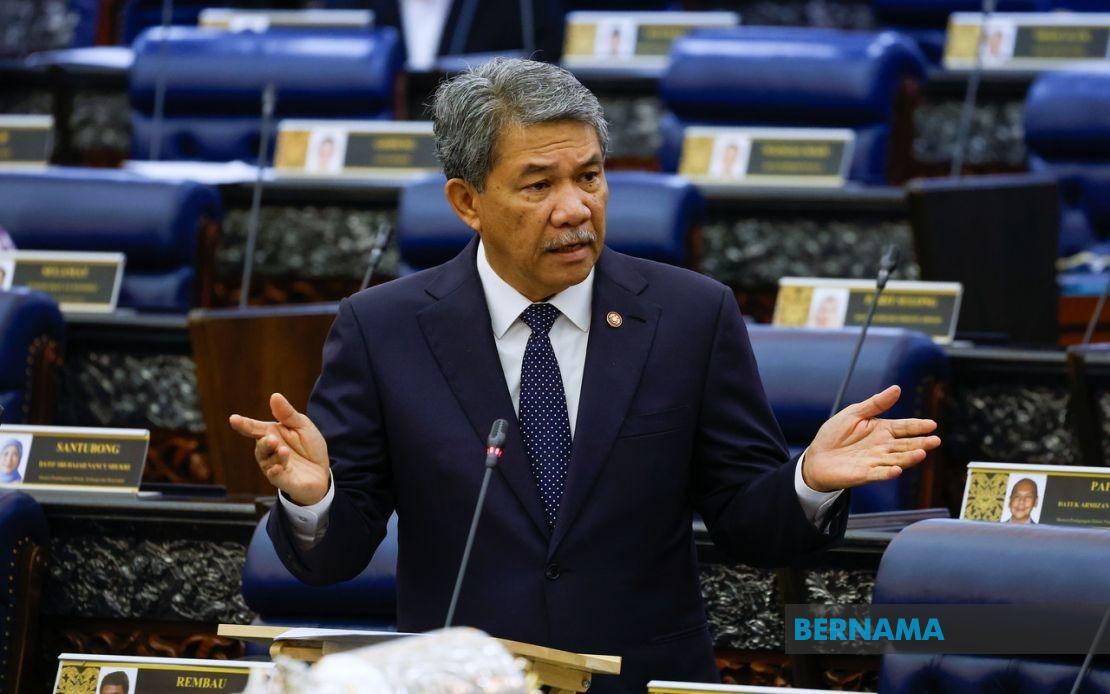
Foreign Minister Datuk Seri Mohamad Hasan has moved to dispel suggestions that Malaysia's diplomatic engagement with Myanmar represents tacit acceptance of the country's military-led administration, reiterating instead that the government maintains its principled stance of non-recognition. Speaking in Parliament on June 25, Mohamad stressed that engagement channels remain vital to ASEAN's unified approach to the ongoing Myanmar crisis, even as member states withhold formal recognition of the post-election government.
The clarification came in response to parliamentary questioning about the Malaysian delegation's visit to Naypyidaw in May, an engagement that had drawn scrutiny from observers concerned about the regional bloc's response to Myanmar's political upheaval. Mohamad explained that the delegation's mission was neither a diplomatic breakthrough nor a shift in Malaysia's position, but rather a continuation of ASEAN's broader strategy to maintain lines of communication with all stakeholders in the country. He emphasized that Malaysia and the wider ASEAN community remain committed to the Five-Point Consensus, the regional framework adopted to guide efforts toward resolving Myanmar's destabilization.
During his meeting with Myanmar Foreign Minister Tin Maung Swe, Mohamad deliberately chose a neutral venue—a hotel rather than the Foreign Ministry—to underscore the informal nature of the engagement. This symbolic choice reflected Malaysia's careful calibration of diplomatic messaging, signaling neither endorsement nor isolation of the junta. The setting also served as a physical manifestation of the conditional and exploratory character of the talks, distinguishing engagement from normalization. Mohamad conveyed to his counterpart Malaysia's expectations for meaningful changes on the ground, outlining the conditions under which Myanmar might reintegrate more fully into the regional community.
A fundamental theme of Mohamad's parliamentary statement centered on the reciprocal nature of ASEAN membership. While Myanmar enjoys the protections and benefits afforded to member states, it simultaneously carries obligations to uphold regional principles and norms. Mohamad made explicit to the Myanmar Foreign Minister that rights and responsibilities must be considered together, signaling that continued isolation could result from the junta's failure to meet its commitments. This framing attempted to balance ASEAN's traditional embrace of non-interference with its evolving standards on governance, democracy, and humanitarian compliance.
The rationale for maintaining open channels with Myanmar reflects broader strategic concerns about regional stability and great power competition. Mohamad warned that prolonged isolation of Myanmar risks creating a geopolitical vacuum that external actors with competing interests might exploit to the detriment of ASEAN cohesion. This argument addresses Malaysia's apprehension that an ostracized Myanmar could drift toward patrons outside the region—a scenario that could undermine ASEAN's centrality in Southeast Asian affairs and fragment the bloc's unified voice on critical issues. The logic suggests that constructive engagement, even without recognition, serves ASEAN's long-term strategic interests better than outright shunning.
The decision to maintain diplomatic channels followed a resolution at the 48th ASEAN Summit, which tasked foreign ministers with continuing informal engagement efforts with Myanmar. This sanctioning from the summit provided multilateral cover for individual member states' bilateral contacts, allowing Malaysia and others to pursue dialogue without appearing to operate outside the established consensus framework. The summit's directive reflected ASEAN's acknowledgment that complete isolation of Myanmar could prove counterproductive, and that quiet, behind-the-scenes pressure might achieve more than public confrontation or ostracism.
Planned follow-up meetings between Malaysia and Myanmar stakeholders, scheduled for early or mid-July, demonstrate the ongoing nature of these engagement efforts. These successive rounds of talks signal Malaysia's commitment to sustained dialogue rather than one-off diplomatic gestures. The involvement of multiple stakeholders—not merely government-to-government interactions—suggests a broader attempt to encourage inclusive dialogue within Myanmar itself, consistent with the Five-Point Consensus's emphasis on conflict de-escalation and political dialogue among all parties. Malaysia's willingness to convene such meetings positions it as an active mediator within ASEAN's framework rather than a mere observer to Myanmar's internal turbulence.
Modhammad's parliamentary remarks also underscored the humanitarian dimension of Malaysia's approach. The government continues to advocate for cessation of hostilities, implementation of ceasefires, inclusive political dialogue, and the delivery of humanitarian assistance to affected populations. These priorities align Malaysia's Myanmar policy with broader international humanitarian norms while maintaining the diplomatic distinction between engagement and recognition. The emphasis on humanitarian access particularly resonates with Malaysia's Muslim-majority population and civil society, which has expressed concern about civilian casualties and displacement in Myanmar.
The timing and tone of Mohamad's clarification reflect domestic sensitivities within Malaysia regarding Myanmar policy. Opposition figures and civil society groups have periodically questioned whether ASEAN engagement with the junta amounts to complicity or abandonment of democratic principles. By explicitly distancing Malaysia's diplomatic contacts from recognition, the Foreign Minister addressed these domestic concerns while maintaining ASEAN's pragmatic middle ground. This balancing act proves increasingly delicate as Myanmar's crisis persists and international pressure on ASEAN grows to adopt a stronger stance against the military administration.
Myalesia's approach to Myanmar illustrates the complex dilemmas confronting the regional bloc as it navigates between conflicting principles: non-interference in member states' internal affairs, pressure for democracy and human rights, the desire to maintain unity, and strategic concerns about external interference. For Malaysia specifically, the stakes extend beyond regional solidarity; as a fellow Muslim-majority nation with ethnic and historical ties to Myanmar, the country faces particular responsibility to advocate for inclusive governance and minority protection. The diplomatic messaging Mohamad articulated attempts to square this circle by remaining engaged while maintaining pressure for substantive change.

