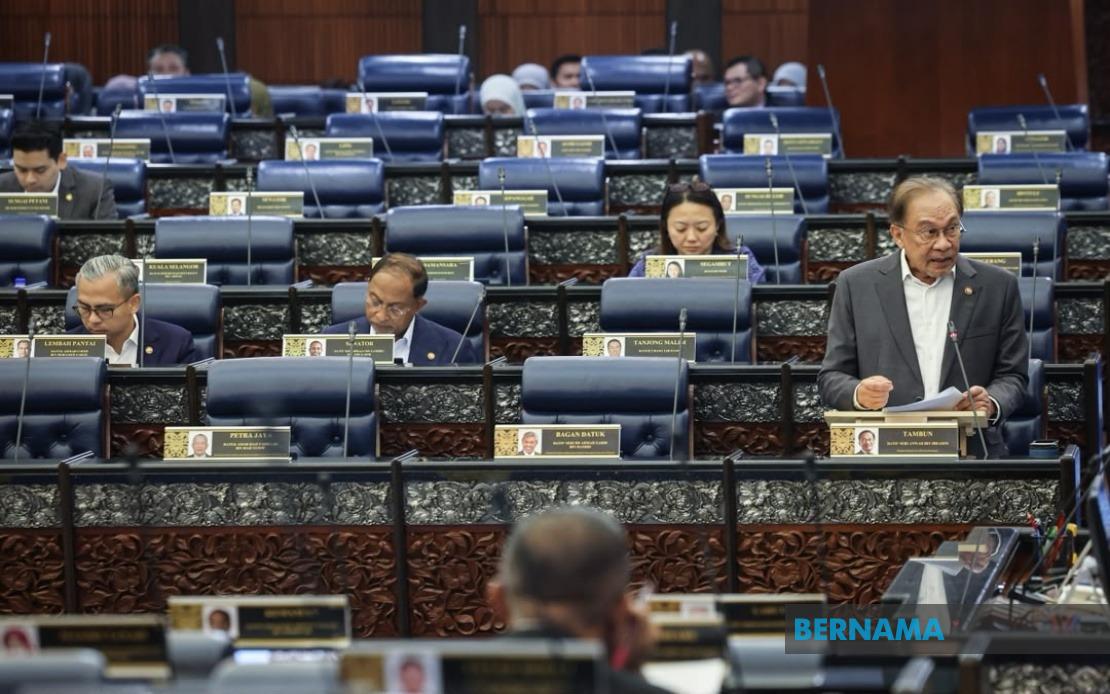
Prime Minister Datuk Seri Anwar Ibrahim has moved to defend Malaysia's fuel pricing structure by pointing to regional comparisons, stating that retail petrol costs remain lower than those in major oil-producing nations. Speaking in the Dewan Rakyat on July 14, he highlighted that the government's BUDI MADANI initiative continues to offer RON95 petrol at RM1.99 per litre, undercutting prices in neighbouring oil-rich economies.
The Prime Minister's remarks came as a response to parliamentary questioning about the trajectory of fuel prices since his administration assumed office, with particular reference to campaign pledges he had made when serving in opposition ranks. Datuk Rosol Wahid, the member for Hulu Terengganu, sought clarification on price differentials across different political administrations, prompting Anwar to deploy comparative regional data to substantiate his government's energy policy.
Anwar's assertion that Malaysian fuel remains cost-competitive carries significance for a nation where transportation fuels represent a substantial portion of household expenditure and where subsidy mechanisms remain politically sensitive. By benchmarking against Saudi Arabia—home to the world's second-largest proven crude reserves and a traditional reference point for regional pricing—the Prime Minister sought to reframe perceptions of Malaysia's energy affordability. He noted that Saudi Arabian petrol now trades above RM2.40 per litre, creating a gap of approximately 41 sen compared to Malaysia's subsidised offering.
The government's positioning reflects an ongoing balancing act between fiscal sustainability and consumer welfare. The BUDI MADANI framework represents a refinement of Malaysia's approach to fuel subsidisation, moving away from blanket support toward targeted mechanisms. This strategy distinguishes between consumers based on vehicle type and usage patterns, aiming to protect lower-income groups whilst moderating the budgetary impact of energy support.
Anwar further extended his comparison to include Qatar and the United Arab Emirates, both substantial petroleum exporters in their own right. The UAE's recent decision to increase fuel prices despite its status as a hydrocarbon-rich state underscored the broader regional trend toward price rationalisation. Such moves by peer economies validate the Malaysian government's approach to gradual adjustment, suggesting that even wealthy oil exporters are reassessing subsidy models in response to global market pressures and fiscal constraints.
The parliamentary exchange reflects broader Malaysian discourse around the sustainability of energy subsidies in an era of volatile global markets and shifting geopolitical dynamics. Opposition voices have periodically challenged the government on whether it has lived up to earlier promises regarding fuel affordability, creating political pressure to demonstrate tangible benefits to consumers. By invoking concrete price comparisons, Anwar attempted to shift the narrative from absolute price levels to relative competitiveness within a regional framework.
For Malaysian consumers and businesses dependent on transport fuels, the distinction between RM1.99 and prices above RM2.40 carries material implications. Small enterprises relying on vehicle-based operations—from delivery services to taxi operators—face cumulative cost pressures that translate into higher operational expenses. The government's maintenance of subsidised pricing thus functions as an indirect subsidy to transport-dependent sectors, even if not explicitly framed as such in policy documentation.
The timing of Anwar's parliamentary defence suggests underlying political concern about public perception of fuel policy. Election cycles and consumer sentiment around energy costs remain closely intertwined in Malaysian politics, with fuel prices frequently featuring in popular discourse about government performance. By placing Malaysia's position within a regional context rather than discussing prices in isolation, the administration sought to reframe criticism as unfounded whilst simultaneously acknowledging that international pressures constrain purely domestic policy choices.
The comparative framework also highlights structural differences in how petroleum-producing nations manage energy wealth. Malaysia, whilst a hydrocarbon exporter, does not possess reserves comparable to Saudi Arabia or Qatar, necessitating different policy calculus around subsidy sustainability. This distinction, however, remained implicit rather than explicit in Anwar's parliamentary remarks, potentially missing an opportunity to educate the public about the constraints imposed by Malaysia's energy endowment relative to Gulf neighbours.
Looking forward, the government's ability to maintain current pricing levels depends on multiple factors including global crude costs, currency movements, and domestic fiscal position. The BUDI MADANI mechanism itself represents an evolutionary step that may portend further adjustments as circumstances warrant. Regional trends suggest that even wealthy oil states are moving toward more market-reflective pricing, creating broader pressure on Malaysia to consider similar trajectories despite legitimate concerns about affordability and competitiveness.

