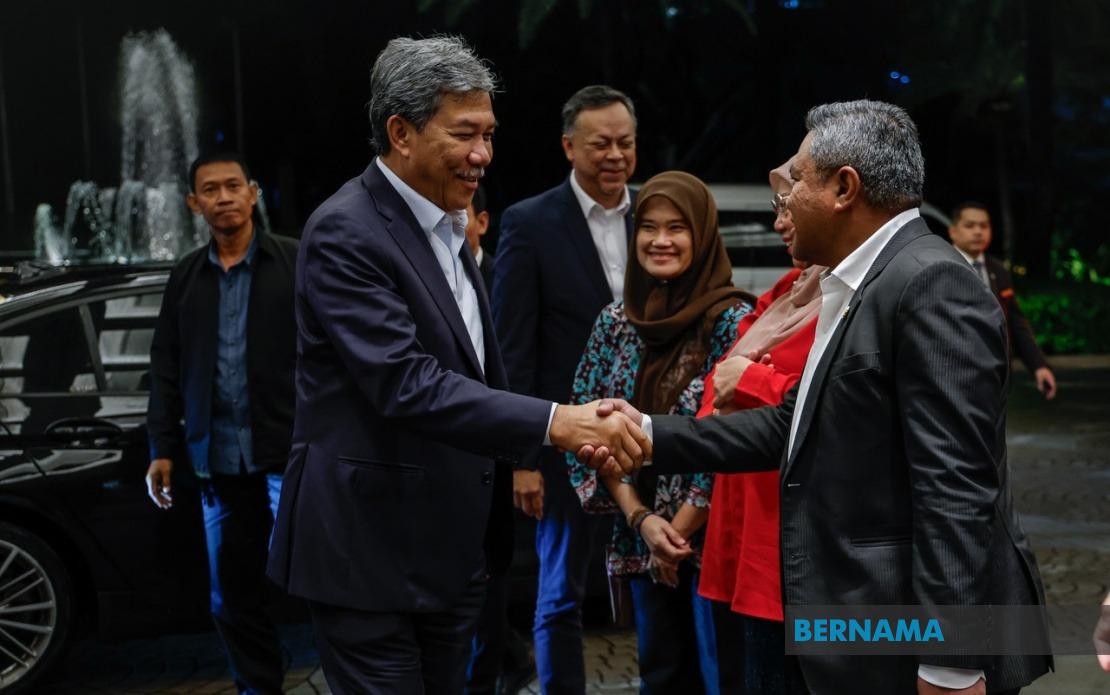
Foreign Minister Datuk Seri Mohamad Hasan touched down in Manila on the evening of August 17, positioning Malaysia to engage in substantive bilateral discussions with the Philippines through the ninth iteration of their highest-level diplomatic mechanism. His arrival at Ninoy Aquino International Airport at 9.40pm set the stage for a ministerial meeting scheduled to commence the following morning at the Department of Foreign Affairs, where the two nations would address contemporary challenges and opportunities facing their partnership.
The Malaysian envoy received a formal welcome from Datuk Abdul Malik Melvin Castelino, Malaysia's Ambassador to the Philippines, with additional support provided by Wisma Putra Deputy Secretary-General (Bilateral Affairs) Datuk Syed Mohamad Hasrin Tengku Hussin and accompanying officials. This ceremonial reception underscored the diplomatic significance assigned to the engagement, reflecting the importance both governments attach to strengthening ties across multiple sectors.
The Joint Commission Meeting represents the paramount institutional framework through which Malaysia and the Philippines coordinate policy, align strategic interests, and operationalize cooperation agreements. By convening at the ministerial level, both countries demonstrate commitment to elevating their relationship beyond routine bureaucratic exchanges. The inclusion of the Senior Officials' Meeting, which commenced prior to Mohamad's arrival, ensures that technical groundwork and preparatory discussions have already crystallized key priorities and negotiating positions.
Trade intensification and cross-border investment facilitation occupy central positions on the bilateral agenda, reflecting the economic interdependencies that characterize the Malaysian-Philippine relationship. Both nations seek to harness their combined market potential, geographic proximity, and complementary economic structures to generate sustained growth. For Malaysian businesses, the Philippines represents a significant market for manufacturing exports, agro-based products, and services, whilst Philippine investors increasingly explore opportunities in Malaysia's financial sector, real estate, and technology industries.
The emphasis on regional economic resilience signals broader Southeast Asian concerns about external economic pressures, supply chain vulnerabilities, and the necessity for intra-ASEAN cooperation to withstand global uncertainties. Malaysia and the Philippines, as substantial regional economies and ASEAN members, recognize that bilateral prosperity depends upon collective regional stability and coordinated responses to transnational economic challenges.
Cooperation in the halal and Islamic finance sectors holds particular relevance for both nations, given their substantial Muslim populations and aspirations to position themselves as regional leaders in Islamic economic frameworks. Malaysia's established halal certification infrastructure and Islamic financial expertise provide a foundation for deeper collaboration, whilst the Philippines seeks to develop these capabilities to serve its own growing Islamic finance sector and broader Muslim communities throughout Southeast Asia.
Energy cooperation assumes critical importance as both nations navigate the transition toward sustainable power generation whilst managing immediate energy security requirements. Malaysia's established petrochemical and liquefied natural gas sectors complement Philippine renewable energy initiatives, creating opportunities for technology transfer, joint ventures, and coordinated regional energy policy. Agricultural and food security partnerships reflect complementary production capabilities and the shared imperative to enhance domestic food sufficiency whilst supporting regional food system resilience.
Defence and security cooperation extends beyond traditional military coordination to encompass maritime security in shared waters, counterterrorism initiatives, and capacity-building programmes. The Sulu-Celebes Sea region, encompassing maritime boundaries claimed by both nations alongside Indonesia, necessitates coordinated approaches to piracy, smuggling, and other transnational security threats that undermine regional stability and commercial interests.
Disaster management and emergency response collaboration gains urgency given the typhoon vulnerability affecting both archipelagic nations. Coordinated early warning systems, evacuation procedures, recovery protocols, and humanitarian assistance mechanisms strengthen both societies' resilience against natural hazards. The recent intensification of extreme weather events across Southeast Asia has elevated disaster preparedness to paramount importance within bilateral defence and security dialogues.
Foreign Minister Mohamad's co-chairmanship of the ministerial session alongside Philippines Foreign Secretary Ma. Theresa P. Lazaro signifies equal partnership and mutual respect between the two governments. The anticipated signature of Agreed Minutes at the meeting's conclusion will formalize commitments, establish working groups, and delineate timelines for implementation of agreed initiatives, providing mechanisms for accountability and progress tracking.
The ninth Joint Commission Meeting reflects evolving dynamics within ASEAN, where mid-sized economies increasingly assert independent foreign policy positions whilst maintaining institutional commitments. Malaysia and the Philippines navigate complex relationships with major powers, manage internal development priorities, and pursue distinctive diplomatic interests whilst recognizing the value of Southeast Asian cooperation and solidarity.
For Malaysia specifically, strengthening the Philippine partnership supports broader regional strategy whilst addressing particular concerns regarding maritime boundaries, labour migration patterns, and cross-border development initiatives. The comprehensive agenda demonstrates sophisticated understanding that bilateral relationships encompass security, economics, cultural exchange, and humanitarian concerns requiring coordinated governance across multiple ministries and agencies.
The successful conclusion of these talks will generate momentum for subsequent technical meetings, sectoral dialogues, and implementation mechanisms. Both nations have demonstrated willingness to translate rhetorical commitments into tangible cooperation frameworks, suggesting that the ninth JCM iteration may yield substantive progress on long-standing priorities whilst establishing foundations for emerging cooperation areas reflecting contemporary regional and global realities.

