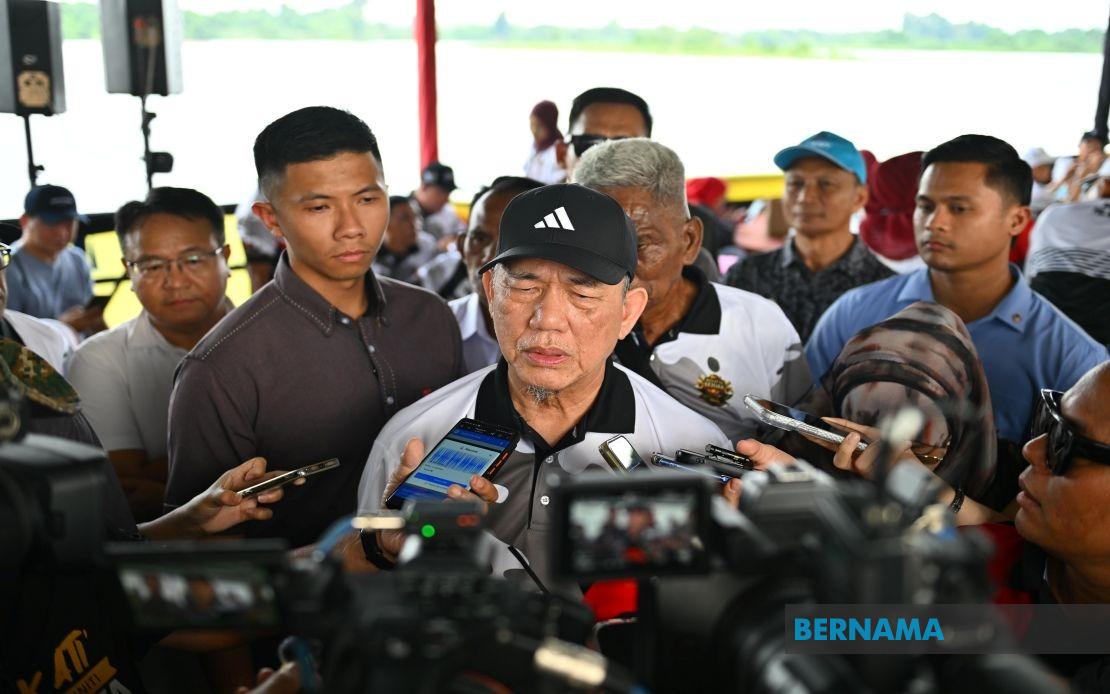
Deputy Prime Minister Datuk Seri Fadillah Yusof has assured the nation that Malaysia's energy sector faces no immediate supply disruptions, even as heightened geopolitical tensions in the Strait of Hormuz persist. Speaking after the closing ceremony of Regatta 2026 at the main jetty in Kampung Sejijak, Kuching, Fadillah stressed that the government maintains a vigilant stance on developments affecting one of the world's most strategically vital waterways. The assurance comes as regional security concerns continue to reverberate across global energy markets, raising questions about Malaysia's vulnerability to supply shocks given its significant dependence on international petroleum flows.
The Deputy Prime Minister's remarks reflect efforts by Petronas and Prime Minister Datuk Seri Anwar Ibrahim to navigate an increasingly complex geopolitical landscape through proactive diplomacy. Rather than relying solely on market mechanisms, the government has engaged in negotiations operating across multiple administrative and diplomatic channels to bolster national energy resilience. This multifaceted approach acknowledges that Malaysia's energy security extends beyond merely securing contractual arrangements; it requires maintaining robust relationships with trading partners, strategic suppliers, and regional stakeholders who influence the flow of hydrocarbons through critical chokepoints such as the Strait of Hormuz.
The Strait of Hormuz represents one of the world's most critical energy arteries, through which approximately one-third of global seaborne traded oil transits daily. Any prolonged disruption to shipping through these waters could send shockwaves through international markets and directly impact Malaysia's import-dependent economy. While Fadillah's statement provided reassurance that present conditions have not triggered supply shortages, the implicit message underscores the necessity of maintaining heightened vigilance. The government's acknowledgment of the situation suggests a sophisticated understanding that Malaysia's current insulation from supply disruptions represents a temporary state contingent upon continued stability in the region.
However, Fadillah articulated a crucial distinction between supply security and price stability, two separate but interconnected dimensions of energy policy. Despite firm guarantees regarding the physical availability of fuel, the minister warned that global oil and gas price volatility continues to pose a substantial economic challenge. This volatility stems not only from geopolitical risks but also from structural shifts in global energy markets, including the transition toward renewable sources and fluctuations in production decisions by major hydrocarbon-exporting nations. For Malaysia, which remains substantially exposed to commodity price movements, these price pressures translate into real fiscal constraints and inflationary pressures.
The Energy Transition and Water Transformation Minister's candid acknowledgment of pricing challenges reflects a broader tension confronting Southeast Asian economies dependent on energy imports. While national policymakers have grown more adept at ensuring physical supply continuity through strategic reserves and diversified sourcing arrangements, controlling international price movements remains largely beyond their reach. Malaysia faces a dilemma that many developing nations confront: maintaining government support for citizens through subsidies and assistance programmes while simultaneously ensuring sustainable public finances. This balancing act becomes particularly acute when global commodity prices spike unexpectedly, straining budgetary allocations and forcing difficult policy trade-offs.
The government's continued commitment to subsidy and assistance programmes despite fiscal pressures reflects political recognition of the social costs associated with rapid energy price increases. For ordinary Malaysians, energy costs represent a substantial proportion of household expenditures, particularly among lower-income groups who lack alternatives such as private transportation or access to air-conditioned personal spaces. Subsidies function as a mechanism for spreading the burden of international price fluctuations across the broader public treasury rather than imposing them entirely on vulnerable populations. Nonetheless, this approach carries its own economic inefficiencies and budgetary consequences, creating a complex policy landscape that policymakers must navigate.
Fadillah's framing of the dual challenge—maintaining supply security while managing price volatility—demonstrates governmental awareness of Malaysia's structural vulnerabilities in the global energy system. Unlike energy-exporting nations such as Saudi Arabia or the United Arab Emirates that can leverage commodity revenues to subsidise domestic consumption, Malaysia must fund energy support programmes through general taxation and economic growth. This fundamental asymmetry shapes policy responses and constrains the range of feasible options available to policymakers seeking to balance economic sustainability with social protection.
The strategic importance of Petronas and its multilevel engagement efforts cannot be overstated. As a state-owned enterprise deeply embedded in global hydrocarbon markets, Petronas possesses the institutional capacity, technical expertise, and relationship networks necessary to navigate complex international negotiations. The pairing of Petronas's commercial acumen with the Prime Minister's political authority enables Malaysia to pursue energy interests through both market-based channels and high-level diplomatic interventions. This combined approach provides Malaysia with multiple levers to influence its energy destiny, even within constraints imposed by global market dynamics.
The regional context amplifies the significance of Malaysia's energy security posture. Southeast Asia contains several major energy consumers competing for supplies amid uncertain future availability and volatile prices. As the region undergoes rapid industrialisation and urbanisation, energy demand continues rising, intensifying competition for access to finite resources. Malaysia's proactive stance in securing energy supplies through diplomatic channels sets an example for other regional nations while simultaneously positioning Malaysia as a reliable partner in regional energy cooperation arrangements. Enhanced regional coordination could potentially improve collective resilience to external shocks and reduce individual nations' vulnerability to supply disruptions.
Looking forward, Fadillah's remarks suggest that the government recognises energy security as an evolving challenge requiring continuous adaptation and strategic foresight. The reference to energy transition policy, embedded within the minister's portfolio title, hints at recognition that long-term energy security depends partly on reducing dependence on imported fossil fuels through renewable energy development and improved efficiency. While such transitions unfold over decades rather than years, strategic investments made today will shape Malaysia's energy vulnerability profile tomorrow. Current assurances about supply adequacy should not obscure the urgency of pursuing structural transformations in energy systems that reduce dependence on volatile global markets.
The Deputy Prime Minister's statement ultimately conveys confidence tempered by realism about persistent challenges. Malaysia currently enjoys adequate energy supplies thanks to existing contracts, strategic reserves, and active government engagement, yet this favourable position remains contingent upon maintaining geopolitical stability and managing economic consequences of international price movements. For Malaysian businesses and consumers, this translates into a period of relative certainty regarding fuel availability, though price pressures will likely continue affecting production costs and living expenses. The government's commitment to monitoring developments and engaging in negotiations provides a foundation for navigating the uncertain energy landscape that stretches ahead.

