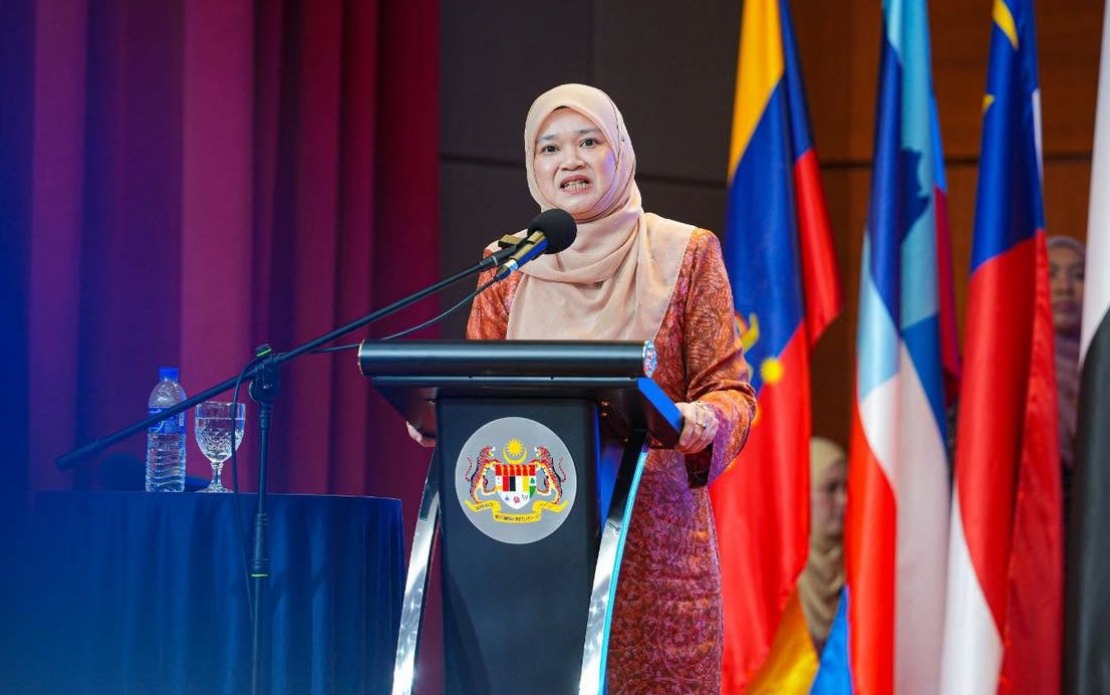
The Malaysian Education Ministry is examining mechanisms to formally recognise the sporting and co-curricular achievements of students studying within prison institutions, potentially opening pathways for university admission that have traditionally remained closed to this demographic. Education Minister Fadhlina Sidek announced the initiative while attending the closing ceremony of the 17th Hijrah Kasih Programme in Kajang, a collaborative effort between the ministry and the Malaysian Prison Department designed to strengthen educational outcomes for incarcerated learners.
The core objective driving this policy reconsideration stems from recognising that educational opportunity should not terminate once students complete their Sijil Pelajaran Malaysia qualification while in prison institutions. By enabling students to accumulate merit through verified participation in sports, cultural pursuits, and other structured activities, the ministry aims to position these individuals competitively when applying to tertiary institutions. Fadhlina stressed that this represents an essential step toward ensuring that circumstance of incarceration does not become a permanent barrier to educational advancement and social reintegration.
Complementing the co-curricular recognition framework, the ministry is simultaneously engaging the Technical and Vocational Education and Training division to establish formal skills certification pathways. Many incarcerated students acquire practical competencies during their detention period, including sewing, food preparation, and other trades that carry genuine market value. The ministry recognises that translating these informal skills into recognised credentials would significantly enhance employment prospects and economic self-sufficiency upon release, creating concrete incentives for continued skill development whilst institutionalised.
The announcement gains particular significance against the backdrop of recent educational performance data from prison schools. Over two consecutive years, students at these institutions achieved a 100 per cent pass rate in SPM examinations, a metric that challenges persistent stereotypes about the academic capacity of incarcerated youth. Fadhlina emphasised that academic success in this context reflects not privilege or advantageous circumstances, but rather individual determination and resilience in environments typically associated with educational disadvantage. This accomplishment demonstrates that environmental constraints do not automatically predetermine educational outcomes when institutional support systems function effectively.
Implementing the Physical, Sports and Co-curricular Assessment framework specifically for prison school populations represents a tangible mechanism through which these achievements translate into measurable advantage. Deputy director-general of Education Datuk Zainal Abas indicated that PAJSK score recognition is targeted for implementation this year, with full integration into university admission criteria planned for SPM candidates from 2027 onwards. Under this proposed system, eligible candidates would receive a 10 per cent merit bonus when submitting higher education applications, a meaningful advantage that could determine admission eligibility across multiple institutions.
The timing and scope of this initiative reflect broader recognition within Malaysia's education establishment that current systems inadvertently perpetuate disadvantage for populations already facing social reintegration challenges. By formalising recognition of achievements that occur within prison contexts, the ministry signals institutional commitment to supporting rehabilitation and social reintegration objectives that extend beyond basic literacy and numeracy attainment. For many students, the confidence gained through sporting achievement or artistic development whilst incarcerated may prove as transformative as academic credentials when reconstructing life trajectories post-release.
Digital accessibility represents another critical dimension of the ministry's enhancement strategy. The proposed extension of the DELIMa platform to prison institutions would connect incarcerated learners to the same educational resources available to their non-institutionalised peers, reducing informational asymmetry and supporting curriculum alignment with developments occurring outside institutional walls. However, the ministry's emphasis on "controlled access" reflects legitimate security considerations that prison environments necessitate, requiring careful calibration between educational opportunity expansion and institutional safety protocols.
For teachers deployed within Henry Gurney schools and designated integrity schools nationwide, platform access would enable curriculum innovation and remote collaboration with educators in conventional settings. This connectivity addresses a persistent challenge in prison education systems: the difficulty of recruiting and retaining highly qualified educators willing to work in restrictive environments. Enhanced access to digital resources and professional networks could improve job satisfaction whilst simultaneously elevating pedagogical quality through exposure to contemporary teaching methodologies and subject matter expertise.
The ministerial focus on parental engagement underscores recognition that family relationships fundamentally influence rehabilitation outcomes and educational persistence. Fadhlina's emphasis on parents maintaining active involvement during students' institutional periods acknowledges that psychological support systems extend educational intervention beyond classroom instruction. For families navigating the trauma of a member's incarceration, institutional barriers often compound emotional distance; the ministry's framing of parental engagement as educationally consequential seeks to reframe family involvement as rehabilitative infrastructure rather than peripheral concern.
From a regional perspective, Malaysia's institutional approach to prison education contrasts with approaches adopted across Southeast Asia, where prison populations typically experience severe educational deprivation. By implementing systematic recognition frameworks that translate prison-based achievements into portable credentials with genuine tertiary institution currency, Malaysia potentially establishes a replicable model addressing the educational exclusion that characterises correctional systems across the broader region. The policy innovation may generate learning opportunities for other jurisdictions grappling with similar rehabilitation and reintegration imperatives.
The practical implementation challenge now rests with ensuring that formal recognition mechanisms translate into actual university admission advantages. Without explicit institutional guidance to tertiary institutions regarding PAJSK score interpretation and integration into selection algorithms, the stated 10 per cent merit allocation risks remaining theoretical rather than operationalised. Transparent communication with university admissions offices regarding the modified evaluation framework will prove essential to converting policy intention into tangible access expansion.
Longer-term success will additionally depend on sustained institutional commitment beyond the initial rollout phase. Prison education systems historically experience resource volatility and shifting administrative priorities; embedding co-curricular merit recognition as a permanent institutional feature rather than a discrete initiative will require embedding the framework within standardised assessment protocols and funding structures. The ministry's specification of 2027 as the implementation timeline for expanded candidate cohorts suggests sufficient lead time for systematisation, though rigorous monitoring of implementation fidelity will remain necessary to ensure equitable application across all prison institutions.

