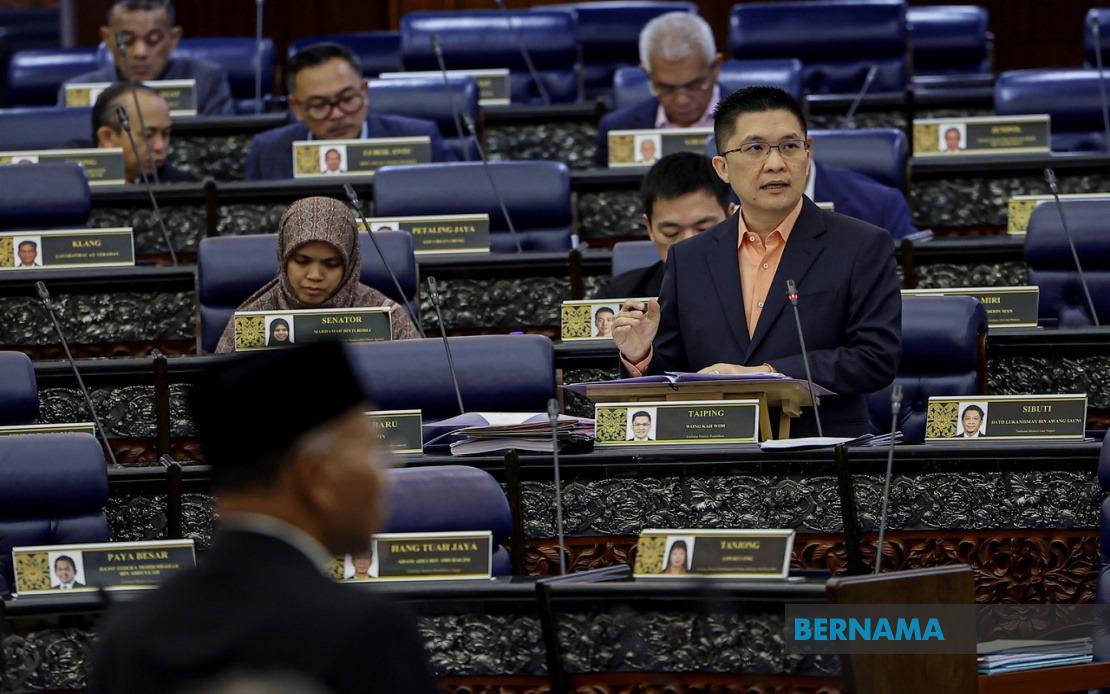
The Ministry of Education in Malaysia is undertaking an ambitious infrastructure and staffing expansion to accommodate a landmark change in the primary school system. Beginning in 2027, Malaysia will transition to enrolling both six-year-old and seven-year-old children in Year One simultaneously, a shift that Deputy Education Minister Wong Kah Woh confirmed will require substantial investment in physical facilities and human resources. The ministry's response has been to greenlight construction of 2,596 new classrooms across 838 schools and commit to recruiting 3,150 contract teachers to manage the surge in student numbers.
The scale of demand is substantial. Registration figures reveal that 73,386 applications have been received from parents of six-year-old children eligible for the 2027 intake, while applications from seven-year-old children reach 405,033. Combined, this yields 478,419 registrations—a 12.07 percent increase on the 2026 Year One enrolment figures, which involved only the seven-year-old cohort. These numbers underscore both the confidence Malaysian families have in state education and the operational pressure the system will face without adequate preparation.
The construction timeline appears tight but achievable. The ministry has selected the Industrialised Building System, or IBS, which employs modular construction methods to accelerate classroom completion. This approach allows for faster assembly of classroom units compared to traditional on-site building, potentially reducing disruption to existing school operations. Wong stated that these projects are expected to conclude by the end of this year, allowing schools several months to prepare infrastructure before the 2027 intake begins. The geographical spread across 838 schools suggests the expansion is designed to distribute new capacity regionally rather than concentrate it in urban centres.
Parental choice emerges as a key policy feature in the transition framework. Rather than imposing a strict age cutoff, the MOE has decided to allow parents discretion in determining whether their six-year-old child is developmentally ready for Year One or should delay entry to align with the seven-year-old cohort. This flexibility reflects broader educational thinking about readiness and individual variation, though it also creates planning complexity as the exact distribution between cohorts remains fluid until parents exercise their preferences. The approach appears designed to mitigate concerns that six-year-olds might struggle academically or emotionally in a classroom environment previously reserved for older peers.
Expanding pre-school access forms a critical complement to the Year One changes. The ministry has substantially increased pre-school class additions to 350 in the current year, compared with an historical average of roughly 150 annually. This acceleration is particularly significant for lower-income families without access to private kindergartens, addressing what has long been an equity gap in early childhood education. By boosting pre-school availability, the MOE aims to ensure that children entering Year One—whether at age six or seven—have benefited from structured early learning experiences that prepare them for formal schooling demands.
The private kindergarten sector faces uncertain terrain as a result of these changes. By introducing a six-year-old cohort into the state system, the policy effectively creates a one-year gap where fewer children are progressing from five-year-old kindergarten classes into Year One. This structural shift threatens the business model of private kindergartens, which have traditionally prepared children for primary school entry. Wong acknowledged that the ministry is actively reviewing the sector's sustainability concerns and has maintained engagement sessions with stakeholders. These discussions likely involve exploring whether subsidies, regulatory adjustments, or alternative roles might preserve private kindergarten viability during the transition period.
Teacher supply has been identified as the critical constraint. Beyond the 3,150 contract teachers the ministry intends to recruit, officials plan to also draw upon reserve candidates from the Education Service Commission, or SPP, to fill gaps as they emerge. This dual-sourcing approach suggests confidence in availability but also reflects the tight labour market for educators. Wong indicated that the ministry is simultaneously strengthening professional training programmes to ensure teachers assigned to six-year-old classes are equipped with age-appropriate pedagogical methods. The five-year projection system for teacher requirements at national and state levels suggests the MOE is taking a medium-term view of staffing sustainability beyond the immediate 2027 transition.
Curriculum adaptation represents another substantial undertaking running parallel to infrastructure expansion. The 2027 school curriculum, to be implemented alongside the dual cohort intake, has been designed with age-appropriate developmental benchmarks in mind. Rather than simply teaching a standard Year One syllabus to mixed-age classrooms, the ministry appears to be tailoring content expectations to reflect the cognitive and social-emotional capacities of six-year-olds versus seven-year-olds. This pedagogical calibration is essential to prevent six-year-olds from feeling overwhelmed or seven-year-olds from being understimulated.
Transition support programmes form a safety net for the broader policy. The MOE intends to deploy structured Year One transition initiatives that will help children from diverse early education backgrounds—ranging from formal pre-school through private kindergartens to home-based upbringing—adjust to formal schooling. These programmes typically include orientation activities, gradual introduction to classroom routines, and diagnostic assessment of foundational skills, allowing teachers to provide targeted support where children exhibit developmental gaps. Given the heterogeneous backgrounds of nearly 480,000 incoming students, such support mechanisms become essential to equitable learning outcomes.
Regionally, the implications for Southeast Asia merit attention. Malaysia's decision to lower the primary school entry age to six reflects global trends toward earlier formal education, though the simultaneous dual-cohort approach is less common. Other ASEAN nations with varying school entry ages—such as Thailand and Indonesia—may observe how Malaysia manages this transition and whether it yields measurable benefits in learning outcomes and equity. The MOE's emphasis on maintaining parental choice and supporting lower-income access through expanded pre-school provision positions the policy as relatively progressive by regional standards.
The financial commitment underlying these preparations, while substantial, remains secondary in the ministry's public narrative. The costs of constructing 2,596 classrooms, training thousands of teachers, and expanding pre-school provision are clearly significant, yet Wong's parliamentary remarks focused on operational readiness rather than budgetary detail. This framing may reflect either confidence in appropriated funding or deliberate avoidance of potential political scrutiny over expenditure. For Malaysian taxpayers and budget watchers, transparency about the total cost and funding sources would strengthen public understanding of the investment.
Longer-term success will depend on implementation consistency and teacher quality maintenance. The 2027 transition represents a watershed moment for Malaysia's education system—the numbers are manageable, the planning appears comprehensive, and the policy logic of gradual introduction to formal schooling is sound. However, quality outcomes hinge on whether newly recruited contract teachers receive adequate training, whether curriculum materials are genuinely tailored to developmental stages, and whether transition support is adequately resourced across all schools. The ministry's multi-year projection approach and emphasis on professional development suggest institutional awareness of these dependencies, though sustained political commitment through inevitable implementation challenges will be the true test.

