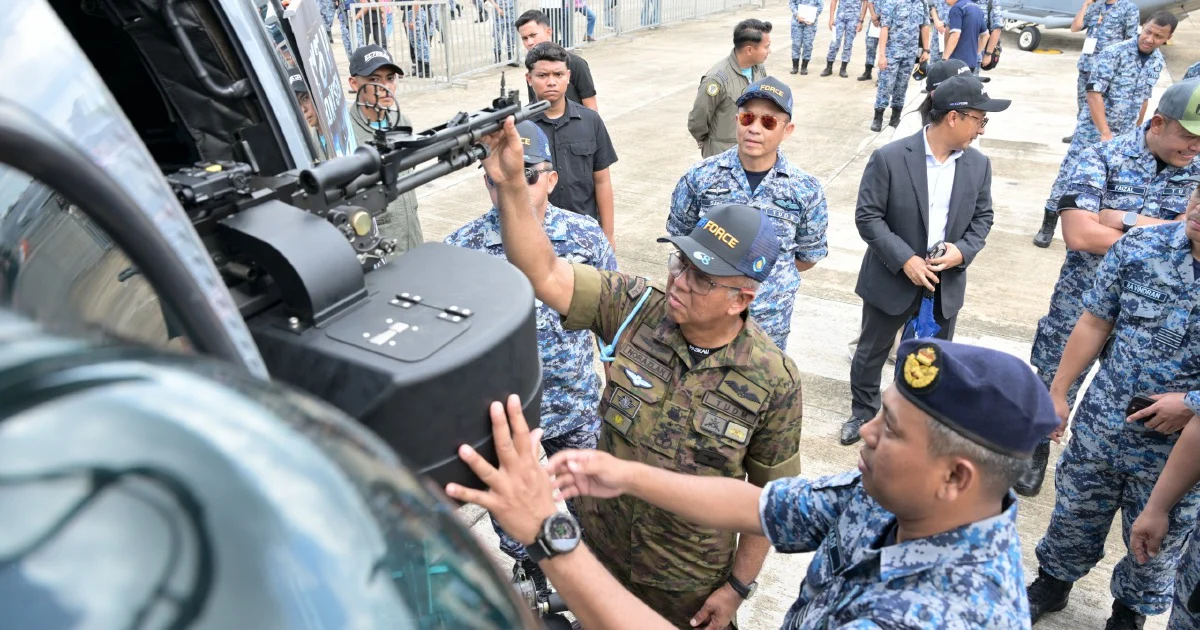
Malaysia's combat search and rescue capabilities have taken a significant leap forward with the Royal Malaysian Air Force's decision to arm its EC725 helicopter fleet with enhanced weaponry systems. The upgrade represents a substantial shift in how the air force approaches high-risk rescue operations, where ground threats and adversarial environments demand greater self-defence and suppressive firepower. This development underscores the service branch's recognition that modern rescue operations increasingly require the ability to engage threats rather than simply evade them.
The EC725 has long served as a workhorse in the RMAF inventory, prized for its range, payload capacity, and reliability across the demanding tropical conditions of Southeast Asia. However, the original platform was designed primarily for transport and utility roles, with rescue missions treated as secondary capabilities. The addition of offensive armament represents the military's acknowledgement that personnel recovery operations in contested zones demand a more comprehensive tactical envelope. This evolution reflects broader global trends in special operations and rescue doctrine, where dedicated combat search and rescue units now operate as fully armed formations rather than lightly-equipped support assets.
Operational necessity has driven this upgrade decision. Rescue teams deployed into areas controlled by hostile forces or within contested airspace face mounting risks that cannot be mitigated through speed or altitude alone. The ability to suppress enemy fire, suppress communications, and provide sustained suppressive fire while extracting personnel fundamentally changes the tactical calculus. A well-armed EC725 can now cover its own approach and withdrawal, reduce exposure time for boarding parties on the ground, and maintain fire superiority throughout extraction sequences. This capability proves especially valuable in maritime operations and complex terrain where ground-based support may be distant or unavailable.
The timing of the upgrade reflects current regional security dynamics. Southeast Asia faces an increasingly complex threat environment encompassing maritime security challenges, transnational armed groups, and the ever-present risk of major power conflict. Malaysia's geographic position along critical sea lanes and the nation's experience managing internal security threats have created institutional understanding of how rescue operations must be structured. The RMAF has studied international special operations forces and learned that armed transport platforms significantly improve personnel recovery success rates while reducing friendly casualties during extraction phases.
Integrating weapons systems into the EC725 required careful engineering work. The helicopter's structure, weight distribution, and rotor systems all needed consideration before mounting additional armament. The upgrade likely involved modifications to the fuselage, integration of fire control systems, and comprehensive testing to ensure that weapon loads do not adversely affect flight characteristics or the helicopter's primary rescue capabilities. This kind of system integration work demands expertise that the RMAF may have developed internally or sourced from the original manufacturer and specialized defense contractors with experience in helicopter weapons integration.
The practical implications extend beyond the physical act of adding guns to an aircraft. Personnel training requirements multiply substantially. Pilots and flight engineers must master new weapons employment procedures while maintaining proficiency in their core rescue mission. Maintenance teams require instruction on unfamiliar systems, ammunition handling, and safety protocols for armed flight operations. Mission planners must develop new tactics for integrating armed EC725s into broader rescue operations, considering rules of engagement, escalation procedures, and coordination with other military assets. These non-material elements often determine whether a technology upgrade translates into genuine operational improvement.
For Malaysia's military establishment, the upgrade carries strategic significance beyond immediate tactical benefits. It signals serious investment in one of the air force's most demanding missions and demonstrates commitment to personnel recovery as a valued capability. This commitment resonates throughout the service culture, affirming that maintaining the force means more than managing platforms—it requires ensuring that no serviceperson is abandoned in hostile territory. Such institutional commitments strengthen unit cohesion and operational resilience, particularly within special operations and rescue communities.
Regional implications deserve consideration as well. The RMAF's armed EC725s add combat capability within a region where multiple air forces operate and where the potential for humanitarian crises or military confrontations remains present. Malaysia's neighbors, including Thailand and the Philippines, have engaged in similar upgrades to their own transport and utility helicopters, suggesting a broader regional trend toward better-armed support aircraft. This evolution reflects the sobering reality that modern security challenges require flexibility, and even platform types traditionally classified as support assets must now deliver combat effects when operational necessity demands.
The upgrade also addresses lessons from allied operations over the past two decades. The United States, United Kingdom, and other nations with extensive combat search and rescue experience have consistently demonstrated that armed rescue platforms achieve higher success rates and lower personnel loss. These lessons, absorbed through allied professional relationships and shared intelligence, have shaped how modern air forces conceptualize rescue operations. Malaysia's implementation represents practical application of hard-won international expertise adapted to regional requirements.
Looking forward, the armed EC725 capability creates opportunities for expanded operational concepts. The air force might now pursue missions previously considered too high-risk, conduct deeper penetration rescues, or support special operations forces with integral fire support. Interoperability with other RMAF assets like fighter aircraft and attack helicopters gains complexity but also potential operational synergy. The EC725 becomes a more versatile asset, capable of transitioning between traditional rescue roles and armed support missions with relative ease.
The firepower upgrade ultimately reflects mature military thinking about force employment in contemporary operating environments. Modern air operations demand flexibility, and the ability to rapidly shift a platform's role while maintaining its core competencies provides significant operational advantage. By enhancing the EC725's combat capabilities while preserving its rescue functions, the RMAF has created a more capable, versatile, and survivable fleet—one better suited to meeting the complex challenges of twenty-first century security operations across Malaysia and potentially throughout the region.

