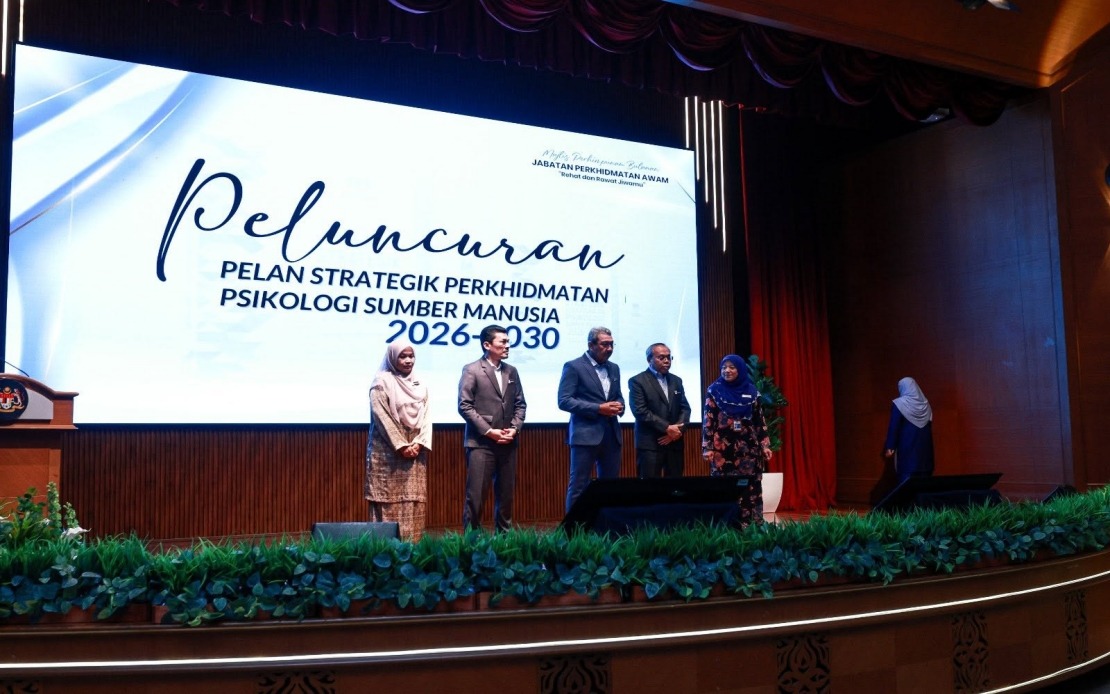
Malaysia's Public Service Department has rolled out an ambitious five-year strategy aimed at transforming how the nation's civil service addresses mental health and psychological well-being among its workforce. Unveiled at the PSD Monthly Assembly in Putrajaya on June 19, the Human Resources Psychology Services Strategic Plan 2026-2030 represents a significant institutional commitment to destigmatizing mental health support across government agencies. The framework encompasses 12 distinct strategies, 22 comprehensive programmes, and 48 key performance indicators designed to systematically measure progress and ensure accountability in implementing the initiative.
The launch ceremony, presided over by Public Service Director-General Tan Sri Wan Ahmad Dahlan Abdul Aziz, carried a thematic emphasis on rest and self-care, encapsulated in the concept "R&R (Rest and Treat) Your Soul." This messaging strategy reflects a deliberate attempt to reframe mental health engagement not as a weakness or failure, but as an essential component of professional responsibility and organizational health. The choice of terminology and framing demonstrates recognition that traditional approaches to employee wellness have often failed because they remain disconnected from cultural attitudes toward psychological vulnerability in the workplace.
Central to the initiative is the promotion of a "Treat" philosophy that fundamentally shifts responsibility toward civil servants themselves. Rather than positioning mental health support as something provided only during crises, the strategy encourages proactive self-advocacy and early intervention. Tan Sri Wan Ahmad Dahlan's messaging emphasized that civil servants must develop the courage to dismantle deeply ingrained social stigma surrounding psychological services, openly communicate struggles, and seek professional assistance without shame or fear of career consequences. This approach recognizes that institutional change alone is insufficient; genuine transformation requires individuals to alter their behavior and attitudes toward help-seeking.
The underlying principle guiding this strategy—that organizational well-being fundamentally depends on individual well-being—addresses a critical gap in Malaysia's public sector management. Historically, the civil service has operated under hierarchical frameworks that prioritize institutional productivity over employee mental health, often creating cultures where admitting psychological distress is perceived as unprofessional or career-limiting. The new strategic plan directly counters this dynamic by explicitly linking individual wellness to organizational effectiveness. This represents a paradigm shift from viewing mental health as a personal problem to recognizing it as a legitimate organizational concern.
The initiative also integrates with existing civil service reform initiatives, particularly the H.E.M.A.T work culture framework. This acronym encompasses governance transformation, public empathy, progressive mindset, innovation appreciation, and transparent administration. By positioning mental health strategy within this broader reform agenda, the PSD signals that psychological well-being is not an ancillary concern but a foundational element of modernizing Malaysia's public institutions. The connection demonstrates strategic coherence—transparent administration, for instance, requires psychologically healthy employees capable of making ethical decisions; public empathy cannot flourish in organizations where staff are themselves experiencing untreated distress.
The "Rawat" concept, which translates roughly to care or treatment in Malay, represents the Malay-language articulation of the intervention framework. This linguistic dimension carries particular significance for Malaysia's civil service, where the majority of employees communicate primarily in Malay. By introducing the initiative in both English and Malay, with locally resonant terminology, the PSD increases accessibility and cultural relevance. The use of indigenous language frameworks for mental health concepts helps normalize discussions by grounding them in familiar cultural contexts rather than presenting them as foreign impositions.
Implementing 48 distinct performance indicators reflects a sophisticated understanding that sustainable change requires measurable accountability mechanisms. These metrics likely encompass diverse dimensions such as service utilization rates, employee satisfaction with psychological services, sick leave patterns, intervention outcome data, and stigma reduction measures. The granular nature of this measurement framework suggests PSD recognizes that without concrete tracking systems, institutional priorities can drift away from stated commitments. For Malaysian readers and public sector employees, this emphasis on measurement should provide confidence that progress will be monitored rather than simply announced and forgotten.
The strategic plan arrives at a moment when mental health challenges among professionals have intensified globally. Malaysia's civil service, which employs hundreds of thousands of people across federal, state, and local levels, faces increasing demands from rapid digitalization, changing work structures, and heightened public expectations. The stress inherent in implementing these transformations while maintaining service delivery creates psychological pressures that previous organizational frameworks failed to address systematically. The new strategy acknowledges this reality and positions mental health support as essential infrastructure for successful public administration reform.
For individual civil servants, the strategic plan promises expanded access to professional psychological services without career jeopardy. The explicit messaging about ending stigma represents a crucial shift in institutional culture. In many Asian contexts, mental health challenges are still perceived as shameful or indicative of personal weakness. By having the Public Service Department's highest leadership publicly champion psychological well-being, the initiative establishes clear organizational permission for employees to seek help. This permission is essential because even with services theoretically available, employees often avoid them due to fear that disclosure will negatively affect career progression, colleagues' perceptions, or professional reputation.
The broader implications for Malaysia's public sector extend beyond individual employee welfare. Psychologically healthier civil servants are more likely to engage in creative problem-solving, demonstrate stronger ethical decision-making, exhibit greater organizational commitment, and provide higher-quality public services. Research consistently demonstrates that employee mental health correlates directly with service quality, institutional accountability, and reduced corruption. By investing in psychological services, the PSD is simultaneously addressing humanitarian concerns and advancing governance quality—a connection that may not be immediately obvious but proves crucial for sustained public sector effectiveness.
Regionally, Malaysia's initiative positions the nation as a leader in recognizing mental health as a governance priority. Many Southeast Asian countries maintain more traditional approaches to civil service management that largely ignore psychological well-being. The PSD's comprehensive strategy, with its emphasis on destigmatization and systematic intervention, offers a potential model for regional peers seeking to modernize human resource approaches while respecting local cultural contexts. This could eventually contribute to broader shifts in how Asian public sectors approach employee welfare.
Looking forward, the success of this strategic plan will depend significantly on execution quality at agency and individual levels. Five-year plans often suffer from implementation gaps when frontline managers lack training, resources, or commitment to new approaches. The PSD will need to invest substantially in educating supervisors and department heads about how to foster psychologically healthy workplace cultures, respond appropriately to employee disclosures, and facilitate access to services. Whether the plan's impressive framework of strategies, programmes, and indicators translates into tangible improvements in civil servants' mental health will ultimately determine its legacy.

