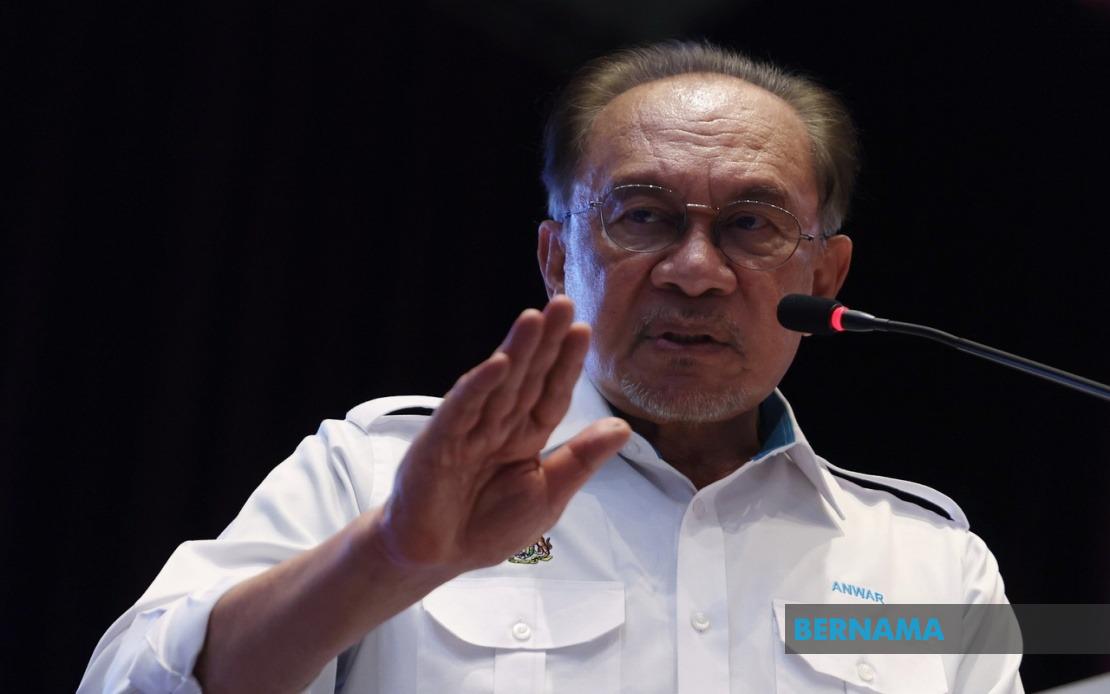
Prime Minister Datuk Seri Anwar Ibrahim has attributed Malaysia's improved standing in global competitiveness rankings to the professionalism and dedication of the nation's civil service. Speaking at a gathering with government officials from the southern zone in Alor Gajah, Anwar emphasised that the country's climb to 15th place in the IMD World Competitiveness Index 2026 represents a collective achievement that extends far beyond political leadership. This eight-position improvement from the previous year's 23rd ranking signals growing momentum in Malaysia's international economic and institutional standing.
The Prime Minister's remarks came in the context of recent diplomatic engagement, with Turkmenistan President Serdar Berdimuhamedov having recently visited Malaysia and publicly acknowledged the nation's competitiveness gains. Rather than accepting sole credit for the advancement, Anwar stressed that the foundation for Malaysia's progress rests upon systemic improvements and the coordinated efforts of civil servants nationwide. His acknowledgment of the civil service's role reflects a broader recognition that sustained competitive advantage depends on institutional capacity and professional governance rather than individual leadership alone.
President Serdar's recognition of Malaysia's competitiveness trajectory has carried practical implications. According to Anwar, the Turkmenistan leader expressed interest in facilitating knowledge-sharing exchanges between his country's civil service and Malaysian counterparts. This proposal to send a Turkmenistan civil service delegation to engage with Malaysian officials underscores how Malaysia's governance improvements have become a reference point for institutional reform internationally. Such benchmarking interest from foreign governments validates the structural changes being implemented across Malaysia's bureaucracy.
The significance of Malaysia's 15th-place ranking extends beyond mere numerical advancement. The IMD World Competitiveness Index assesses nations across multiple dimensions including economic performance, government efficiency, business competitiveness, and infrastructure quality. An eight-position leap in a single year suggests that improvements are occurring across multiple governance and economic indicators simultaneously. This broad-based progress indicates that reform efforts are yielding tangible results rather than representing isolated improvements in specific sectors.
For Malaysia's regional standing within Southeast Asia, this ranking enhancement carries strategic weight. The country competes directly with regional peers for foreign investment, multinational corporate headquarters, and skilled talent. A stronger competitiveness position relative to other developing economies can influence investment decisions and talent flows. Anwar's emphasis on civil service quality speaks to recognition that institutional reliability and government efficiency remain critical differentiators in an increasingly competitive global marketplace for capital and expertise.
The Prime Minister's attribution of success to systemic factors rather than personalised achievement reflects an important governance philosophy. By publicly crediting the civil service apparatus, Anwar reinforced the importance of institutional stability and professional bureaucratic capacity. This messaging potentially supports broader civil service morale and retention by validating government employment as a profession contributing to national progress. For civil servants attending the gathering at the Centre of Excellence for Engineering and Technology in Simpang Ampat, such recognition may strengthen commitment to ongoing service improvements.
Malaysia's improved competitiveness ranking occurs within a three-and-a-half-year period of the current administration. This timeframe allows assessment of what government policy shifts and institutional reforms have contributed to measurable improvements in international competitiveness assessments. The focus on civil service efficiency suggests that reforms have concentrated on strengthening government delivery capacity, streamlining administrative processes, and enhancing the quality of public services that underpin broader economic competitiveness.
The event's attendance by senior government figures, including Chief Secretary Tan Sri Shamsul Azri Abu Bakar, Communications Ministry secretary-general Datuk Abdul Halim Hamzah, and Melaka Chief Minister Datuk Seri Ab Rauf Yusoh, highlighted the significance placed on civil service engagement and recognition. Such high-level participation signals that competitiveness improvements and civil service excellence feature prominently in government priorities and strategic planning. The gathering served not merely as recognition but as alignment-building across different government levels regarding institutional development objectives.
The advancement in Malaysia's competitiveness ranking carries implications for domestic policy direction. Recognition of civil service contribution may translate into resource allocation decisions, training investments, and technological adoption aimed at further strengthening government capacity. International interest from countries like Turkmenistan in learning from Malaysian administrative practices could also generate opportunities for institutional exports and technical cooperation agreements that generate additional economic benefits.
Looking forward, Malaysia's trajectory in competitiveness rankings will depend on sustaining the institutional improvements that drove recent gains. The civil service will remain central to this challenge, as maintaining professional standards, managing talent within government, and adapting administrative systems to emerging economic demands require ongoing focus. Anwar's public validation of civil service contributions establishes a framework emphasising that Malaysia's competitive edge depends fundamentally on government quality and institutional capacity.

