Malaysia's drive to digitise government operations has delivered tangible fiscal benefits, with the civil service reporting savings of RM1.99 million through its paperless initiative. Chief Secretary to the Government Tan Sri Shamsul Azri Abu Bakar disclosed that the programme has successfully eliminated 116,405 reams of paper from government workflows, marking a significant milestone in the country's broader digitalisation agenda. The achievement underscores mounting momentum within the bureaucracy to transition away from paper-dependent processes that have long characterised administrative operations across the region.
The announcement came during a gathering of the Digital Economy and Fourth Industrial Revolution Council, convened under the direct supervision of Prime Minister Datuk Seri Anwar Ibrahim. Shamsul Azri, who chairs the Government Cluster overseeing this transformation, highlighted the meeting's emphasis on accelerating technological uptake across multiple government platforms and initiatives. The session prioritised three interconnected strategic priorities that reflect the administration's commitment to modernising public service delivery and enhancing citizen engagement through digital channels.
Central to the government's vision are the MyDigital ID and MyGov platforms, which represent foundational infrastructure for citizens to interact with state services in a more streamlined, convenient manner. MyDigital ID aims to create a unified digital identity system that simplifies authentication and verification processes, while MyGov serves as a comprehensive digital portal consolidating various government services into a single online gateway. These initiatives address longstanding friction points in citizen-government interactions, where individuals previously had to navigate disparate agencies and undergo repetitive documentation procedures. By converging these services digitally, the government aspires to reduce administrative burden and improve user experience across the board.
Expanding digital access represents another critical dimension of the strategy. The meeting concurred on the necessity of broadening digital infrastructure and capacity within Malaysia's higher education sector, recognising universities as both training grounds for digital talent and institutional users of advanced technologies. This expansion addresses a structural gap where many educational institutions, particularly in peripheral regions, have lagged behind in technology adoption and integration. Enhanced digital connectivity across tertiary institutions strengthens the pipeline for developing skilled professionals equipped to navigate and shape the digital economy.
The meeting also charted a course for developing comprehensive digital talent through the MyMAHIR National AI Council for Industry. This initiative seeks to cultivate expertise in artificial intelligence and emerging technologies, recognising that technological advancement means little without a correspondingly skilled workforce capable of deploying, managing, and innovating within digital ecosystems. MyMAHIR represents a coordinated effort to bridge the skills gap and ensure Malaysia possesses adequate human capital to compete effectively in the global digital marketplace.
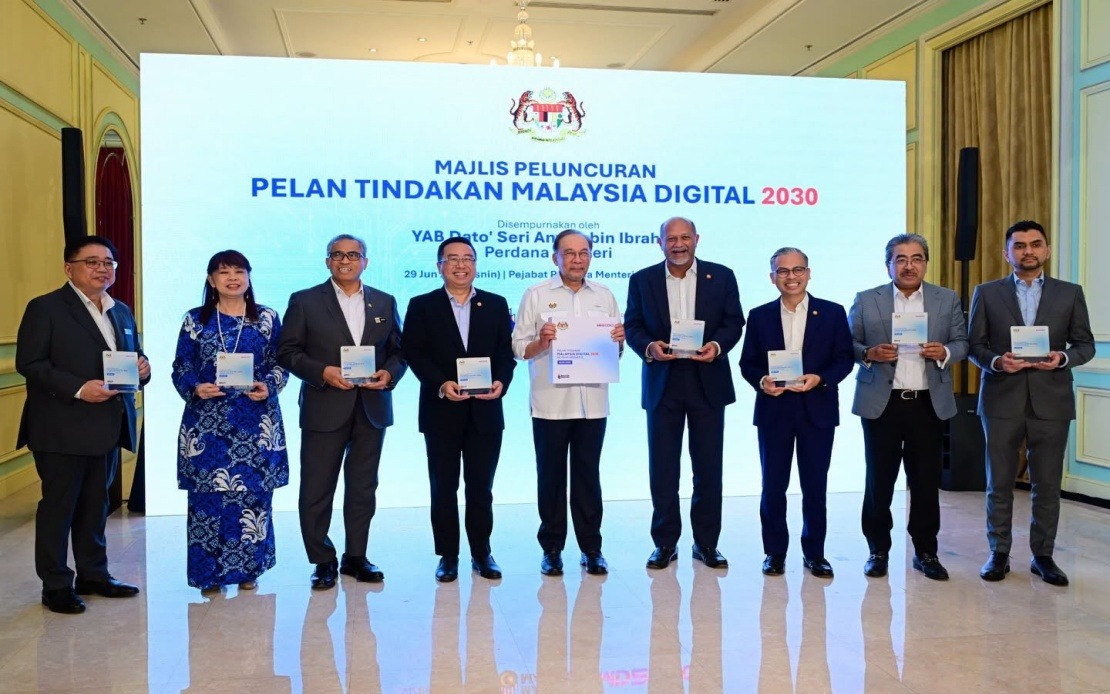
These developments align with Malaysia Digital 2030, a sweeping blueprint launched by Prime Minister Anwar Ibrahim during the meeting. The roadmap explicitly positions Malaysia as an aspiring AI nation by the end of the decade, signalling an unmistakable pivot toward technology-centric governance and economic development. Achieving AI nation status demands comprehensive integration of artificial intelligence across government operations, business sectors, and educational institutions, coupled with regulatory frameworks that encourage innovation while protecting citizens and maintaining public trust.
The paperless initiative itself commenced in earnest on February 9, following a February 7 announcement that the civil service would transition simple transactions away from paper-based processing. This phased approach allows departments to adapt workflows gradually, testing digital procedures before broadening implementation across the entire bureaucratic apparatus. The RM1.99 million in documented savings from eliminating 116,405 reams translates into reduced procurement costs for materials and supplies, but the benefits extend beyond mere financial accounting.
Paperless operations yield environmental dividends that resonate with global sustainability commitments. Reducing paper consumption decreases demand for forest resources and manufacturing energy while lowering waste streams that require disposal. For a region confronting deforestation pressures and environmental degradation, government-led efforts to minimise paper usage carry symbolic significance beyond budgetary concerns, demonstrating institutional commitment to environmental stewardship and supporting Malaysia's obligations under international climate and sustainability frameworks.
Operational efficiency gains accompany the financial and environmental benefits. Digital workflows permit instantaneous document transmission across geographic distances, accelerating processing timelines and reducing delays endemic to paper-dependent systems. Centralised digital storage facilitates superior record management, audit trails, and compliance monitoring compared to dispersed physical archives prone to deterioration and loss. These improvements strengthen governance quality by enhancing transparency and accountability mechanisms that underpin public administration effectiveness.
The timing of these announcements reflects heightened urgency around digital transformation across Southeast Asia. Regional competitors including Singapore, Thailand, and Indonesia have aggressively pursued digitalisation programmes, establishing themselves as technology hubs and attracting investment accordingly. Malaysia's initiatives attempt to match this competitive momentum while establishing distinctive positioning around AI expertise and governance modernisation. Success in attracting digital talent and investment hinges partly on government demonstrating through its own operations that Malaysia possesses the institutional maturity and technological sophistication requisite for leading-edge digital innovation.
Looking forward, the government's articulated commitment to paperless administration, digital identity systems, and AI development will require sustained investment and enforcement mechanisms to prevent backsliding. Previous digitalisation efforts across Asia have encountered resistance from entrenched bureaucratic interests comfortable with established procedures, necessitating strong leadership support and incentive structures that motivate compliance. Measuring progress through quantifiable metrics like paper consumption reductions and cost savings provides accountability mechanisms that sustain momentum when initial enthusiasm naturally dissipates.
The integration of these separate initiatives under the Malaysia Digital 2030 framework signals recognition that meaningful digital transformation demands coherence across government, education, and industry rather than fragmented departmental efforts. Citizens benefit when digital services function seamlessly across platforms and institutions, but achieving this coherence demands substantial coordination and standardisation that transcends traditional organisational boundaries. Malaysia's commitment to this integrated approach positions it competitively within Southeast Asia's digital economy, provided implementation matches the ambition articulated by senior government leadership.

