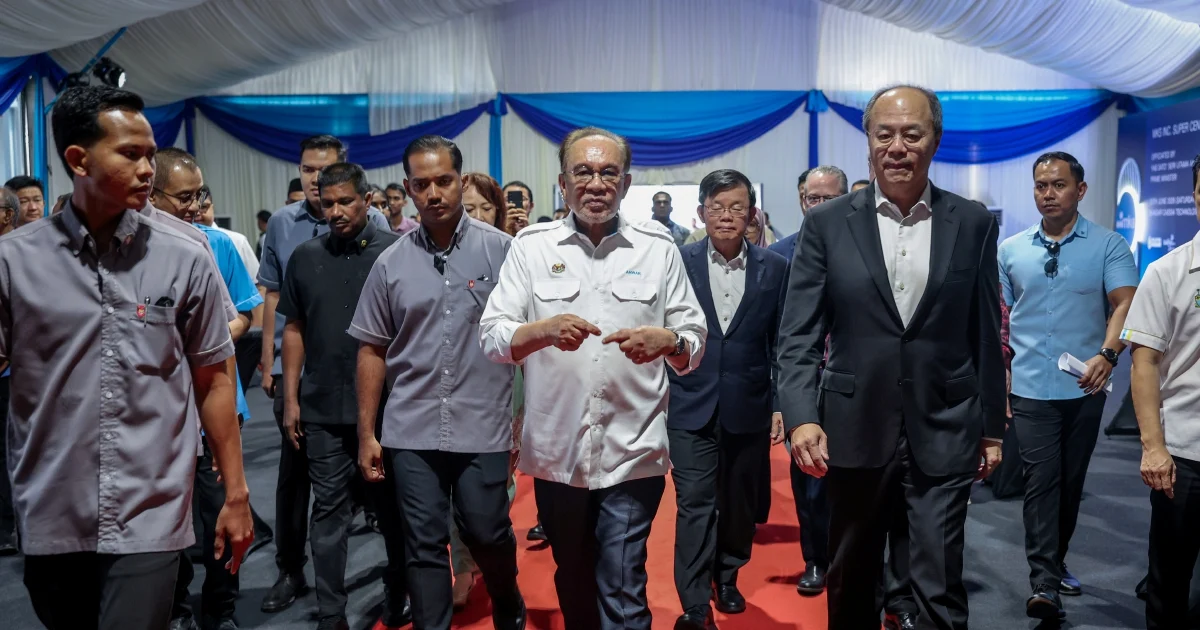
Prime Minister Datuk Seri Anwar Ibrahim has attributed Malaysia's appeal to international investors partly to the country's deliberate strategy of maintaining diplomatic neutrality and strategic independence whilst actively engaging with all major global powers. Speaking in Batu Kawan, Anwar emphasised that this carefully calibrated approach—avoiding alignment with any single bloc whilst building relationships across geopolitical divides—has become a competitive advantage in attracting capital flows and fostering business expansion.
Malaysia's positioning as a non-aligned nation carries particular weight in today's fractious geopolitical environment. Rather than being forced to choose between competing superpowers or regional hegemonies, the country maintains productive relationships with the United States, China, Russia, Europe, and neighbouring regional partners. This diplomatic flexibility allows Malaysian businesses and foreign investors to operate across multiple spheres of influence without the complications that bind nations locked into rigid alliances or strategic rivalries.
The Prime Minister's framing reflects a shrewd understanding of contemporary investor psychology. Multinational corporations increasingly view geopolitical alignment as a business risk. Companies considering major investments in manufacturing, technology, finance, or infrastructure seek stable jurisdictions insulated from the disruptions that accompany proxy conflicts or economic coercion between great powers. Malaysia's unaffiliated status reduces these strategic risks whilst its ASEAN membership and geographic position astride major trade routes amplify its commercial advantages.
This messaging also addresses investor concerns about supply chain vulnerabilities that have become acute since the US-China trade tensions and subsequent semiconductor competition. Firms attempting to diversify production away from geopolitically sensitive zones now view Southeast Asia generally, and Malaysia specifically, as a hedging strategy. A nation explicitly committed to neutrality and non-alignment offers reassurance that it will not suddenly impose export restrictions or regulatory barriers based on geopolitical allegiances.
Malaysia's economic model has long depended on open trade and attracting foreign direct investment across sectors from petrochemicals to semiconductors to services. Historically, this required a delicate diplomatic balance between major trading partners and investors from different regions. However, the intensity of current great power competition has elevated this balancing act to become a more salient selling point. Countries perceived as uncommitted to any single bloc enjoy negotiating leverage and can attract investors seeking optionality and resilience.
The Prime Minister's public articulation of this strategy serves multiple purposes. For international business audiences, it signals Malaysia's reliability as a host country where investment decisions will not be subordinated to geopolitical pressures. For domestic constituencies, it frames non-alignment not as mere principle but as pragmatic statecraft delivering tangible economic benefits. This narrative counters suggestions that neutrality represents weakness or indecision; instead, it presents strategic independence as sophisticated policy generating growth and prosperity.
Indonesia, Vietnam, Thailand, and Singapore employ similar balancing strategies, but each approaches the balance differently. Malaysia's particular articulation—emphasising both neutrality and active engagement—distinguishes it from nations presenting themselves as closer partners to either major pole. This differentiation matters as investors allocate capital across the region and rank jurisdictions by stability, predictability, and freedom from coercive pressure.
However, maintaining this posture grows increasingly challenging as geopolitical pressures mount. Technology transfers, digital infrastructure, and critical minerals create situations where nations feel compelled to declare preferences. Malaysia's ability to preserve genuine equidistance whilst deepening technological and economic cooperation with both developed and developing powers will determine whether its non-aligned positioning remains viable and beneficial.
The economic data will ultimately validate or challenge Anwar's claims about neutrality's returns. Foreign direct investment flows, investor sentiment surveys, and business expansion announcements offer measurable indicators of whether Malaysia's diplomatic approach genuinely translates into superior capital attraction relative to regional competitors. The concentration of tech and semiconductor manufacturing in Malaysia and the recent announcements from multinational companies choosing Malaysian sites suggest the strategy has merit, though isolating the effect of diplomatic positioning from other factors like labour costs, infrastructure quality, and regulatory efficiency requires careful analysis.
Looking forward, Malaysia's stakes in maintaining credible neutrality have risen substantially. Investors will watch whether the government successfully navigates competing demands from strategic partners without appearing captive to either. Any perception that Malaysia has tilted decisively toward one bloc could trigger capital reallocation, particularly if rival powers respond with coercive measures targeting Malaysian firms or officials.
The Prime Minister's emphasis on balanced engagement therefore extends beyond diplomatic theory into practical economic calculation. For Malaysia, neutrality is not a philosophical luxury but an operational necessity supporting growth and competitiveness. Whether this positioning can be sustained amid intensifying great power rivalry will significantly shape Malaysia's economic trajectory throughout the coming decade and its ability to maintain investor confidence across multiple geopolitical scenarios.

