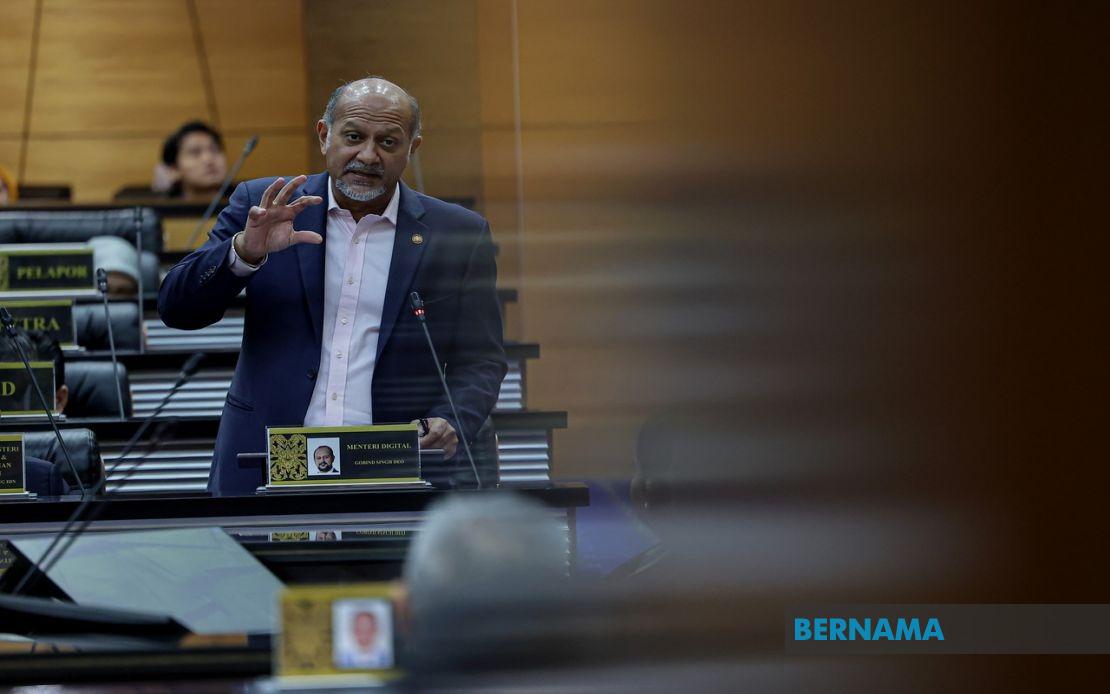
Malaysia's forthcoming Artificial Intelligence Governance Bill represents a crucial step towards establishing transparent responsibility frameworks for the rapidly expanding use of AI across the country's public and private sectors. Speaking in the Dewan Rakyat on June 24, Digital Minister Gobind Singh Deo clarified that the legislation will place legal accountability on humans, organisations, and entities involved in developing, deploying, and operating AI systems rather than on the technology itself. This distinction proves essential because AI systems, unlike human actors, possess no legal personality or capacity for moral responsibility, creating an accountability vacuum that the new bill seeks to address.
The minister was responding to concerns raised by Khoo Poay Tiong, the Member of Parliament for Kota Melaka from the Pakatan Harapan coalition, about whether the bill would offer Malaysian citizens clear legal protections as they increasingly encounter AI technologies in their daily interactions. Gobind emphasised that the accountability principle forms the cornerstone of the bill's design, particularly given how deeply embedded AI has become in routine operations across both government agencies and commercial enterprises. This foundational commitment reflects an international trend whereby jurisdictions are moving beyond passive observation of AI development towards proactive governance that establishes clear chains of responsibility.
The government is currently conducting detailed research into a comprehensive accountability framework that would span the entire operational lifespan of an AI system, beginning with its initial development and extending through to its eventual decommissioning or termination. This lifecycle approach recognises a critical reality that Gobind articulated: artificial intelligence risks and failures do not manifest at a single point but can emerge across multiple stages of deployment. A system that functions safely during development may become problematic when modified by subsequent operators, when transplanted into different operational contexts, when integrated with other systems, or when applied to user populations it was not originally designed to serve. This sophisticated understanding of AI risk dynamics suggests the bill will move beyond simplistic accountability measures towards more nuanced requirements.
Crucially, the proposed bill operates as a horizontal governance framework designed to complement and strengthen existing legislation rather than supplanting or conflicting with sector-specific regulations. The government recognises that when AI systems intersect with criminal offences, consumer protection matters, intellectual property disputes, or industries already subject to specialised oversight, the established legal structures and regulatory bodies will continue to exercise their designated responsibilities. This complementary approach avoids the pitfall of creating overlapping bureaucratic requirements while ensuring that AI governance integrates seamlessly with Malaysia's existing regulatory architecture. The strategy suggests a pragmatic recognition that governance in emerging technology areas must work in concert with rather than against established institutional frameworks.
When disputes involve sectors with their own regulatory jurisdictions—such as financial services, telecommunications, or healthcare—the relevant authorities will maintain their oversight roles even as AI-specific governance mechanisms operate in the background. This integrated approach reduces regulatory fragmentation and prevents companies from exploiting gaps between different regulatory regimes. For Malaysian businesses operating across multiple sectors or expanding internationally, such clarity about which rules apply in which circumstances provides essential certainty for compliance planning and risk assessment. The bill thus positions itself as part of a broader ecosystem of regulation rather than as a standalone instrument.
The government has explicitly decided against directly regulating the content or outputs that AI systems generate, focusing instead on establishing governance mechanisms that target risk mitigation before problems materialise. This prevention-oriented approach acknowledges that attempting to police AI-generated content after the fact creates significant practical and constitutional challenges. Instead, the framework will emphasise proactive mechanisms designed to identify and manage risks during the development and deployment phases. This strategy reflects growing international consensus that effective AI governance requires upstream intervention rather than downstream content policing, particularly in jurisdictions concerned with maintaining proportionate regulatory burdens on innovation.
One key mechanism under consideration is a mandatory AI incident reporting system that would require developers and operators to notify authorities when problems arise. Such reporting would enable government agencies to assess the scope and nature of risks, initiate appropriate follow-up actions, and identify patterns across multiple incidents that might signal emerging systemic vulnerabilities. Over time, aggregated incident data could reveal recurring failure modes or vulnerable populations that warrant policy adjustment. For Malaysia's citizens, this reporting infrastructure creates a channel through which genuine harms can be documented and addressed rather than remaining invisible within private corporate systems. The transparency this generates serves both accountability and public protection objectives.
The government is also exploring the establishment of an AI regulatory sandbox—a controlled environment where developers, industry participants, and government agencies can collaboratively test and refine AI systems before they reach broader deployment. Such sandboxes have proven valuable in fintech and other technology sectors, allowing innovation to proceed while maintaining oversight. For Malaysian AI developers and technology companies, sandbox access could reduce the risk of costly failures after wide-scale deployment and provide constructive feedback from regulators during development phases. This approach signals government interest in supporting responsible innovation rather than simply blocking or restricting AI development, an important signal for a nation seeking to participate meaningfully in the global AI economy.
Gobind characterised the bill as a balanced legal framework calibrated to enable safe, responsible, and reliable AI development and adoption throughout Malaysia while protecting public interests. The government's stated commitment to continuing refinement of the legislation suggests an iterative approach that incorporates feedback from affected stakeholders and evolving international practice. For Malaysia, successful implementation of this bill could establish the country as a jurisdiction offering both investor confidence and citizen protection—an attractive combination for companies seeking to responsibly scale AI operations in Southeast Asia. The framework's emphasis on accountability throughout the AI lifecycle, combined with support for innovation and technological development, positions Malaysia to capture value from the AI transition without externalising risks onto vulnerable populations.
The bill's development occurs against a backdrop of mounting public concern about AI's societal implications, from algorithmic discrimination to privacy violations to economic disruption. Malaysian policymakers clearly recognise that public trust in AI systems depends on credible accountability mechanisms and transparent governance. By establishing clear responsibility chains and proactive risk management, the legislation aims to build confidence that government possesses both the will and capacity to prevent AI harms before they materialise. As artificial intelligence continues to reshape industries and social interactions across Southeast Asia, Malaysia's governance approach may influence policy development across the entire region, making the careful calibration of this bill consequential not just domestically but for the broader trajectory of AI governance in Asia.

