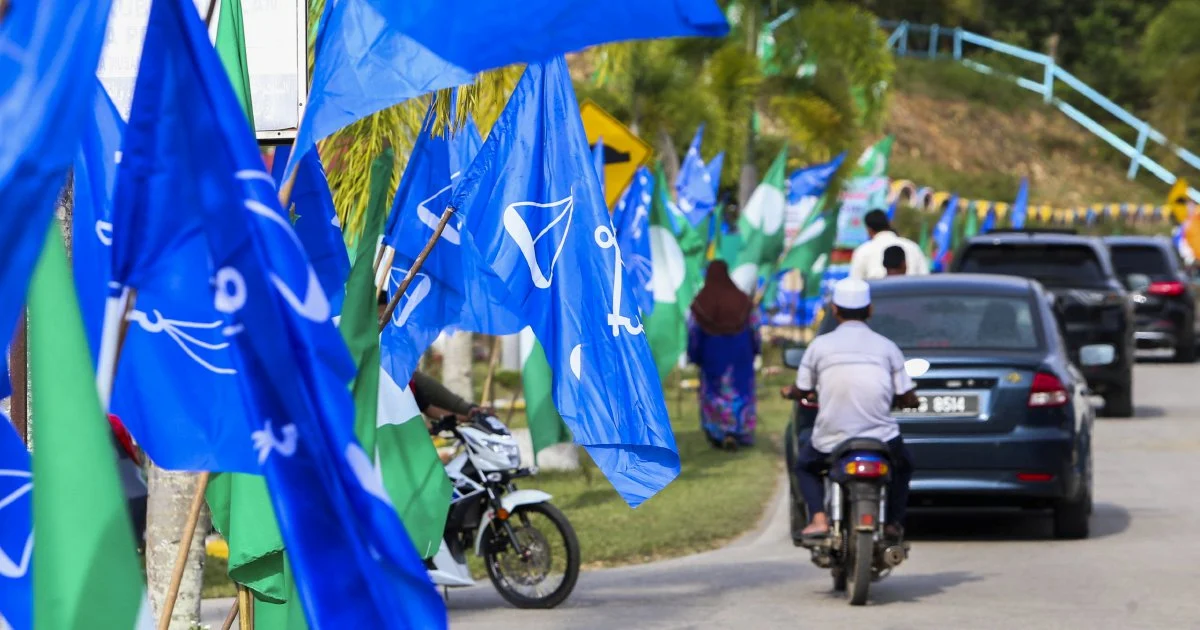
Datuk Mohd Amar Nik Abdullah, vice-president of PAS, has indicated that Malaysia's 16th general election will probably take place sometime between late October and November of this year. The prediction, made in Kota Baru, reflects calculations emerging within opposition and coalition circles regarding the political calendar and dissolution timetables that would be required to hold fresh parliamentary polls.
The timing projected by the PAS leadership suggests a window that aligns with broader constitutional and administrative requirements for calling and conducting a nationwide election. Malaysia's electoral cycle typically demands dissolution of Parliament followed by a campaign period that can span several weeks. A late-October or November ballot would fall well before year-end, allowing Parliament to reconvene and begin legislative work before 2025 commences.
During his remarks in the Kota Baru session, Nik Abdullah did not specify the precise reasoning underpinning his forecast. However, PAS has maintained close associations with governmental structures and has held ministerial portfolios in recent administrations, positioning the party with access to insider perspectives on potential election timelines. The party's assessment may reflect informal discussions within ruling coalition chambers or public signals from senior government figures regarding parliamentary dissolution dates.
The prediction carries significance for multiple stakeholder groups across Malaysia's political spectrum. For the governing coalition and Prime Minister, an election window between late October and November would present opportunities and constraints. Such timing could capitalise on economic conditions or policy achievements, whilst also navigating the year-end holiday season and potential voter fatigue from multiple electoral cycles held since 2018.
For opposition parties including DAP, PKR, and Amanah, the forecasted timeline provides a reference point for campaign preparation and resource allocation. Opposition coalitions have begun grassroots mobilisation in recent months, and confirmation of an election window would accelerate candidate selection processes and messaging development across constituencies. The length of the campaign period matters substantially for parties seeking to shift voter sentiment or consolidate support bases.
Regional observers and Southeast Asian watchers regard Malaysia's electoral trajectory as consequential for the broader region's political stability. A successful, incident-free election would reinforce Malaysia's democratic credentials and institutional integrity. Conversely, any irregularities or contestation during GE16 could reverberate through investor confidence, foreign relations, and regional solidarity frameworks including ASEAN.
The October-November window also carries practical implications for Malaysia's civil service, Election Commission, and security agencies. These bodies would require adequate preparation time to manage voter registration, ballot printing, polling station setup, and law enforcement deployment across all parliamentary constituencies. The Election Commission has proven capable of organising multiple elections within compressed timeframes, yet advance notice remains operationally valuable.
From an economic perspective, election certainty influences business confidence and foreign direct investment decisions. Multinational corporations and local enterprises typically postpone major commitments during electoral uncertainty. A confirmed timeline allows companies to plan capital expenditure, hiring, and expansion projects with greater predictability. Finance markets similarly respond favourably when political calendars are clarified rather than remaining ambiguous.
The international dimension warrants attention as well. Malaysia's role in regional trade architectures, diplomatic initiatives, and security partnerships benefit from stable domestic governance. Major trading partners including China, the United States, and ASEAN neighbours monitor Malaysian electoral health as an indicator of broader institutional robustness. An orderly election process strengthens Malaysia's negotiating position in bilateral and multilateral forums.
PAS vice-president Nik Abdullah's public statement likely reflects broader elite consensus within government structures regarding optimal election timing. Malaysian political convention permits sitting administrations considerable discretion in dissolving Parliament, typically within constitutional constraints that establish maximum parliamentary duration. The PAS assessment suggests deliberations within government circles have coalesced around late-2024 timing as administratively feasible and politically strategically.
For ordinary Malaysian voters and citizens, the forecasted election window carries immediate household implications. Campaign periods typically increase political rhetoric intensity, social media polarisation, and community divisions along party lines. Families and workplaces engage in electoral discussions ranging from policy substantive to personality-driven. Understanding probable timing helps citizens prepare mentally and informationally for the heightened political engagement that accompanies active campaigns.
Additionally, the October-November timeframe intersects with Malaysia's cultural and religious calendar. Ramadan will have concluded by October, and major festivals including Deepavali and Christmas fall within late-year months following the projected election window. Post-election periods often feature community-bridging initiatives and inclusive governance messaging from victorious coalitions seeking to rebuild national unity.
The PAS leadership's prediction ultimately underscores Malaysia's functioning democratic institutions and the continued vitality of periodic electoral renewal. Whether the actual election occurs precisely within Nik Abdullah's projected window or shifts slightly earlier or later, the regular scheduling of free and fair general elections remains central to Malaysian governance legitimacy and public accountability mechanisms.