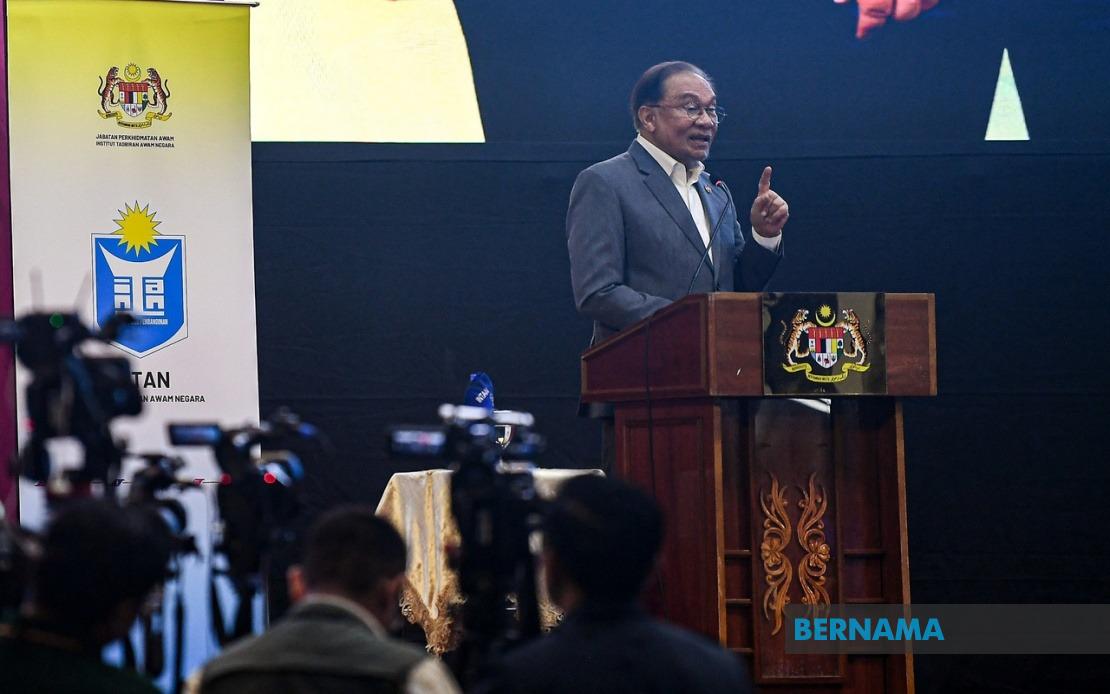
Prime Minister Datuk Seri Anwar Ibrahim has delivered a pointed critique of Malaysia's lingering attachment to Western systems and thinking, urging citizens to embrace independence not merely as a historical milestone but as a philosophical foundation for national development. Speaking at Universiti Islam Selangor during an engagement with civil servants from the Central Zone, Anwar emphasised that true freedom requires breaking the psychological chains of colonialism that continue to shape how many Malaysians view governance, education, economics and culture.
The Prime Minister's remarks zeroed in on a peculiar phenomenon affecting post-independence generations: the persistence of Western-centric worldviews among those who have no direct memory of colonial rule. Anwar characterised this mindset with deliberate irony, noting that some citizens born after Malaysia's independence in 1957 nonetheless regard English language proficiency, Western educational frameworks, Anglo-American economic systems and liberal governance models as universal gold standards. This internationalisation of colonial values represents, in his view, a failure to genuinely exercise the sovereignty that previous generations sacrificed to secure.
Anwar's intervention addresses a tension that has simmered beneath Malaysia's development trajectory for decades. While the nation has made deliberate choices to elevate Bahasa Melayu as an official language and to ground its constitutional framework in Islamic principles and Malay-Muslim interests, parallel institutions and elite networks continue to privilege English and Western credentials. Professional advancement often requires fluency in English; higher education aspirations frequently point toward Western universities; and policy frameworks are frequently benchmarked against OECD standards rather than evaluated against Malaysia's own socioeconomic objectives and cultural values.
The Prime Minister's language—his reference to those with "brown skin" but "half-English" thinking—signals frustration with what he perceives as internalised inferiority within Malaysian society. This phrasing acknowledges that colonialism operates not merely as external imposition but as embedded psychological conditioning. Decades after formal independence, Malaysian elites may continue to structure their aspirations, professional identities and policy preferences around Western templates, unconsciously replicating hierarchies established during the colonial period.
Anwar's challenge carries particular weight given his own biography. As a Western-educated leader who has engaged extensively with international institutions and liberal democratic frameworks, his call for scepticism toward Western models cannot be dismissed as parochial nationalism. Instead, it reflects an argument that Malaysia possesses sufficient institutional maturity and intellectual resources to chart its own development path—one informed by Islamic principles, plural democracy, multicultural pragmatism and local knowledge rather than imported blueprints.
The emphasis on values and national identity signals Anwar's intention to reorient governance priorities away from technocratic adoption of international best practices toward frameworks rooted in Malaysian circumstances. This has practical implications across multiple domains. In education policy, it might mean greater investment in Bahasa Melayu-medium instruction and reduced deference to English-language curricula. In economic development, it could mean prioritising locally designed strategies over World Bank-prescribed reform agendas. In constitutional and political matters, it suggests defending Malaysia's existing institutional arrangements rather than perpetually pursuing convergence with Western democratic standards.
The gathering at Universiti Islam Selangor included Chief Secretary to the Government Tan Sri Shamsul Azri Abu Bakar and Director-General of the Public Service Tan Sri Wan Ahmad Dahlan Abdul Aziz, indicating that Anwar's message was directed specifically toward the bureaucratic establishment. This suggests an attempt to reshape civil service culture and institutional decision-making away from reflexive adoption of Western administrative practices and toward frameworks explicitly grounded in Malaysian values.
For Southeast Asian observers, Anwar's remarks reflect broader regional conversations about post-colonial identity and development autonomy. Throughout the region, nations grapple with the tension between integration into Western-dominated international systems and assertion of indigenous governance models. Vietnam, Thailand and Indonesia have each navigated comparable debates about preserving cultural distinctiveness while engaging economically with the West. Anwar's framing offers a distinctly Malaysian contribution to this discussion, grounded in the nation's specific history of plural democracy and constitutional multiculturalism.
The practical implementation of Anwar's vision remains uncertain. Malaysia's deep economic integration with Western markets, its participation in Western-designed financial institutions and its reliance on English as a lingua franca within global business and academia create structural pressures that resist easy redirection. Moreover, significant segments of Malaysian society—particularly urban professionals and diaspora communities—derive tangible benefits from proximity to Western systems and may resist policies that reduce such access.
Yet Anwar's intervention signals serious intent to redefine Malaysia's intellectual and institutional orientation. Whether through education policy reforms, modified governance structures or explicit preference for locally designed development models, the Prime Minister appears committed to moving beyond what he characterises as post-colonial psychological dependence. This represents not isolation from global systems but rather a reassertion of Malaysian agency in determining how the nation engages with international frameworks and adopts or adapts external models.
The resonance of Anwar's message will likely depend on whether it translates into concrete policy shifts that demonstrably improve Malaysian welfare and opportunity. Citizens may embrace indigenous development models enthusiastically if such frameworks deliver superior outcomes compared to Western-influenced alternatives. Conversely, if policy changes reduce access to global opportunities or economic competitiveness, resistance will solidify among constituencies with international orientations. The coming months will reveal whether this rhetorical pivot toward post-colonial self-determination produces substantive institutional transformation or remains primarily symbolic.

