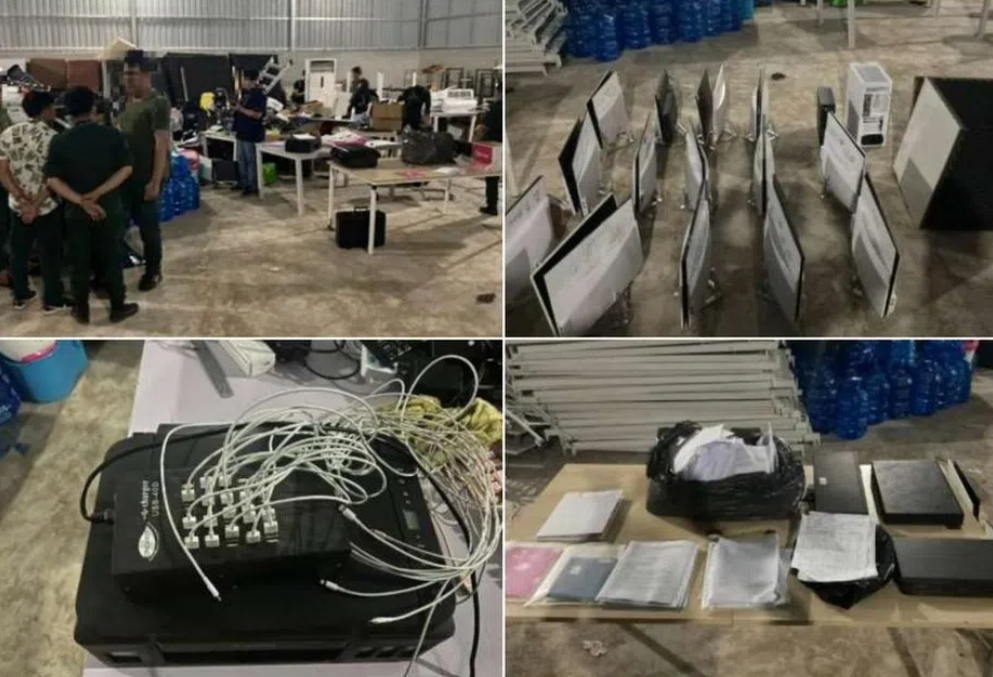
A 30-year-old Malaysian has been sentenced to 16 months and two weeks' imprisonment for his brief involvement with an organised crime syndicate operating from Phnom Penh that systematically targeted Singaporeans through elaborate impersonation schemes. Yip Chee Ming pleaded guilty to membership in an organised crime group, with an additional charge related to fraud taken into consideration at sentencing on Friday, June 26. His case underscores the regional reach of transnational scam networks and the vulnerability of victims across Southeast Asia to coordinated deception operations.
Yip's entry into the criminal enterprise came through a personal connection. A friend identified as Jason approached him in October 2024 with details of lucrative work at a scam call centre, promising substantial monthly compensation. Intrigued by the prospect of earning cryptocurrency payments, Yip agreed to explore the opportunity. The two men were subsequently added to a Telegram messaging group by Tang Soon Wah, identified by authorities as one of the syndicate's senior operational leaders. Tang extended an invitation for them to travel to Cambodia to inspect the actual scam facility, offering to fund their transportation as part of the recruitment process.
In late November 2024, both men flew to Cambodia to evaluate the operation firsthand. The scam centre was housed in a five-storey building in Phnom Penh, protected by stationed security guards—infrastructure suggesting a sophisticated and well-resourced criminal enterprise. Yip was offered a compensation package consisting of US$1,800 per month in cryptocurrency plus a one per cent commission on each successful fraud. These financial incentives reflected the syndicate's confidence in its operational model and its ability to generate substantial illegal proceeds from victims.
Despite the standardised training and scripted approach provided to callers, Yip proved remarkably ineffective at the core criminal task. His role required him to impersonate a bank officer and manipulate Singaporean victims into transferring funds or revealing financial details. Armed with a prepared script and coaching from the syndicate's trainers—who specialised in coaching callers to adopt convincing Singaporean accents and persuasive techniques—Yip began work on November 22, 2024. His first day yielded zero successful frauds. When he attempted again the following day, he continued to fail at deceiving his targets. By November 23, Tang made the decision to terminate Yip's employment, deleting their digital communications to obscure the connection.
The syndicate itself demonstrated a highly organised hierarchical structure that allowed it to scale its criminal operations across borders. Leadership directed overall strategy and financial distribution, while supervisors and specialised trainers managed the day-to-day activities of individual callers. A separate unit devoted itself to converting stolen funds into cryptocurrency, creating a money laundering pipeline that obscured the origin of proceeds. Court records indicated the operation encompassed at least 78 suspected members, indicating a substantial criminal workforce distributed across multiple functional roles. Between September 3, 2024, and September 5, 2025, this machinery produced at least 528 reported fraud cases with aggregate losses exceeding S$52.5 million—a figure that likely understates the actual impact given underreporting of scams.
Yip's arrest came nearly a year after his dismissal from the syndicate. Singaporean police detained him on September 9, 2025, as part of a coordinated operation against the criminal network. The operation involved cooperation between Singapore's police force and the Cambodian National Police, reflecting the transnational nature of the investigation and enforcement challenge. Yip was among 12 individuals charged with alleged membership in the syndicate. Nine of his co-accused were Singaporean citizens: Deon Tan Ke Yuan, Lester Ng Jing Hai, Christy Neo Wei En, Heiqal Lee, Tay Jun Xiang, Ng Wei Kang, Zachary Lee Jia An, Melvin Tan Wenzheng and Lau Haoxiang, ranging in age from 25 to 39 years. The remaining accused included another Malaysian, Muhamad Asyraf Anuar, 29, and a Filipino national, De Villar Rizalyn Panganiban, 34. The multinational composition of both the accused and the operational team illustrated how scam syndicates recruit across regional borders.
The prevalence of government impersonation schemes has emerged as a particularly concerning trend in Singapore's fraud landscape. Despite an overall decrease in scam reports during 2025, the number of cases involving impersonation of government officials surged dramatically, more than doubling from 1,504 recorded instances in 2024 to 3,363 in 2025. This category ranked as the fifth most frequently reported scam type in 2025, signalling a strategic shift by criminal organisations toward exploiting public trust in governmental institutions. The exploitation of authority and official status appears especially effective at inducing victims to comply with fraudulent demands, particularly among older or less digitally-savvy demographics.
For Malaysian readers and regional stakeholders, Yip's case carries several important implications. It demonstrates that individuals from Malaysia are actively recruited into cross-border scam operations, either as direct perpetrators or facilitators—a concerning indicator of organised crime networks extending into the country. The involvement of Singaporean nationals as defendants suggests that scam syndicates operate with mixed teams, potentially drawing on citizens of target countries to increase operational credibility and cultural authenticity. The sentencing framework, which carries potential penalties of up to five years' imprisonment and fines reaching S$100,000 for organised crime group membership, reflects the serious view taken by Singapore's courts toward such criminal enterprise participation. For Malaysian authorities, the case underscores the importance of coordinated regional intelligence-sharing and extradition procedures to address transnational organised crime.

