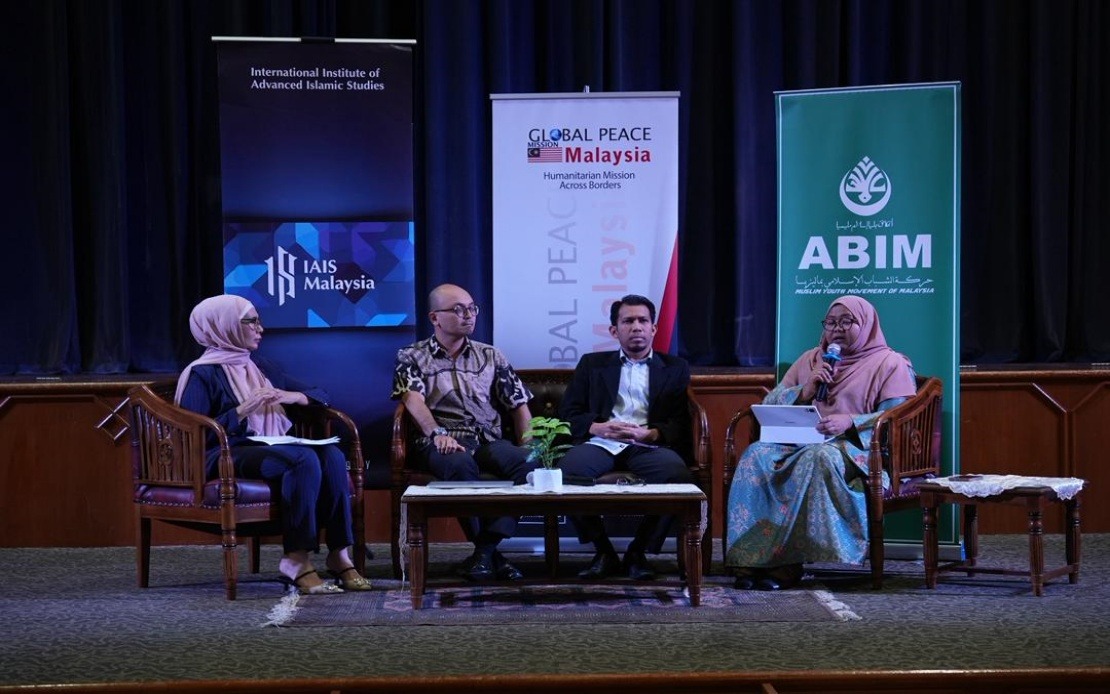
Civil society organisations, academic institutions and humanitarian groups gathered in Kuala Lumpur on June 20 for a conference marking World Refugee Day 2026, where they adopted 10 resolutions designed to guide Malaysia's approach to refugee management. The resolutions represent a significant push for a more nuanced policy framework that accounts for both legitimate security concerns and the humanitarian imperatives that drive refugee support. Angkatan Belia Islam Malaysia (ABIM) president Ahmad Fahmi Mohd Samsudin announced that the conference participants—drawn from NGOs, universities, international organisations and community leaders—have committed to sharing their findings with Members of Parliament and other key stakeholders to advance substantive policy discussions.
The Kuala Lumpur: Solidarity with Refugees Conference, jointly organised by Global Peace Mission (GPM) Malaysia, ABIM and the International Institute of Advanced Islamic Studies (IAIS) Malaysia, reflects growing concern within civil society that Malaysia's refugee discourse has become polarised. Ahmad Fahmi signalled plans to engage directly with the Home Ministry and the National Security Council (MKN) in follow-up consultations, indicating that organisers view government collaboration as essential to translating the conference resolutions into actionable policy changes. This institutional approach suggests that advocates believe refugee issues can be reframed as a governance challenge requiring coordinated input across multiple agencies rather than as a politically divisive topic.
Malaysia's position on refugee matters remains distinctive in the region. Although the country has not ratified the 1951 Refugee Convention, it has accumulated decades of practical experience managing populations displaced by conflicts in Vietnam, Syria, Bosnia and Palestine. This historical track record positions Malaysia as a state with demonstrated humanitarian capacity, yet one operating outside the formal international refugee protection framework. Ahmad Fahmi emphasised that Malaysia's approach to refugees should acknowledge this dual reality—recognising both the nation's proven ability to respond compassionately and the legitimate need to maintain security and social stability.
A central concern animating the conference is the rising tide of anti-refugee sentiment visible across Malaysia's social media landscape and in public discourse. Organisers worry that xenophobic attitudes directed at refugee populations could establish a precedent that eventually extends to other vulnerable or marginalised groups within Malaysian society. By framing refugee protection as a matter of defending social cohesion itself, advocates hope to shift debate away from zero-sum narratives in which refugee rights are presented as inherently competing with local interests. Instead, they argue that misinformation and inflammatory rhetoric pose a common threat to all residents seeking a stable, harmonious society.
The resolutions adopted at the conference reflect this analytical framework. Participants called for explicit rejection of hatred, discrimination and dehumanisation directed at refugees and asylum seekers, while simultaneously acknowledging that public anxieties regarding security, law enforcement and community welfare deserve serious attention rather than dismissal. This formulation attempts to navigate between activist demands for refugee rights and citizen concerns about resource competition and public order. By legitimising both sets of concerns as worthy of policy consideration, the conference resolutions model a deliberative approach that might reduce polarisation.
Data management and transparency emerged as critical themes. Conference participants endorsed strengthened collaboration between the Malaysian government, the United Nations High Commissioner for Refugees (UNHCR) and other international and local stakeholders to improve refugee registration, documentation and data collection systems. Better information infrastructure could serve multiple purposes—enabling more orderly processing of asylum claims, improving security vetting procedures and providing factual foundations for public policy debates currently often dominated by anecdote and speculation. This emphasis on institutional capacity-building reflects recognition that policy legitimacy depends partly on demonstrating competent, professional administration.
Information warfare and digital harassment have become increasingly significant obstacles to constructive refugee discourse in Malaysia. The conference resolutions therefore prioritise public education, media literacy and efforts to counter misinformation and xenophobic messaging online. Organisers acknowledge that NGOs, activists and humanitarian workers face coordinated campaigns of slander and disinformation that can undermine their ability to function effectively. The resolutions call for establishing communication and advocacy mechanisms to support these organisations when they face social media attacks and hate campaigns, effectively seeking to protect the civic space necessary for humanitarian advocacy.
The conference represents a strategic effort by Malaysian civil society to move refugee issues away from the margins of public policy and into mainstream governance discussions. By framing refugee protection as compatible with Malaysian national interests—rather than opposed to them—advocates hope to build broader political coalitions. The emphasis on balancing humanitarian responsibilities with local community well-being reflects pragmatic understanding that policies perceived as dismissive of citizen concerns lack sustainable political support. At the same time, the call for holistic action plans suggests that piecemeal responses or purely enforcement-oriented approaches have proven insufficient.
Regional implications of Malaysia's refugee policy evolution merit attention. Southeast Asia hosts millions of displaced persons and asylum seekers, yet remains largely absent from formal international refugee protection frameworks. Malaysia's experience developing practical management systems outside the 1951 Convention structure offers lessons for neighbouring countries facing similar questions about how to respond to displacement while maintaining political stability. The conference resolutions, if translated into government policy, could establish a regional model demonstrating that comprehensive refugee management is achievable without formal convention accession.
Implementing the resolutions will require sustained engagement between civil society and government institutions. Ahmad Fahmi's indication that ABIM and partner organisations plan follow-up discussions with the Home Ministry and National Security Council suggests that the conference organisers understand the challenge ahead. Government bureaucracies typically move slowly and often resist civil society pressure. However, the breadth of participation at the conference—spanning academic, religious, humanitarian and community sectors—may provide sufficient political weight to secure serious consideration of the recommendations. Whether Malaysia ultimately adopts a holistic refugee action plan as the conference demands will indicate whether domestic pressure can reshape government priorities on this politically sensitive issue.

