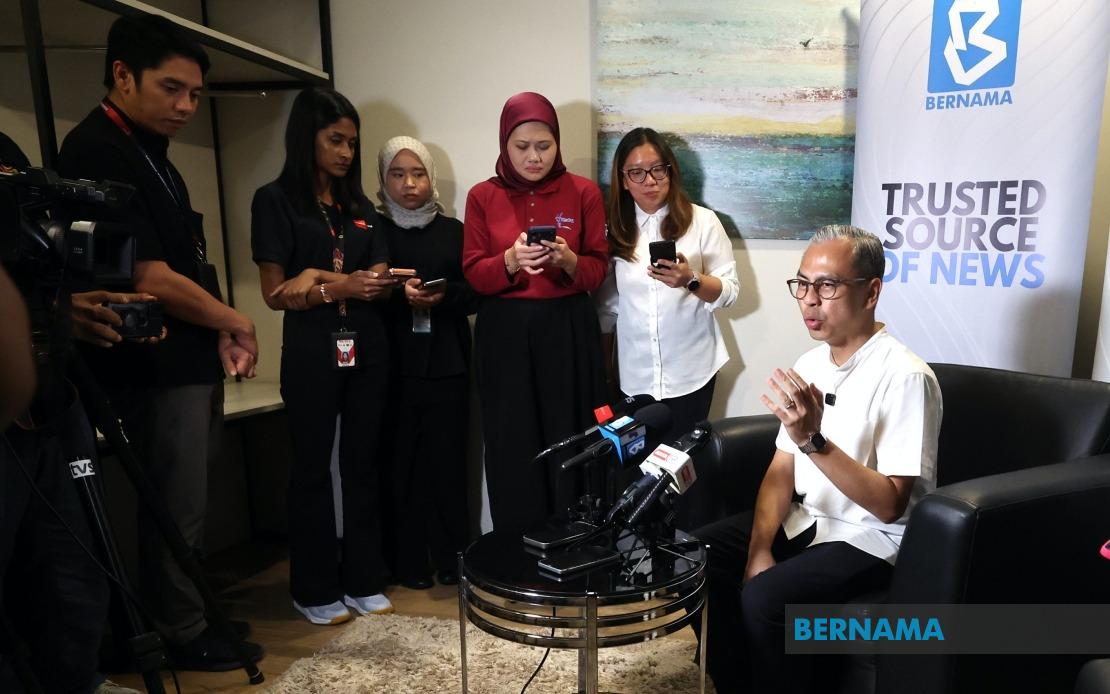
The Malaysian Media Council requires substantial reinforcement to function effectively as the country's media self-regulatory body, Communications Minister Datuk Fahmi Fadzil declared during a visit to the national news agency's operations centre in Johor Bahru this week. The minister's remarks signal the government's commitment to enabling the newly established council to mature into a credible mechanism for addressing industry standards without direct state intervention. This emphasis on institutional development comes at a critical moment when Malaysia's media landscape faces evolving challenges from both traditional outlets and rapidly expanding digital platforms.
Fahmi outlined plans for the government to provide targeted assistance during the Malaysian Media Council's formative years, framing such support as essential scaffolding rather than ongoing dependence. The strategy reflects recognition that self-regulatory bodies typically require initial institutional backing to establish legitimacy and operational capacity. Beyond financial or logistical support, the minister indicated the government would actively work to expand the council's membership base, viewing broader industry participation as fundamental to the body's effectiveness and independence. His comments suggest a deliberate policy shift toward industry-led governance rather than regulatory enforcement.
The expansion of membership holds particular significance for addressing systemic issues within Malaysia's media ecosystem. When more organisations adhere to common standards through a shared regulatory framework, individual outlets face reduced incentive to cut corners through sensationalism or ethical shortcuts. Fahmi argued that comprehensive coverage would transform the council from a marginal body into a forum where media-related disputes and standards questions could be resolved through transparent peer review. This approach potentially reduces friction between journalists and authorities while protecting editorial freedom by placing judgment in professional hands.
Prime Minister Datuk Seri Anwar Ibrahim recently announced a complementary mechanism: complaints against journalists from recognised media organisations would no longer trigger automatic government action but must first pass through the Malaysian Media Council. This procedural change carries substantial implications for press freedom. By inserting an independent intermediary between accusations and prosecution, the mechanism theoretically prevents weaponisation of legal processes against inconvenient reporting. Anwar framed the shift as ensuring fairer, more transparent treatment of journalists, addressing longstanding concerns about selective enforcement against critical voices.
However, the most contentious aspect of Fahmi's push involves persuading social media platforms to join the self-regulatory framework. Digital platforms present regulatory challenges fundamentally different from traditional newsrooms. While established media organisations maintain editorial hierarchies and fact-checking processes, social content flows from millions of users with minimal filtration. Fahmi acknowledged this distinction, noting that most conventional media outlets already respect ethical journalism principles, whereas problematic content frequently circulates on digital platforms without consideration for Malaysian context or local sensitivities. This gap has widened as social media becomes citizens' primary news source across Southeast Asia.
The minister cited concrete examples of harm resulting from unmoderated digital sharing. A recent incident in Banting, where a teenager stabbed a student, saw the victim's face and investigation details rapidly disseminated across social platforms, illustrating how digital networks can compromise privacy and interfere with police work. Such cases demonstrate that the challenge extends beyond factual accuracy to encompass dignity, security, and procedural integrity. Fahmi argued that if major platforms adopted Malaysian Media Council standards, equivalent safeguards could protect vulnerable individuals and support legitimate investigations.
Getting platforms to embrace local regulatory frameworks represents a formidable challenge. Most social media giants operate global policies designed for international applicability, and Malaysia's specific concerns—whether relating to religious sensitivity, political stability, or investigative protocols—may rank low in platform priorities. Fahmi acknowledged this tension, noting that existing platform guidelines largely ignore Malaysian context. Compelling or incentivising adoption of locally tailored standards requires either regulatory leverage or demonstrating commercial benefit, neither readily available to a newly formed council.
The proposed inclusion of social platforms in Malaysia's media self-regulation aligns with growing international discussion about digital accountability. Across Asia-Pacific, governments and civil society increasingly recognise that press freedom and media ethics cannot remain confined to traditional outlets when digital platforms distribute vastly more content. Singapore, Indonesia, and the Philippines have pursued similar strategies with mixed results. Malaysia's approach through the Malaysian Media Council potentially offers a middle path between light-touch industry self-regulation and heavy-handed state censorship, though implementation details remain underdeveloped.
Fahmi connected the strengthening initiative to Malaysia's standing in international assessments, specifically mentioning the Media Freedom Index. The country's ranking has fluctuated amid concerns about restrictive legislation and variable press freedom. A functional, inclusive self-regulatory council could signal to international observers that Malaysia prioritises industry-led governance and journalist protection. However, credibility depends on genuine independence: if the council operates as a rubber stamp for government preferences or lacks enforcement teeth against powerful interests, its ratings impact will be negligible or negative.
The timeline for achieving fuller platform participation remains unclear. Fahmi's language emphasised encouragement rather than mandates, suggesting persuasion and incentives will constitute the initial approach. Building consensus among competing platforms, media organisations, civil society groups, and government stakeholders typically proceeds slowly. The Malaysian Media Council must first consolidate existing membership among traditional outlets before realistically onboarding digital giants. This phased approach, while practical, means immediate impact on social media content moderation appears limited.
For Malaysian readers and Southeast Asian observers, the council's evolution carries implications beyond journalism norms. How effectively Malaysia addresses media ethics and digital accountability will influence regional approaches to similar challenges. Success could demonstrate that self-regulatory frameworks, despite limitations, offer advantages over state-controlled alternatives. Conversely, failure would reinforce arguments that only government action can manage digital disorder, potentially justifying more restrictive policies across the region. The Malaysian Media Council thus represents not merely a domestic institutional experiment but a test case for balancing press freedom, public protection, and digital governance in contemporary Asia.

