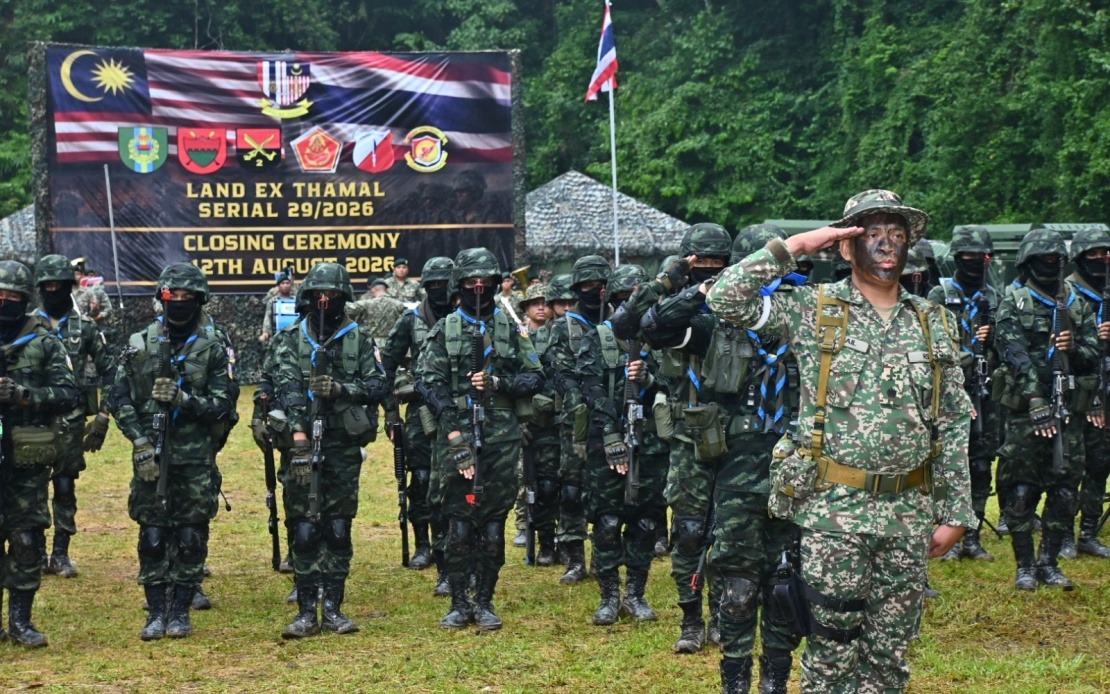
More than 250 military personnel from Malaysia and Thailand have commenced an intensive joint training programme in Gerik, underscoring the two nations' commitment to strengthening defence cooperation and regional security. The Exercise LAND THAMAL Series 29/2026, which began on August 5, brings together 197 Malaysian Army (TDM) officers and troops alongside 55 from the Royal Thai Army (RTA), creating a rare opportunity for both militaries to synchronise operational procedures and deepen mutual understanding in an era of evolving regional security challenges.
The training initiative, coordinated under the auspices of the 2nd Malaysian Infantry Division, represents a comprehensive approach to military preparedness that extends beyond traditional combat drills. The exercise framework encompasses three distinct phases designed to progressively build capability and strengthen the institutional bonds between the two forces. These phases—the Cross Training Exercise, Field Training Exercise, and Combined Military Civil Action—reflect a holistic philosophy that views defence partnerships as encompassing both tactical prowess and civilian-military engagement.
During the field training component, participating troops are exposed to a demanding curriculum covering core infantry competencies. Personnel from both nations practice combat manoeuvres, negotiate challenging terrain including water crossings and obstacle courses, establish field positions, conduct reconnaissance patrols, execute ambush tactics, and undertake assaults on simulated enemy installations. This immersive methodology ensures that soldiers from different command structures develop familiarity with shared tactical doctrines and can operate effectively alongside one another in contingency situations.
Beyond the technical dimensions of military training, the exercise emphasises knowledge transfer and institutional learning. Thai and Malaysian commanders and non-commissioned officers exchange insights into their respective operational methodologies, allowing both forces to benefit from different perspectives on tactical problem-solving. This exchange mechanism acknowledges that military excellence emerges not from unilateral approaches but from synthesising best practices across allied forces.
The opening ceremony on August 5 at Gerik Airstrip was jointly presided over by Brigadier General Datuk Mohd Zaini Hashim, Commander of the 30th Malaysian Infantry Brigade, and Senior Colonel Taweeporn Kanatong, Commander of the 5th Infantry Brigade of the Thai Army. Senior Colonel Taweeporn's remarks during the ceremony articulated the deeper strategic rationale underpinning the exercise. He highlighted that LAND THAMAL transcends narrow military training objectives, serving instead as a mechanism for fortifying the bilateral relationship itself whilst simultaneously augmenting both nations' capacity to respond to multifaceted contemporary threats.
The challenges that Senior Colonel Taweeporn identified—natural disasters, security threats, armed conflict, and broader regional instability—reflect the complex threat environment confronting Southeast Asia. Thailand and Malaysia, sharing a substantial land border and facing common vulnerabilities to transnational crime, insurgency, and climate-related emergencies, benefit significantly from coordinated defence planning. Joint exercises of this scale and intensity signal to regional and international actors that the two nations maintain high operational readiness and will respond collectively to security challenges affecting either nation.
The professional relationship evidenced by LAND THAMAL Series 29/2026 carries particular significance given the geopolitical dynamics of Southeast Asia. As regional powers pursue increasingly assertive foreign policies and as non-regional actors intensify their engagement in maritime and terrestrial disputes, the solidarity demonstrated through joint military exercises provides a stabilising counterweight. The exercise implicitly conveys that Thailand and Malaysia view their defence relationship not as a legacy arrangement from earlier decades but as an evolving partnership responsive to present and anticipated future security requirements.
Interoperability—the ability of forces from different nations to work seamlessly during joint operations—represents a central deliverable of the exercise programme. When military personnel routinely train together, establishing mutual comprehension of communication protocols, command structures, and tactical methodologies, the friction costs of emergency coordination diminish substantially. Should either nation face a security crisis requiring bilateral military response, the relationships and procedural familiarity cultivated through exercises such as LAND THAMAL substantially enhance the probability of effective coordination.
The inclusion of the Combined Military Civil Action component, operationalised through the Jiwa Murni Programme, demonstrates that contemporary military cooperation extends beyond traditional defence domains. Thai and Malaysian service members conducted community activities at Sekolah Menengah Kebangsaan Sultan Idris Shah II in Gerik, illustrating the military's broader social integration role. This civil action dimension strengthens military-community relations and underscores that defence cooperation generates tangible benefits for local populations.
For Malaysian defence planners, the continuation of LAND THAMAL exercises reinforces a strategic orientation centred on bilateral and multilateral partnerships rather than unilateral military buildups. The exercise demonstrates that Malaysia prioritises deepening ties with immediate neighbours through structured, sustained military engagement. This approach contrasts with purely hardware-focused defence strategies and reflects recognition that security in contemporary Southeast Asia depends heavily on institutional relationships, operational compatibility, and shared commitment to regional stability.
The choice of Gerik as the exercise location carries subtle significance, positioning the training in Malaysia's northern frontier region where Thai-Malaysian border dynamics are most acute. By conducting major military exercises in this sensitive area, both nations signal their confidence in the bilateral relationship and their commitment to ensuring that border regions remain zones of peaceful cooperation rather than latent tension. The exercise thus serves simultaneously as military training, diplomatic messaging, and institutional relationship-building.
Looking forward, the continuation of LAND THAMAL Series exercises will likely remain a cornerstone of Malaysia-Thailand defence relations. As the statement explicitly noted, these regular exercises are envisioned as providing an enduring platform for strengthening bilateral military ties and contributing to broader regional efforts to maintain peace and security. For Malaysian military professionals and policymakers, the successful execution of Exercise LAND THAMAL Series 29/2026 reaffirms that Southeast Asian stability rests substantially on the quality of relationships between neighbouring defence establishments.
The broader implications extend beyond bilateral relations to encompass regional security architecture. When major regional military forces like Thailand and Malaysia demonstrate sustained commitment to joint training and operational integration, they establish patterns of cooperation that resist the fragmentation pressures that periodically threaten regional stability. The exercise thus functions simultaneously as tactical training, strategic signalling, and institutional investment in the stable regional environment that underpins prosperity and development across Southeast Asia.

