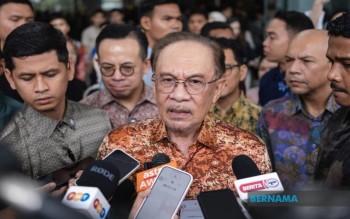
Prime Minister Datuk Seri Anwar Ibrahim has drawn a firm line in the sand regarding tax reform, declaring that Malaysia will not pursue the foundational concept of a broad-based Goods and Services Tax despite ongoing discussions about overhauling the nation's consumption tax architecture. Speaking after opening the TikTok Shop Summit 2026 in Kuala Lumpur, Anwar, who also holds the Finance Ministry portfolio, emphasized that protecting lower-income Malaysians from additional tax burdens remains non-negotiable for the MADANI government.
The prime minister's statement arrives amid renewed debate about Malaysia's tax regime, with various proposals circulating that range from levies on digital payment transactions to a full resurrection of GST mechanisms. The government had previously signalled openness to consumption tax reforms aimed at achieving greater progressivity and operational efficiency, comments that triggered speculation about whether a return to GST might be imminent. Anwar's latest remarks effectively quash those concerns, at least regarding the wholesale adoption of GST's fundamental architecture.
Understanding the distinction Anwar has articulated is crucial for Malaysian taxpayers and businesses. A broad-based GST, as implemented previously and still used across numerous economies, applies taxation across nearly all goods and services with limited exemptions. This approach casts an exceptionally wide net, capturing revenue from every income tier including the poorest citizens. Such universality was precisely why Malaysia abandoned GST in 2018, following public backlash centred on affordability and the regressive impact on household budgets during a period of rising living costs.
Yet Anwar's position is more nuanced than an outright rejection of all tax modernization. The government remains willing to examine specific GST components and to refine the current Sales and Service Tax framework to enhance both execution and fairness. This distinction matters considerably. Rather than scrapping the SST entirely or reverting wholesale to GST, policymakers appear to be exploring targeted enhancements—potentially borrowing selected mechanisms from GST design while maintaining SST's more selective application. Such hybrid approaches could theoretically improve revenue collection without imposing fresh tax obligations on vulnerable populations.
The SST system, introduced as GST's successor, operates differently by targeting specific goods and services rather than attempting comprehensive coverage. This structure theoretically permits greater exemptions for essential items and sectors serving lower-income households. However, the SST regime has faced persistent criticism from business operators complaining about administrative complexity and from economists questioning whether it generates sufficient revenue to support government fiscal objectives. Various reform proposals have accordingly surfaced, including mechanisms to broaden the tax base through digital transaction levies or other innovative approaches.
For Malaysian businesses and investors, particularly those in sectors like retail, hospitality, and e-commerce, Anwar's comments signal relative stability regarding the fundamental tax framework. Companies have invested substantially in SST compliance infrastructure since 2018; a sudden pivot to GST would necessitate costly system overhauls. The government's evident preference for incremental improvements over revolutionary restructuring thus offers welcome predictability, even as specific adjustments remain under review.
The political dimension of this stance deserves attention. The MADANI administration has staked considerable political capital on its commitment to ordinary Malaysians, positioning itself against policies perceived as burdensome to lower-income households. Rejecting broad-based GST aligns with this positioning and distinguishes the current government from its predecessor, which implemented GST in 2015 only to face mounting public dissatisfaction. By explicitly tying the anti-GST stance to principles of fairness and protection for the poorest citizens, Anwar reinforces the government's social equity messaging.
Regionally, Malaysia's tax architecture choices carry implications for Southeast Asian economic policy discussions. Several nations in the region grapple with similar questions about consumption tax design and progressivity. Malaysia's maintained commitment to a selective rather than comprehensive tax approach offers a counterpoint to broader-based systems operating elsewhere in Asia, reflecting different political economies and social priorities.
The practical challenge ahead involves executing meaningful SST improvements without triggering either revenue shortfalls or fresh popular backlash. Government officials must identify which specific GST components might usefully enhance the current system—perhaps streamlined filing procedures, clearer classification rules, or technological integration improvements—while avoiding any appearance of creeping toward a return to the universality that made GST unpopular. Digital payment transaction taxes, frequently mentioned in reform discussions, represent one avenue for broadening the revenue base without imposing traditional broad-based consumption taxation.
Business groups will likely scrutinize upcoming detailed proposals closely. While Anwar's assurance regarding SST's fundamental continuation provides comfort, the devil resides in implementation details. Any adjustments to SST mechanics, definition boundaries, or compliance requirements could significantly affect operational costs and competitive dynamics across different sectors. The government's willingness to engage with business stakeholders during the design phase of reforms will prove essential to avoid unintended economic consequences.
Longer-term fiscal sustainability remains a legitimate concern underlying these policy debates. Malaysia faces demographic shifts, rising healthcare and education expenditure demands, and economic growth dynamics that will strain government budgets. Revenue-raising measures, therefore, remain inevitable even as politicians resist politically unpopular broad-based taxation. The challenge for policymakers involves threading this needle—generating adequate revenue while respecting equity commitments and maintaining growth-friendly conditions for business investment.

