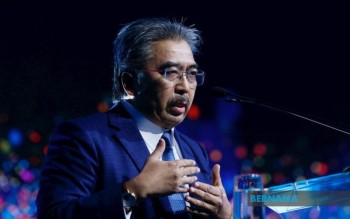
The Malaysian government faces a delicate policy challenge as it seeks to expand electric vehicle charging infrastructure across the country while managing the fiscal burden and protecting consumers from excessive costs. During a Dewan Negara session this week, Investment, Trade and Industry Minister Datuk Seri Johari Abdul Ghani acknowledged that authorities are still determining the most appropriate mechanism for a proposed EV levy rather than moving ahead with implementation. The minister's comments reveal the government's recognition that any policy decision will carry significant trade-offs that require careful calibration.
The fundamental tension at the heart of this policy dilemma reflects a broader challenge facing Malaysia as it transitions toward electric mobility. Government subsidies have been substantial, but maintaining them indefinitely while simultaneously building charging infrastructure requires identifying sustainable funding sources. The minister emphasised that authorities must consider the entire ecosystem, not merely the cost of vehicles themselves. This includes the expenses associated with electricity generation, fuel inputs, and the physical infrastructure needed to support widespread EV adoption. Without acknowledging these interconnected costs, policymakers risk making decisions that appear attractive in isolation but prove problematic when implemented at scale.
One critical consideration shaping the government's approach is Malaysia's continued dependence on fossil fuels for electricity generation. The country remains heavily reliant on gas and coal-fired power stations, meaning that the environmental and economic benefits of EV adoption are partially offset by the energy sources used to charge vehicles. This reality complicates the narrative around electric vehicles as a clean energy solution and necessitates a more nuanced policy framework that accounts for the actual composition of Malaysia's electricity grid. As the nation gradually transitions toward renewable energy, the calculus surrounding EV infrastructure investment will evolve, but current decisions must reflect today's energy realities rather than aspirational future scenarios.
The government is contemplating two primary approaches to funding the charging network expansion. The first involves imposing a direct levy on manufacturers, who would then likely transfer these costs to vehicle purchasers through higher prices. The second entails collecting a dedicated levy on each EV sold and channelling the revenue into a government fund specifically designated for public charging station development. Each approach carries distinct advantages and disadvantages that merit careful analysis. A manufacturer-focused levy might appear less visible to consumers but would effectively raise vehicle prices, potentially dampening EV adoption rates among cost-conscious buyers. Conversely, a sales-based levy would be more transparent but could similarly impact purchase decisions.
The fiscal constraints facing the government add urgency to this policy deliberation. Operating under a budgetary deficit, authorities must identify revenue sources for infrastructure development rather than allocating general tax revenues. This context explains why the government is reluctant to fund the entire charging network through conventional budget allocations. Minister Johari's candid discussion of these fiscal realities reflects an effort to help the public understand that infrastructure development requires funding mechanisms and that the government cannot indefinitely absorb these costs through subsidy programmes. The minister implicitly acknowledged that political and economic sustainability require moving beyond temporary subsidies toward longer-term, self-supporting funding models.
Malaysia's situation differs markedly from that of more developed nations with established EV ecosystems and superior fiscal positions. China, for instance, has deployed enormous resources to create a comprehensive charging network, investing at scales that reflect both greater governmental capacity and higher EV adoption rates that justify the expenditure. Malaysia must chart a more modest path appropriate to current adoption levels and fiscal capacity. The government's acknowledgement that it cannot replicate China's approach represents pragmatic policy-making that recognises domestic constraints. Expanding charging infrastructure must occur at a pace that aligns with increasing EV sales volumes and available government resources.
The challenge of coexisting internal combustion engine vehicles and electric vehicles adds another layer of complexity to infrastructure planning. Malaysia cannot abruptly phase out conventional vehicles, and substantial portions of the population will continue driving fossil-fuel-powered cars for the foreseeable future. This reality means that charging infrastructure must expand to serve growing EV users without simultaneously forcing the government to abandon support for the broader transportation ecosystem. The policy must accommodate this transition period during which both powertrains remain prevalent on Malaysian roads.
Stakeholder positioning will significantly influence the final policy decision. Automobile manufacturers will likely resist levies that reduce their competitiveness or require them to absorb costs. Consumer groups may object to levies that increase vehicle prices or establish new taxes on EV purchases. Electricity providers will have interests in how charging infrastructure develops and whether their role in supporting it expands. Government agencies responsible for transportation, environment, and energy will each bring their perspectives to the deliberation. Navigating these competing interests while maintaining forward progress on the EV transition requires political skill and clear communication about the rationale underlying whatever mechanism authorities ultimately select.
The timing of this policy decision carries significance for Malaysia's automotive industry. As regional competitors like Thailand and Indonesia develop their own EV strategies and charging infrastructure, Malaysia risks falling behind if it delays implementation. Potential EV buyers and manufacturers will make investment and purchasing decisions based on their assessment of charging availability and policy stability. Protracted uncertainty about levy mechanisms could dampen enthusiasm for EV adoption and discourage manufacturers from expanding production capacity in Malaysia. The government must therefore balance thoroughness in policy development with the need to demonstrate commitment and provide clarity to market participants.
Minister Johari's framing of the issue as requiring public understanding rather than predetermined political positions suggests the government may be preparing the ground for a policy announcement that will require public acceptance. By publicly discussing the fiscal constraints, infrastructure requirements, and inherent trade-offs, authorities are attempting to build a narrative that justifies whatever mechanism they eventually implement. This communicative approach recognises that any levy will face resistance and that political sustainability depends partly on public comprehension of why such measures are necessary. The coming weeks will reveal whether this educational strategy succeeds in generating sufficient consensus for an announced EV levy mechanism.

