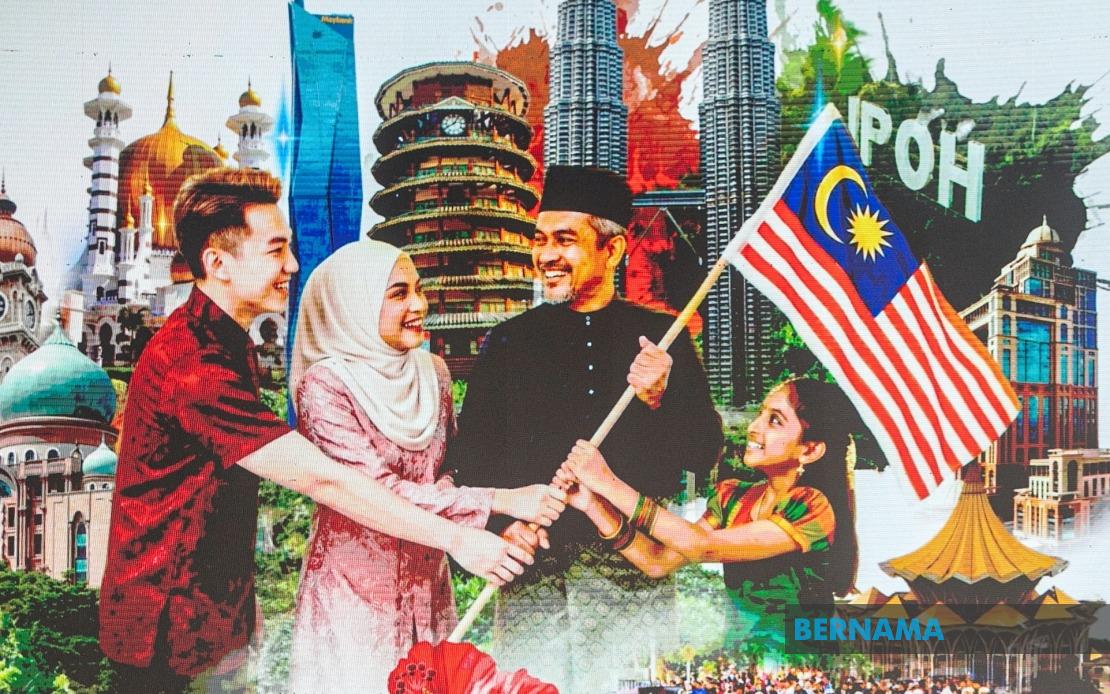
Malaysia's Communications Minister Datuk Seri Fahmi Fadzil has issued a timely reminder for content creators and the public to exercise heightened caution when deploying artificial intelligence tools to generate imagery and materials featuring the Jalur Gemilang, stressing the importance of maintaining the flag's visual integrity and symbolic value. Speaking at the launch of the 2026 National Month and Fly the Jalur Gemilang campaign in Ipoh on July 19, Fahmi highlighted a growing concern: the rapid proliferation of AI-generated content has introduced the risk of rendering Malaysia's national emblem with inaccuracies that could undermine its dignity and cultural significance.
At the heart of the minister's concern lies a specific technical detail that carries profound nationalist implications. The Jalur Gemilang features exactly 14 stripes, a foundational design element that distinguishes it from other flags and holds symbolic meaning for the nation. Fahmi stressed that content creators must take responsibility for ensuring AI systems accurately reproduce this critical feature, warning that the omission or misrepresentation of even a single stripe constitutes a material error with potential diplomatic and cultural ramifications. This concern reflects a broader challenge facing governments in the digital age: how to preserve national symbols and protocols when powerful, accessible technologies enable rapid content generation at scale, often without human review or quality assurance mechanisms.
The communications ministry's response reflects a measured, graduated approach to enforcement rather than outright prohibition. Fahmi indicated that the government would initially adopt an advisory posture, reaching out to individuals or organisations that inadvertently produce or distribute flagrantly inaccurate representations of the national emblem. This soft-touch strategy acknowledges the reality that many errors stem from genuine oversight or technological limitations rather than deliberate disrespect, and seeks to correct behaviour through education and dialogue before resorting to legal mechanisms. However, the minister's implicit reference to "specific laws governing such matters" suggests that more formal enforcement options exist should voluntary compliance prove insufficient, signalling that the government retains a compliance toolkit should persuasion fail.
Fahmi announced plans for institutional collaboration with the Malaysian Press Institute and the Malaysian Media Council, positioning these bodies as gatekeepers of quality and accuracy throughout the National Month period. This partnership model distributes responsibility for flag representation across the media ecosystem rather than concentrating it solely within government agencies, reflecting recognition that sustainable compliance depends on professional standards and industry self-regulation. By engaging established media institutions, the government seeks to leverage their credibility and reach to ensure that news organisations, digital platforms, and content producers maintain rigorous standards when depicting the national flag, particularly when employing emerging technologies.
The initiative coincides with preparations for the 2026 National Day and Malaysia Day celebrations, which carry special significance as they represent an opportunity for nationwide patriotic expression. Prime Minister Datuk Seri Anwar Ibrahim presided over the launch event, underscoring the government's commitment to these commemorations. National Unity Minister Datuk Aaron Ago Dagang and Perak Menteri Besar Datuk Seri Saarani Mohamad attended, reflecting multi-level government coordination around the campaign. The 2026 National Day will be celebrated in Putrajaya, while Malaysia Day festivities will be centred in Sarawak, with final venue arrangements still pending, signalling continued planning for what promises to be significant national events.
The Fly the Jalur Gemilang campaign encourages Malaysians to display the national flag continuously from the campaign's launch through at least September 16, transforming residential areas, villages, and government buildings into visible expressions of patriotic sentiment. This sustained flag-flying initiative extends beyond the traditional concentration of displays around Independence Day, aiming to create a prolonged period of national unity messaging. By maintaining flag displays over an extended timeline, the campaign seeks to internalise patriotic consciousness and strengthen emotional connection to national symbols among the broader population.
The emphasis on AI-generated content reflects contemporary challenges that earlier generations of policymakers never anticipated. As artificial intelligence systems become increasingly sophisticated and user-friendly, they have democratised content creation, enabling individuals without professional design training to produce polished imagery. However, this accessibility carries inherent risks when applied to symbols demanding precision and consistency. AI models trained on vast datasets may occasionally reproduce images with subtle errors that human creators would catch intuitively; algorithmic bias in training data can lead to skewed or inaccurate representations. The government's proactive stance signals awareness that reactive approaches will inevitably lag behind technological capability, necessitating forward-thinking engagement with emerging tools.
For Malaysian readers and Southeast Asian observers, this initiative carries broader implications about how nations navigate the intersection of digital innovation and cultural preservation. As regional governments increasingly embrace AI to enhance service delivery and citizen engagement, they simultaneously confront questions about maintaining quality, accuracy, and cultural sensitivity when delegating creative functions to algorithmic systems. Malaysia's approach—combining encouragement of responsible AI use with collaborative institutional oversight—offers a template that balances innovation with national interest, neither rejecting emerging technologies outright nor allowing their deployment without safeguards.
The minister's explicit education component, encouraging Malaysians to learn proper etiquette for displaying the Jalur Gemilang, addresses a complementary challenge beyond AI-specific concerns. Renewed emphasis on flag protocols reflects recognition that maintaining symbolic consistency requires ongoing public education, particularly as demographic turnover and cultural change may erode traditional knowledge. By coupling technological warnings with broader civic education about flag respect, the government attempts to embed patriotic practices and understanding across multiple registers simultaneously.
Looking forward, the experience will likely inform how Malaysian institutions approach similar challenges involving other national symbols, official imagery, and official communications when AI tools become further embedded in content production workflows. The precedent established through the Fahmi initiative—emphasising accountability, institutional collaboration, and proportionate enforcement—may become a model for broader government guidance on AI deployment in contexts where accuracy, precision, and cultural fidelity carry significant weight. As other Southeast Asian nations confront comparable questions about managing AI's role in civic and national contexts, Malaysia's practical approach to balancing technological adoption with symbolic stewardship will merit attention from policymakers grappling with analogous tensions.

