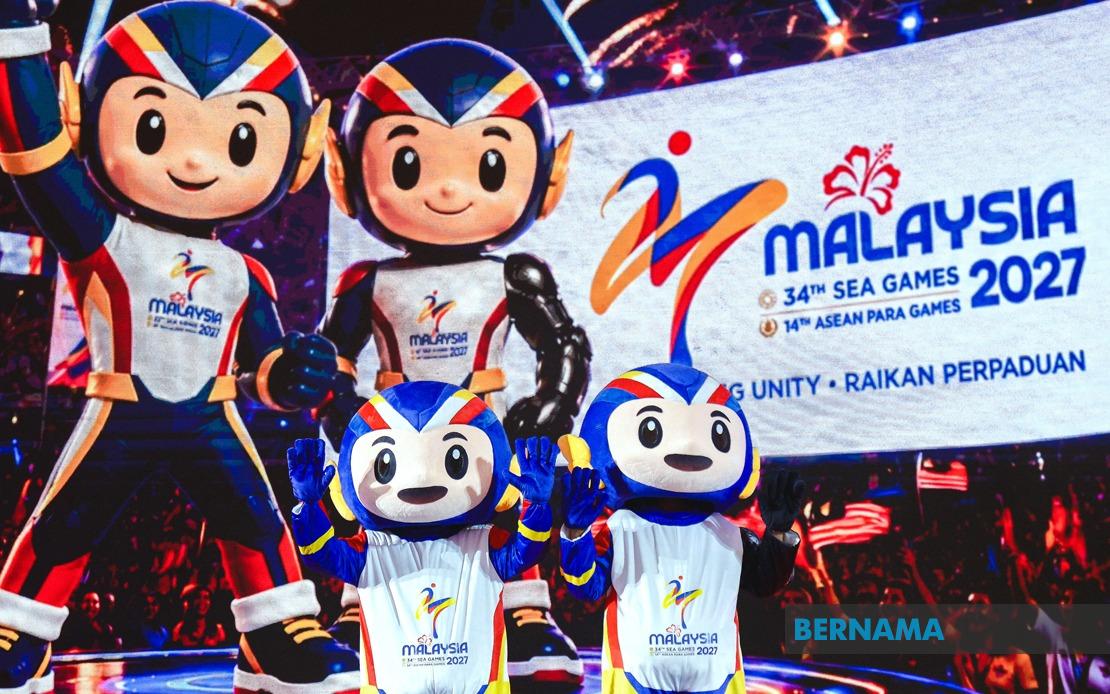
Malaysia has officially launched its vision for the 2027 SEA Games and ASEAN Para Games, unveiling a cohesive identity designed to capture the regional spirit and set the tone for what promises to be a landmark sporting event. At a ceremony in Putrajaya on July 13, Youth and Sports Minister Dr Mohammed Taufiq Johari presented the official theme, logo, and mascot that will guide preparations and execution across the two-week games.
The chosen theme, "Celebrating Unity," encapsulates Malaysia's ambition to use sport as a vehicle for regional solidarity. Rather than simply seeking to organize a successful competition, the framework emphasises how athletic competition can reinforce bonds between Southeast Asian nations. Dr Mohammed Taufiq explained that this overarching concept serves as more than symbolic window-dressing; it is intended to motivate athletes to transcend their perceived capabilities and pursue excellence on the global stage. For a host nation, establishing such a thematic anchor early in the preparation cycle helps align all stakeholders—from government agencies to private sponsors and local communities—around a shared narrative.
Equally significant is the introduction of TUAH, a departure from the animal mascots that have characterised previous SEA Games editions. Rather than anthropomorphised creatures, TUAH represents a contemporary human figure embodying heroic qualities: dynamism, self-assurance, and relatability. This shift in mascot design reflects evolving attitudes toward sports mascotry in Southeast Asia, where organisers increasingly seek characters that resonate with younger, digitally-native audiences. The mascot's visual identity draws explicitly from Malaysia's national flag, the Jalur Gemilang, weaving patriotic symbolism into the Games' branding. By grounding TUAH in national iconography, Malaysia signals that the event belongs not merely to government or sports administrators but to the Malaysian people themselves.
For athletes competing across disciplines, such symbolic frameworks matter considerably. Mascots and themes function as psychological anchors, shaping the atmosphere in which competitors train and perform. Dr Mohammed Taufiq articulated a hope that TUAH would serve as a talisman—a lucky charm—as Malaysia pursues its goal of finishing atop the overall medal standings on home soil. This ambition is neither boastful nor unprecedented; every host nation enters its Games seeking to leverage home advantage. Yet Malaysia's explicit targeting of the overall championship title indicates confidence in its athletic development and investment in grassroots sports programmes.
Underlying this confidence is a strategic performance benchmark established by the National Sports Council. The body has set a target of ensuring that 70 per cent of Malaysia's athletes finish on the podium—a top-three placement—at Asian-level competitions by the end of the calendar year. NSC director-general Jefri Ngadirin recently clarified that this metric exists specifically to gauge Malaysia's realistic chances of claiming the overall 2027 championship. Such data-driven target-setting reflects a maturation in how the nation approaches athletic development, moving beyond ad hoc efforts toward systematic, measurable goals.
The geographic distribution of venues across Malaysia deserves particular attention when assessing the Games' broader impact. Rather than concentrating infrastructure in a single city, organisers have designated four clusters spanning Sarawak, Penang, Johor, and Kuala Lumpur. This archipelago-like arrangement poses logistical complexity but offers significant advantages for the nation. Spreading Games venues distributes economic benefits, reduces transport congestion in any single metropolitan area, and allows peripheral regions to participate directly in hosting. For Sarawak in particular, co-hosting major sporting events elevates its profile regionally and facilitates cross-border engagement with Brunei and Indonesian Borneo.
Dr Mohammed Taufiq provided reassurance that facility construction and development are proceeding without major impediments. To date, no significant complications have emerged regarding the sporting venues themselves. However, the minister acknowledged that current efforts are concentrated on technical dimensions—the operational frameworks, technological systems, and administrative protocols necessary to run complex, multi-venue competitions smoothly. This phase-by-phase approach is sensible; once structural capacity is confirmed, attention must shift toward ensuring that timing, scheduling, security, catering, transport, and volunteer coordination function seamlessly across geographically dispersed sites.
The September 18–29 timeframe for the SEA Games, followed immediately by the ASEAN Para Games from October 17–23, compresses a substantial competitive calendar into six weeks. This back-to-back scheduling requires meticulous planning to ensure that facilities remain in pristine condition between events, that volunteer corps are adequately rested and retained, and that local populations remain enthusiastic despite the extended disruption. By establishing clear themes and identities well in advance, Malaysia provides continuity across these two distinct but interconnected competitions.
For Southeast Asian athletes, the 2027 Games represent an intermediate milestone between the 2023 Games in Cambodia and future editions. The region's sporting infrastructure continues maturing; investment in athletic academies, coaching talent, and training facilities is accelerating across multiple countries. Malaysia's transparent articulation of its performance targets and preparation status sets a benchmark that may influence how neighbouring nations approach their own competitive objectives and event hosting responsibilities.
The unveiling of "Celebrating Unity" and TUAH thus signals more than administrative formality. It represents Malaysia's commitment to delivering an inclusive, ambitious Games that inspires both the host nation's athletes and the broader Southeast Asian sporting community. Whether the mascot proves fortunate, whether the Games achieve their championship aspirations, and whether the multi-cluster venue arrangement functions flawlessly will determine the ultimate legacy of this investment in regional sport.

