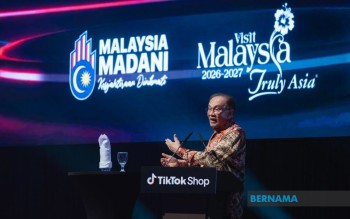
Prime Minister Datuk Seri Anwar Ibrahim has signalled a significant shift in Malaysia's investment policy, declaring that the government will implement stricter vetting procedures for new foreign investment applicants. The move comes as authorities recognise a concerning trend where international companies establish operations in Malaysia without generating substantive economic returns or job opportunities for Malaysian citizens. Speaking at the TikTok Shop Summit 2026 in Kuala Lumpur, Anwar emphasised that future investment approvals would be conditional on demonstrable contributions to domestic employment and broader economic activity.
The impetus for this policy review stems from alerts raised by the Ministry of Investment, Trade and Industry (MITI), which has identified numerous enterprises operating warehousing and transit facilities that provide minimal value to the Malaysian economy. These operations essentially exploit Malaysia's strategic location and infrastructure without reciprocating through meaningful job creation or economic stimulus. The Prime Minister acknowledged that enforcement action has already commenced against such entities, though a comprehensive review of all new applicants remains necessary to prevent similar arrangements going forward.
Anwar's comments emerged during a question-and-answer exchange at the TikTok Shop Summit, when a participant raised concerns about the flooding of cheap merchandise into Malaysia through cross-border e-commerce platforms such as Temu and Pinduoduo. This question touched on a tension inherent in Malaysia's identity as an open, trade-oriented economy: the nation's commitment to liberalised commerce and digital connectivity has inadvertently created pathways for predatory pricing strategies that undermine local retailers and manufacturers. The Prime Minister acknowledged this dilemma while clarifying that Malaysia's openness must not become a liability for domestic business operators.
Particularly troubling in Anwar's assessment is the prevalence of shell companies registered under misleading local business identities that mask entirely import-dependent operations. He cited the example of enterprises registered as ostensible coffee shops or traditional retailers while importing every product they market, contributing neither employment nor authentic local entrepreneurship. Such arrangements exploit consumer perception and regulatory loopholes simultaneously, creating a veneer of local business while functioning as foreign distribution networks. This phenomenon represents a sophisticated form of regulatory arbitrage that circumvents the spirit, if not always the letter, of investment and commercial regulations.
The Port Klang warehouse phenomenon exemplifies a more industrial-scale variant of the same dynamic. Major international logistics operators have established significant warehouse facilities in one of Southeast Asia's busiest ports without any corresponding requirement to engage Malaysian labour or source Malaysian goods. These operations function essentially as conduits for international supply chains with minimal ancillary economic activity within Malaysia itself. The absence of local hiring requirements or domestic procurement means that capital investment fails to generate the multiplier effects typically associated with foreign direct investment, whereby wages circulate through the local economy and domestic suppliers gain market opportunities.
The Prime Minister's framing of certain import practices as "dumping" reflects growing concern within Malaysian policymaking circles about price-predatory strategies from international e-commerce actors. While Malaysia maintains its commitment to free trade principles, there is an emerging recognition that unregulated market entry by companies employing loss-leader pricing can distort domestic competition and destabilise local businesses unable to match such unsustainable price points. The challenge for Malaysian authorities lies in distinguishing between legitimate competitive pricing and predatory strategies designed solely to capture market share at the expense of market stability.
This initiative arrives at a critical juncture for Malaysia's economic development. As the nation seeks to transition toward higher-value manufacturing and services, the quality of foreign investment becomes increasingly significant. Previous decades witnessed Malaysia successfully attracting substantial foreign direct investment in semiconductor manufacturing, automotive production, and petroleum refining—all sectors generating substantial employment multipliers and technology transfer. However, the emergence of low-value warehousing and transit operations suggests that investment attraction mechanisms may have become misaligned with contemporary economic priorities.
The government's regulatory response must navigate several competing imperatives. Excessive restrictions risk deterring legitimate foreign investors and damaging Malaysia's reputation as an investment destination at a time when regional competition for capital intensifies. Conversely, insufficient scrutiny permits parasitic operations that extract value from Malaysia's infrastructure and location while contributing minimally to national development objectives. Anwar's proposal for case-by-case review of new applicants represents an attempt to calibrate this balance, substituting blanket policies with substantive assessment of each investment's prospective benefits.
For Malaysian small and medium enterprises, particularly retailers and manufacturers competing against imported goods, this policy shift potentially offers meaningful relief. Local businesses have increasingly complained about unfair competition from entities employing aggressive pricing that local operators cannot replicate while maintaining viable profit margins and employee wages. Enhanced investment screening that privileges applicants demonstrating commitment to local employment and supply chain participation could shift competitive dynamics favourably toward domestic enterprises.
Implementation of this strategy depends critically on bureaucratic capacity and clarity of criteria. MITI must develop transparent benchmarks for assessing whether investment applications generate sufficient employment and economic benefits to merit approval. Without such frameworks, investment decisions risk becoming subject to inconsistent application or perception of arbitrariness that itself discourages legitimate foreign investors. The ministry must simultaneously increase enforcement capacity to monitor compliance by existing operators and identify violations of any new requirements imposed on approved investments.
The initiative also carries implications for Malaysia's broader trade relations and commitments. International trade agreements to which Malaysia is party may constrain the government's latitude for discriminatory treatment of foreign investors. Any investment screening regime must be carefully calibrated to comply with obligations under bilateral investment treaties and multilateral agreements while still achieving domestic policy objectives regarding employment and economic contribution.
Moving forward, the success of this approach will be measured not by restrictiveness but by quality: whether it attracts investments that genuinely strengthen Malaysia's productive capacity and employment base while still maintaining the openness and connectivity that remain essential to Malaysian prosperity. The Prime Minister's comments suggest recognition that markets require architecture and direction, and that Malaysia's future competitiveness depends on ensuring foreign investment aligns with rather than undermines domestic economic development objectives.

