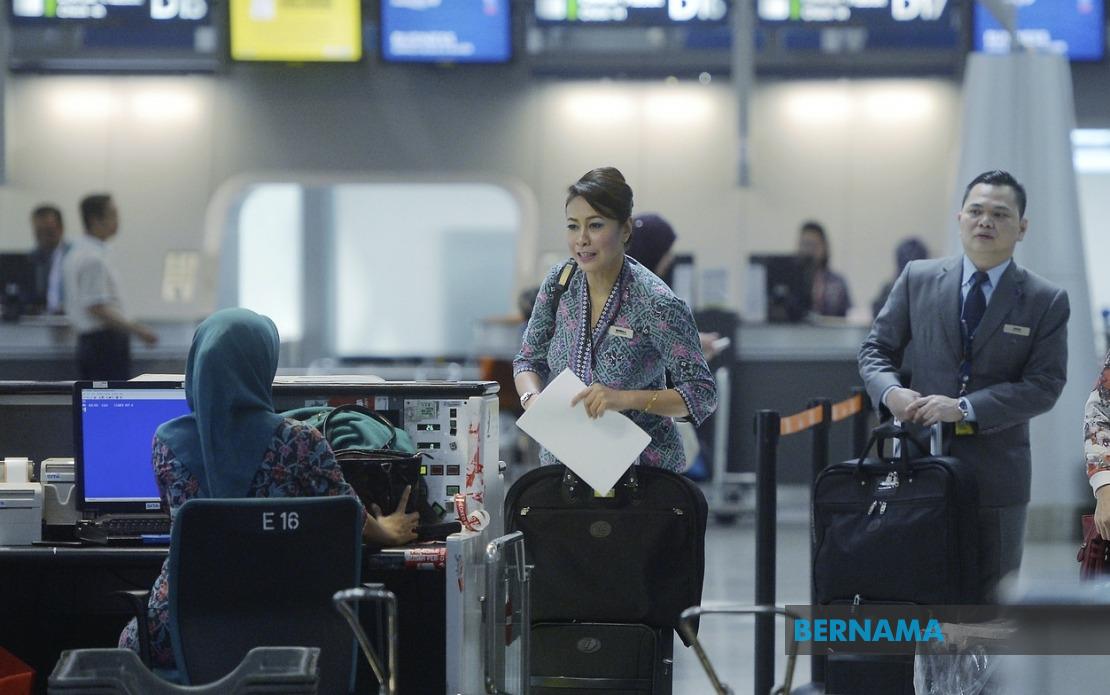
Malaysia's aviation security framework is undergoing a significant overhaul following the arrest of a Malaysian pilot in Indonesia, with authorities pledging to implement tighter vetting procedures for all flight personnel operating from the country's airports. The Malaysian Border Control and Protection Agency (AKPS) has committed to enhancing existing screening protocols, addressing vulnerabilities that allowed a suspect to transit through Kuala Lumpur International Airport with contraband before being apprehended upon arrival in Jakarta.
Datuk Seri Mohd Shuhaily Mohd Zain, the director-general of AKPS, disclosed that a high-level coordinating meeting convened by the Transport Ministry secretary-general brought together officials from the police force, the national airline group, and border authorities to systematically review current security measures. The gathering underscored the seriousness with which government agencies are treating the incident, with Malaysia Aviation Group representatives participating actively in discussions about procedural improvements. Mohd Shuhaily emphasised that all relevant bodies are committed to strengthening the existing framework in the coming months.
The immediate trigger for this security review centres on the July 31 arrest of a 39-year-old Malaysian pilot at Soekarno-Hatta International Airport in Jakarta. Indonesia's customs authorities reported that the suspect arrived on July 29 after operating a scheduled international passenger service from Kuala Lumpur and was found carrying approximately 25 kilogrammes of ecstasy valued at around Rp60 billion. The drugs were discovered concealed within the pilot's checked luggage, raising critical questions about how such a substantial quantity of contraband evaded detection systems at Malaysia's primary international hub.
What compounds concern within aviation security circles is that the suspect successfully cleared all screening procedures at KLIA on July 28 before departure. Routine X-ray scanning technology failed to identify anything suspicious about either the items or the luggage in question, permitting the individual to pass through Malaysia's standard security protocols without raising alarms. This gap in detection capability has prompted authorities to await detailed feedback from the Royal Malaysia Police regarding the circumstances that enabled the contraband to transit undetected, suggesting that the incident has exposed potential weaknesses in either equipment capability or procedural implementation at Malaysia's busiest international airport.
The comprehensive nature of proposed enhancements extends beyond simple equipment upgrades. Mohd Shuhaily indicated that all pilots, crew members, and airport staff will henceforth undergo more thorough background and security screening, reflecting a shift towards personnel-centric rather than purely luggage-centric security measures. This broader approach acknowledges that trusted transportation sector workers represent a potential vulnerability vector, particularly given their routine access to aircraft and lower suspicion profiles compared to general passengers moving through airport terminals.
For Malaysia's aviation sector, the incident represents a significant reputational challenge at a time when the industry is rebuilding international confidence following earlier crises. Airlines operating from Malaysian airports depend heavily on seamless international operations and passenger confidence in safety and security protocols. Enhanced screening for crew members, while operationally necessary, may introduce additional time requirements during pre-flight preparation, potentially affecting turnaround times and scheduling efficiency at KLIA and regional airports.
The timing of this security review occurs within a broader Southeast Asian context of increased vigilance regarding drug trafficking through aviation channels. The region remains a critical transit zone for illicit substances moving between production areas in the Golden Triangle and consumption markets across East and Southeast Asia. The use of trusted transportation sector personnel to facilitate drug movement represents an evolution in trafficking methodologies that law enforcement agencies across the region have encountered with increasing frequency.
Indonesia's handling of the case through its customs directorate demonstrates the interconnected nature of aviation security across borders. The arrest itself, rather than occurring at the point of origin in Malaysia, highlighted the importance of destination country screening as a final safeguard. This reality underscores the limitations of relying solely on origin-point security measures and reinforces the necessity of robust mutual cooperation between Malaysian and regional aviation authorities.
The proposed screening enhancements will likely focus on expanding background verification databases, cross-referencing crew records with intelligence databases maintained by the Federal Bureau of Investigation and Interpol, and potentially introducing more sophisticated pharmaceutical detection technologies specifically calibrated to identify synthetic drugs like ecstasy. These measures reflect international best practices increasingly adopted by aviation security authorities in developed economies facing similar challenges with insider threats.
For Malaysian readers and the broader travelling public, these procedural changes should ultimately enhance confidence in aviation security without substantially disrupting normal operations. The involvement of Malaysia Aviation Group in the review process suggests that industry stakeholders recognise the mutual benefits of reinforced security frameworks. Airlines understand that a single high-profile incident involving crew members can trigger regulatory scrutiny and passenger anxiety that damages commercial operations more severely than modest increases in pre-flight screening duration.
The incident also raises questions about the adequacy of existing human resources training within KLIA's security divisions. Whether the failure to detect contraband resulted from technological limitations, procedural shortcuts, or insufficient personnel training will likely inform the specific nature of recommendations emerging from the Transport Ministry review. Enhanced screening protocols will prove effective only if implemented consistently by trained personnel operating within clear procedures and accountability frameworks.
Moving forward, Malaysia faces the challenge of implementing these security improvements without inadvertently creating operational inefficiencies that disadvantage the country's aviation industry relative to regional competitors. Airlines may choose to relocate operations to jurisdictions with less stringent crew screening if procedural enhancements become excessively burdensome. The government's task involves striking an appropriate balance between enhanced security protection and maintaining the operational efficiency that keeps Malaysia's aviation sector competitive within regional air transport markets.

