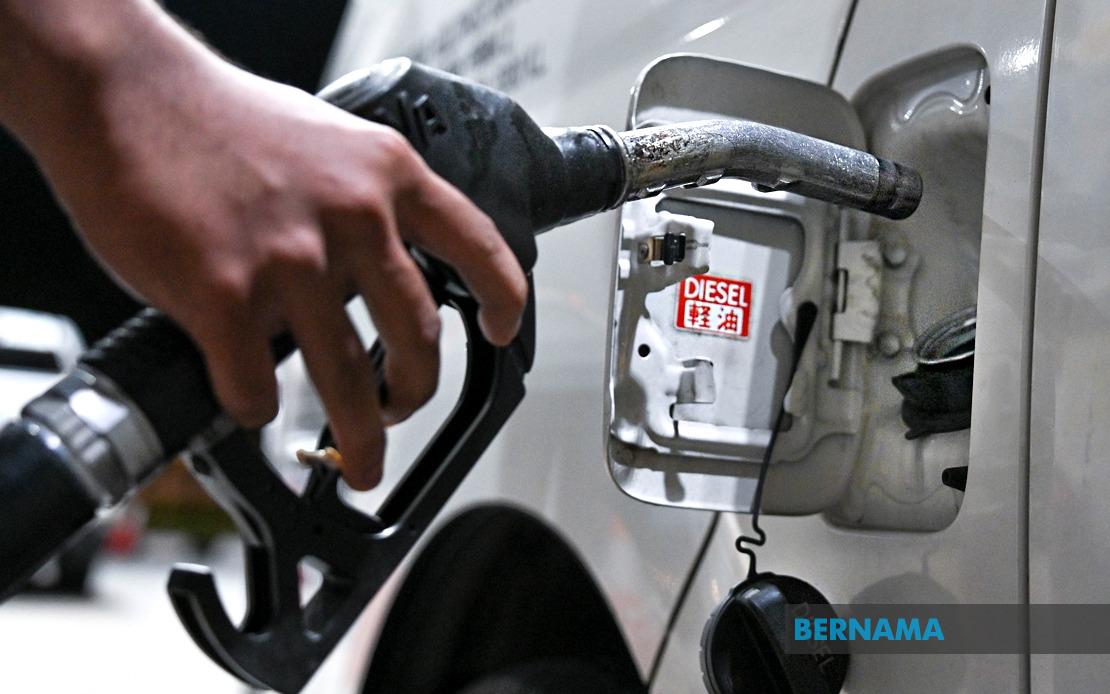
The Malaysian government has unveiled an ambitious diesel subsidy reform programme designed to recapture billions of ringgit lost annually to leakages and illegal diversions. Second Finance Minister Datuk Seri Amir Hamzah Azizan announced that the BUDI MADANI Diesel initiative, set to commence on July 1, 2026, is projected to deliver RM2 billion in annual savings by establishing a streamlined, transparent subsidy mechanism that reaches only genuinely eligible Malaysians. The standardised price point of RM2.10 per litre represents a pivotal shift from the government's previous ad-hoc subsidy approach, which had seen costs spiral to unsustainable levels amid volatile global crude markets.
The fiscal pressures that prompted this overhaul are starkly evident in recent government accounts. Monthly fuel subsidy obligations, which historically averaged around RM800 million, spiked dramatically to nearly RM4.7 billion in March 2026 and RM4.9 billion in April as international oil prices surged. These extraordinary demands revealed a structural vulnerability in Malaysia's subsidy system: the government lacks effective tools to differentiate between legitimate domestic consumption and fraudulent diversions. This vulnerability became catastrophically apparent through consumption data that exposed alarming anomalies in the market, signalling systematic abuse at multiple points across the supply chain.
The most telling evidence of subsidy leakage emerges from diesel consumption patterns that defy logical explanation. National monthly diesel offtake expanded from approximately 624 million litres to nearly 1.2 billion litres, an almost doubling that cannot be attributed to organic economic growth or expanded commercial activity. This sudden surge points unmistakably to deliberate diversion schemes, with subsidised diesel intended for domestic road transport and agricultural use being illegally siphoned into cross-border smuggling networks or captured by commercial and industrial users who should be purchasing unsubsidised product at market rates. These practices strain government finances and, critically, threaten the physical availability of diesel for genuine domestic needs.
The distortions are even more pronounced in Malaysia's East Malaysian states. Sabah and Sarawak together are consuming approximately two billion litres of diesel annually, yet credible estimates of legitimate demand in these territories suggest actual requirements of around one billion litres yearly. This billion-litre gap represents pure leakage, a staggering loss that underscores the urgency of systematic reform. The geographic remoteness of these states and their proximity to maritime smuggling routes make them particularly vulnerable to subsidy exploitation schemes that regional authorities have struggled to contain.
The government's response centres on introducing identity verification technology as the gateway to subsidy access. The BUDI MADANI Diesel programme adopts the MyKad authentication mechanism already proven successful in the BUDI RON95 petrol subsidy scheme, ensuring that only eligible individual vehicle owners can access discounted fuel. Initially, approximately 700,000 private diesel vehicle owners across Malaysia will qualify for the RM2.10 per litre rate upon presentation of valid MyKad at participating petrol stations nationwide. This technological barrier aims to eliminate the anonymous nature of current diesel transactions, where trucks and vehicles of unknown ownership can refuel at subsidised rates with minimal accountability.
For those already receiving diesel support through the government's cash assistance programmes, the transition will be seamless. The current RM400 monthly cash payment awarded to existing BUDI Diesel beneficiaries will be discontinued and replaced with direct point-of-sale subsidies activated through MyKad verification at fuel pumps. Critically, eligible recipients will be automatically migrated to this new mechanism without requiring fresh applications, reducing administrative friction and ensuring continuity for vulnerable groups who depend on this assistance. This structured transition acknowledges that diesel subsidies serve important social functions beyond general subsidy relief, particularly for commercial operators and transport workers whose livelihoods depend on fuel cost containment.
The rollout timeline reflects careful preparation and risk management. Ahead of the full nationwide launch scheduled for July 1, 2026, early access to the BUDI Diesel system will commence on June 27, 2026, initially restricted to qualifying private diesel vehicle owners in Peninsular Malaysia. This phased approach permits authorities to test system robustness, identify technical glitches, and address operational challenges before extending the programme to Sabah, Sarawak, and the Federal Territories. Such measured implementation reduces the risk of supply disruptions or system failures that could undermine public confidence in the reformed subsidy architecture.
From a policy perspective, the BUDI MADANI Diesel reform represents a significant evolution in Malaysia's approach to fuel subsidies. Rather than abandoning subsidies entirely, which could impose hardship on low-income households and essential service operators, the government is instead reconstructing the subsidy system around verification and targeting principles. This middle-ground strategy acknowledges political and social constraints while attempting to improve fiscal sustainability and supply security. The RM2 billion in projected annual savings—if realised—would free substantial resources for other development priorities or deficit reduction, addressing concerns about unsustainable government spending on energy support.
However, the success of BUDI MADANI Diesel ultimately depends on implementation rigour and technological reliability. MyKad verification systems, while effective, are not impervious to manipulation or technical failures. Cross-border smuggling networks, which benefit from the subsidy differential between Malaysia and neighbouring countries, possess strong financial incentives to circumvent the new system through document fraud or parallel supply channels. The government will need robust enforcement coordination with customs authorities, federal and state police, and regional maritime agencies to prevent determined smugglers from simply escalating operations beyond formal fuel station networks.
Regionally, Malaysia's subsidy reform has implications for neighbouring economies. The narrowing gap between subsidised Malaysian diesel prices and global market rates may reduce the profit margins available to smuggling operations that currently divert Malaysian fuel to Thailand, Singapore, and the Philippines, potentially diminishing cross-border fuel trafficking. Conversely, the targeting mechanism removes the blanket subsidy that currently extends to non-resident and commercial users, which may indirectly increase fuel costs for certain industries and transportation sectors accustomed to accessing Malaysian subsidised rates. Industry associations and transport operators will likely advocate for transitional protections or carve-outs.
From a sustainability standpoint, the BUDI MADANI Diesel programme aligns with broader international trends toward better-targeted social spending. Many developing economies, from Indonesia to Egypt, have struggled with universal fuel subsidies that primarily benefit wealthier households with private vehicles whilst straining government budgets. Malaysia's evolution toward identity-verified, means-tested fuel support reflects lessons learned from these experiences. The RM2 billion in annual savings represents not merely fiscal consolidation but a reallocation of resources toward more productive investments in education, healthcare, and infrastructure that generate broader societal benefits than broad fuel subsidy programmes.
Looking ahead, the success metrics for BUDI MADANI Diesel extend beyond simple cost savings to encompass system stability, equity outcomes, and enforcement effectiveness. The government must transparently monitor and publicly report on programme performance: actual subsidy expenditures versus projections, beneficiary numbers, regional distribution, supply continuity metrics, and compliance rates. Such transparency builds public confidence in the reformed system and provides evidence for potential future adjustments. Additionally, policymakers should remain attentive to unintended consequences—such as impacts on rural transport operators or small-scale industries—and establish adjustment mechanisms if the policy creates unforeseen hardships for economically vulnerable groups.

