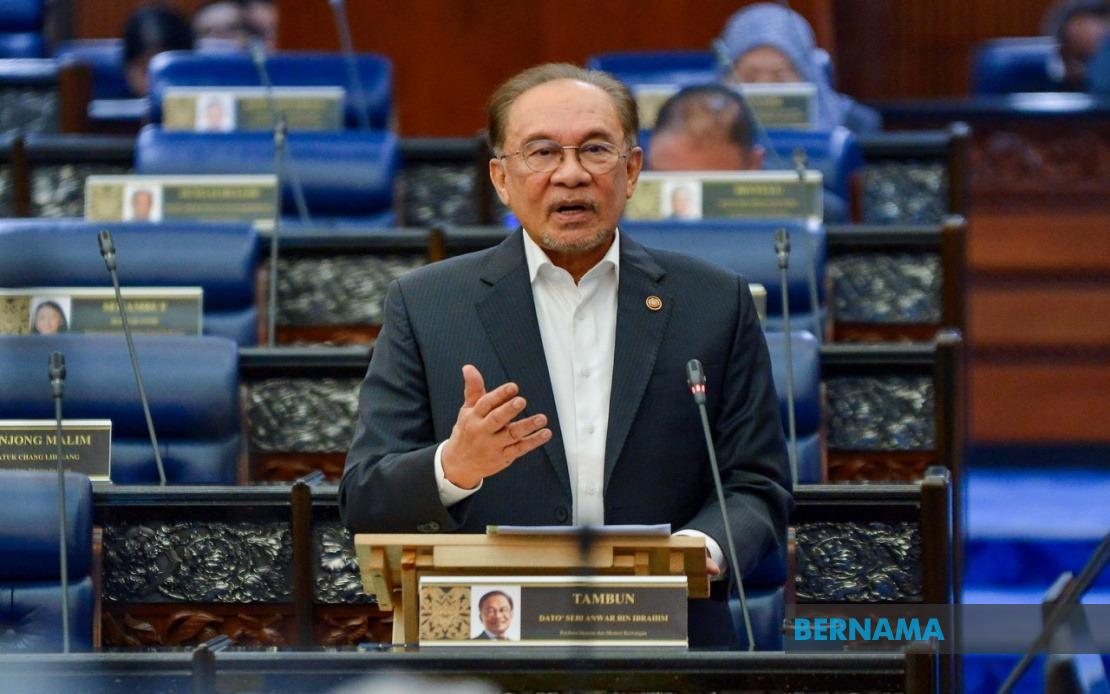
Malaysia will persist in anchoring its approach to maritime boundary disputes with neighbouring countries on the dual pillars of diplomatic negotiations and the 1982 United Nations Convention on the Law of the Sea, Prime Minister Datuk Seri Anwar Ibrahim declared in Parliament on July 14. Speaking before the Dewan Rakyat in response to a question about maritime security in the Straits of Malacca and the potential role of the International Maritime Organization, Anwar stressed that while Malaysia acknowledges the IMO's contributions to maritime governance, the organization itself operates within the UNCLOS 1982 framework, which offers the most comprehensive legal structure available for such matters.
The prime minister's remarks underscore a fundamental tension in maritime law: while UNCLOS provides an internationally recognized baseline, its interpretation remains contested among nations with competing territorial and resource claims. Anwar acknowledged this complexity directly, noting that despite the convention's breadth, different states read its provisions differently, and UNCLOS alone cannot serve as a panacea for all maritime disagreements. This candid assessment reflects the lived experience of Southeast Asian nations, where overlapping claims in the South China Sea and other waters frequently test the limits of existing legal instruments. For Malaysian policymakers, the acknowledgment signals a pragmatic understanding that rigid adherence to any single framework will often prove insufficient without the political will to negotiate.
Regarding the broader South China Sea situation, Anwar outlined ASEAN's collective strategy with China to finalize a Code of Conduct that would prevent escalatory incidents while maintaining UNCLOS as the foundational principle guiding discussions. He noted, however, that progress varies across the region. While most ASEAN members have navigated toward workable arrangements with China, the Philippines presents a notably more complicated picture due to unresolved historical claims, including disputed sovereignty questions over Sabah. This distinction is important for Malaysian audiences to understand, as it illustrates how bilateral grievances within the region can complicate multilateral consensus-building and slow the pace of regional stabilization efforts. Anwar's framing suggests that Malaysia views the COC negotiations as an incremental process rather than a breakthrough, with participants accepting repeated rounds of discussion and periodic breaks as necessary features of the diplomatic landscape.
A cornerstone of Anwar's defense of Malaysia's negotiation-first strategy rests on concrete examples of successful economic cooperation despite unresolved sovereignty claims. The prime minister highlighted Malaysia's experience with Thailand and Vietnam, where the establishment of Joint Development Authorities allowed both nations to extract and share resources from disputed waters without either side formally surrendering its legal position. This model offers tangible benefits to both parties: the disputed territories generate revenue and employment while sovereignty questions remain formally untouched, preserved for future resolution if circumstances change. For Vietnam specifically, Anwar emphasized that the arrangement explicitly states that economic cooperation occurs without prejudice to either nation's sovereignty claims, creating a legally structured space where practical coexistence supersedes the need for final boundary demarcation. Such arrangements demonstrate that maritime disputes need not paralyze regional development or cooperation.
The Prime Minister enumerated Malaysia's maritime boundary challenges across a wide arc of the nation's maritime periphery, identifying disputes with Brunei, Thailand, Indonesia, Singapore, the Philippines, and China. This inventory underscores Malaysia's position as a nation with perhaps the most complex web of maritime boundary relationships in Southeast Asia, a reality that shapes both the government's negotiating capacity and its incentive structure. When a country faces multiple concurrent disputes, the costs of aggressive posturing in any single case rise considerably; escalation in one maritime zone risks triggering instability across others. Anwar's emphasis on Malaysia's consistent choice of diplomacy appears partly rooted in this strategic calculus—a nation engaged with six neighbours on maritime matters cannot afford the luxury of brinkmanship in any one relationship.
Progress on the Brunei boundary front has reportedly reached an advanced stage, with most outstanding issues resolved and only a handful of areas, primarily those touching Sarawak's jurisdiction, remaining unresolved. This development is noteworthy because it suggests that methodical, patient negotiation can yield results, albeit slowly. The involvement of Sarawak in these discussions highlights the domestic political complexity of maritime negotiations in Malaysia's federal system, where state governments possess constitutionally protected interests in offshore resources and boundaries. Conversations with Indonesia operate under similar constraints, focusing on areas relevant to Sabah and proceeding in close consultation with the state government. This domestic coordination requirement, while sometimes slowing negotiations, also ensures that agreements reached at the federal level enjoy broader support and legitimacy within Malaysia itself.
The prime minister's articulation of Malaysia's maritime philosophy reflects a matured understanding of regional interdependencies. Rather than viewing boundary disputes as zero-sum contests that must be conclusively resolved before normal relations can proceed, Malaysia has embraced a model wherein economic cooperation and political stability are treated as separable from the technical question of where precisely a boundary line should be drawn. This philosophical shift, adopted across much of Southeast Asia, emerged from decades of experience demonstrating that disputes frozen through negotiated agreements often prove more manageable than disputes stoked by nationalist rhetoric and military posturing. The costs of conflict—disruption to shipping, economic sanctions, military buildups, and regional arms races—far exceed the benefits of any marginal territorial gain.
For Malaysian citizens and regional observers, Anwar's parliamentary statement also implicitly addresses concerns about China's assertive actions in the South China Sea. By reaffirming Malaysia's commitment to UNCLOS and gradual negotiation of the COC, the government positions itself as defending a rules-based order while simultaneously avoiding confrontational language that might provoke Chinese responses or draw Malaysia into great power competition dynamics. This balancing act represents a subtle but essential component of Malaysian foreign policy: maintaining good relations with China, a crucial economic and strategic partner, while resisting pressure to abandon the legal frameworks and ASEAN coordination that protect smaller nations' interests. The emphasis on ongoing ASEAN unity in these negotiations signals that Malaysia will not break ranks unilaterally, a reassurance to neighbours and a constraint on Beijing's ability to divide Southeast Asian positions through bilateral inducements.
The prime minister's framing also contains an implicit critique of approaches that defer solely to technical or organizational expertise. While acknowledging the IMO's role, Anwar made clear that maritime disputes ultimately belong to the political and diplomatic domain, where nations must negotiate settlements reflecting their interests, histories, and legal positions. This conviction explains Malaysia's reluctance to outsource maritime boundary resolution to international bodies; doing so would surrender negotiating flexibility and expose Malaysia to outcomes shaped by countries without direct regional interests. By keeping negotiations bilateral or multilateral, within ASEAN frameworks where Malaysia holds voice and vote, the government preserves agency over outcomes affecting Malaysian territory, resources, and maritime security.
Looking forward, the implications of Anwar's position extend beyond maritime questions to broader questions of Malaysia's role in regional stability and in resisting pressures toward great power alignment. Malaysia's insistence on negotiation, UNCLOS, and ASEAN coordination represents a strategy of managed ambiguity—maintaining relationships with all major powers while binding itself primarily to ASEAN frameworks and international law. This approach has served Malaysia reasonably well, allowing it to prosper economically despite its geographical position in a contested region. However, as geopolitical tensions in Asia intensify and external powers increase pressure on smaller nations to choose sides, sustaining this equilibrium will demand sustained diplomatic skill and clear communication of Malaysia's red lines. Anwar's parliamentary remarks provide that clarity: Malaysia will defend UNCLOS, pursue negotiated settlements, and work through ASEAN, even when progress is slow and frustrating.

