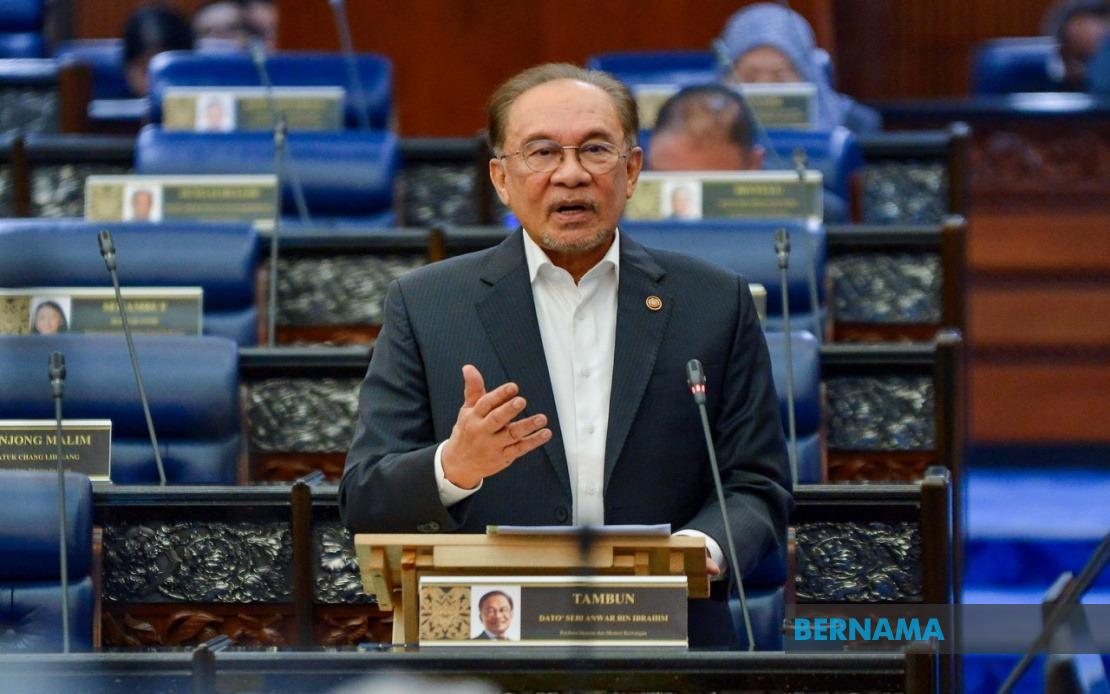
The Malaysian government intends to make local employment its primary focus while subjecting all foreign worker requirements to rigorous examination, according to Prime Minister Datuk Seri Anwar Ibrahim. Speaking in Parliament on July 14, Anwar outlined a balanced approach to labour policy that seeks to address competing pressures: the chronic shortages affecting small and medium enterprises, the importance of youth employment prospects, and the ongoing challenge of irregular migration and worker exploitation. His statement reflects the complex reality facing Malaysian policymakers, who must navigate between the immediate operational needs of businesses and longer-term objectives of developing the domestic workforce and protecting employment opportunities for Malaysian citizens.
The Prime Minister acknowledged that certain economic sectors genuinely require foreign workers to maintain productivity and competitiveness. Rather than implementing blanket restrictions, the government has committed to evaluating each sector's needs through established regulatory frameworks and inter-ministerial coordination. This approach recognises that manufacturing, construction, hospitality, healthcare, and agriculture have structural labour gaps that cannot be immediately filled by domestic workers, whether due to skills mismatches, wage expectations, or demographic factors. However, Anwar emphasised that when foreign workers are approved for specific roles, priority must first be given to the estimated millions of foreign workers already lawfully residing in Malaysia to fill vacancies before new overseas recruitment is undertaken. This strategy aims to reduce bureaucratic delays and ensure existing workers are not left underutilised while employers simultaneously recruit from abroad.
The issue of foreign worker syndicates emerged as a significant concern in Anwar's parliamentary remarks. He described these illicit operations as a longstanding institutional problem that has allowed individuals and networks to accumulate substantial wealth through exploitation and corruption. By highlighting this dimension, the Prime Minister signalled that the government views the foreign worker question not merely as an economic matter but as a law-and-order issue requiring sustained enforcement attention. The syndicate problem intersects with irregular migration, human trafficking, and workplace abuses, suggesting that any expansion of foreign worker programmes must be accompanied by stronger oversight mechanisms and tighter supply-chain accountability to prevent criminal networks from profiting.
Anwar's response to Khoo Poay Tiong's supplementary question revealed the government's commitment to a two-pronged review process. The Ministry of Human Resources and the Ministry of Home Affairs are tasked with jointly assessing sectors where foreign workers are essential, with particular consideration given to national security implications. This inter-ministerial framework acknowledges that labour migration cannot be treated in isolation from border security, identity verification, and law enforcement. The collaboration ensures that any expansion of foreign worker access does not create vulnerabilities in Malaysia's security apparatus or enable individuals with criminal backgrounds to enter the country under the guise of legitimate employment.
Parallel to managing foreign worker flows, the government has identified youth employment as a critical policy priority requiring protection through stricter gatekeeping mechanisms. Anwar outlined concerns about the abuse of professional worker visas, particularly in emerging technology sectors. Companies have reportedly applied to import specialists in artificial intelligence and digital fields but then deployed those workers in unrelated roles, effectively using approved expertise categories as backdoor immigration channels. By tightening entry requirements for foreign professionals, the government aims to ensure that approved positions genuinely correspond to authentic skill gaps that Malaysian youth cannot fill after suitable training. This approach invests faith in domestic human capital development whilst preventing employers from taking shortcuts that undermine local talent development and entrench dependencies on cheaper foreign labour.
The Prime Minister's remarks on enforcement revealed an important philosophical distinction in how the government frames labour law compliance. Anwar stated that whether workers are Malaysian or foreign, those adhering to regulations deserve legal protection and workplace rights. However, those violating labour laws face consequences regardless of origin or ethnicity, with business premises subject to seizure and operational suspension. This framing attempts to depoliticise enforcement action and present it as neutral rule-of-law implementation rather than nationalist employment protectionism. Notably, Anwar specifically mentioned the Rohingya population in this context, signalling that enforcement applies equally to all irregular or non-compliant workers, which carries significant implications for Myanmar's persecuted minority who have sought refuge in Malaysia.
The broader context for this labour policy debate encompasses Malaysia's demographic challenges and economic development stage. As the country transitions toward higher-value manufacturing, digital services, and knowledge-intensive sectors, the skills profile of required workers is shifting. While manual labour shortages may persist, the government appears determined to avoid creating permanent dependencies on low-skilled foreign workers that could suppress wages for Malaysian citizens and discourage youth from entering trades and service sectors. Simultaneously, the decision to study rather than immediately expand foreign worker quotas reflects recognition that unrestricted migration can strain social services, housing, and public infrastructure in cities already experiencing congestion.
The policy framework outlined by Anwar attempts to reconcile several competing interests within Malaysia's political economy. Business associations and SME representatives have consistently advocated for easier access to foreign workers to control labour costs and maintain production schedules. Labour unions and youth organisations have pushed for prioritising local employment and ensuring opportunities for young Malaysians entering the workforce. Civil society organisations monitoring migrant rights have emphasised the need for stronger enforcement against exploitation and trafficking. By proposing a regulatory approach that accommodates sector-specific needs whilst protecting local employment prospects and strengthening enforcement, Anwar's government seeks middle ground, though implementation success will depend entirely on the effectiveness of inter-ministerial coordination and the sufficiency of resources allocated to labour inspectorates and immigration enforcement.
The implications for Southeast Asia are substantial, as Malaysia's labour migration policies influence broader regional patterns. If Malaysia substantially restricts foreign worker access, workers may redirect toward Thailand, Singapore, or other destinations, potentially destabilising those labour markets. Conversely, if Malaysia maintains generous access, it may reinforce dependencies in origin countries like Indonesia, Myanmar, and the Philippines, where workers' remittances comprise significant portions of household and national income. The government's emphasis on prioritising workers already in Malaysia over new recruitment may also signal a preference for consolidating existing migrant populations rather than continuously expanding inflows, which could have demographic and social integration implications that extend beyond economics into public services planning and social cohesion.
Moving forward, the effectiveness of this policy will be measured by whether the promised inter-ministerial study produces concrete mechanisms that genuinely prioritise local workers and existing foreign workers over new recruitment, whether enforcement action against syndicates and exploitative employers is sustained at sufficient scale, and whether tightened professional worker requirements actually preserve opportunities for Malaysian youth or simply divert foreign recruitment into less-scrutinised categories. The government's willingness to acknowledge that foreign workers remain necessary represents political maturity, yet the implementation phase will reveal whether the policy represents genuine labour market management or whether economic pressures will eventually compel further liberalisation of foreign worker access.

