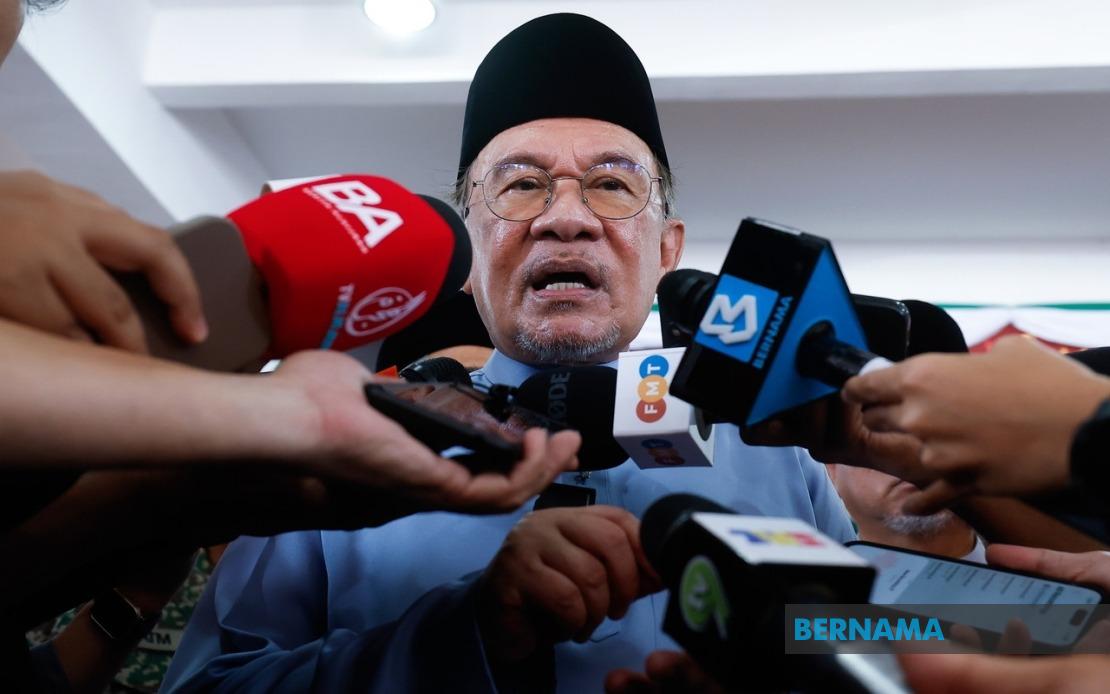
Prime Minister Datuk Seri Anwar Ibrahim has vowed to maintain diplomatic pressure on the United States regarding tariffs recently imposed on Malaysia, signalling that the government will not accept the outcome if current negotiations fail to yield satisfactory results. Speaking after a national ceremony at the Army Basic Training Centre in Port Dickson, Anwar indicated that the matter remains an active priority for his administration, with ongoing discussions being orchestrated by Minister of Investment, Trade and Industry Datuk Seri Johari Abdul Ghani.
The tariff situation stems from a US investigation conducted under Section 301 of the Trade Act of 1974, which examined whether 60 countries had adequately implemented and enforced prohibitions on importing goods manufactured through forced labour. Malaysia emerged from this review among a select group of nations designated for the lowest penalty rate, a distinction that reflects both the severity of the compliance gap and the relative position of different trading partners in American eyes. At 10 per cent, Malaysia's duty rate matches that imposed on Cambodia and Indonesia, placing it substantially below the standard 12.5 per cent applied to other non-compliant economies.
Anwar's framing of the situation reveals a careful balance between acknowledgment of the government's shortcomings and strategic positioning for further engagement. By publicly noting that Malaysia received what he termed a "relatively low" tariff compared to the broader set of affected countries, the Prime Minister deflected potential domestic criticism while simultaneously preparing grounds for continued negotiation. This approach suggests Malaysia's negotiating team will likely emphasise the distinction between the 10 per cent rate and the 12.5 per cent baseline, arguing implicitly that Malaysia warrants even more favourable treatment.
The forced labour issue has become an increasingly fraught element of international trade relations, particularly affecting Southeast Asian nations whose manufacturing and agricultural sectors rely heavily on migrant workforces. Malaysia's garment, electronics, and palm oil industries—all significant export sectors—have faced recurring scrutiny from labour rights advocates and trading partners regarding employment practices and worker protections. The US decision to impose tariffs rather than pursue alternative mechanisms like import bans underscores Washington's preference for financial penalties that theoretically incentivise compliance rather than supply chain disruption.
From a Malaysian economic perspective, the 10 per cent duty represents a meaningful but not catastrophic burden on affected exports. The government's relief at escaping the 12.5 per cent tier appears genuine, as such a differential could translate to tens of millions of dollars in annual additional costs depending on export volumes and product categories targeted. However, the tariff also serves as a persistent reminder that Malaysia's enforcement mechanisms for labour standards remain inadequate in American assessment, creating reputational and operational challenges beyond the immediate financial impact.
The presence of senior defence and government officials at the announcement—including Chief Secretary Tan Sri Shamsul Azri Abu Bakar and Chief of Defence Forces General Tan Sri Malek Razak Sulaiman—suggests the government views this matter with considerable institutional weight. This high-level attendance may also reflect the broader geopolitical context in which trade disputes operate, particularly given the strategic importance of Malaysia to US interests in Southeast Asia and the Indo-Pacific region. Washington's willingness to impose tariffs on multiple ASEAN members simultaneously indicates a coordinated pressure strategy rather than targeted punishment of individual nations.
A secondary but significant opportunity mentioned in US Trade Representative Jamieson Greer's announcement involves a potential tariff-rate quota mechanism. This arrangement would allow Malaysia to import certain inputs from the United States at reduced duty rates, conditional on demonstrating improved enforcement of forced labour prohibitions. The incentive structure embedded in this offer creates pathways for Malaysia to demonstrate compliance improvements, though it also imposes conditions that require substantial domestic regulatory enhancement and implementation capacity. Malaysian policymakers will need to assess whether the cost of ramping up labour inspections, worker complaint mechanisms, and employer penalties justifies the tariff relief available through this quota.
The government's strategy of delegating ongoing negotiations to Johari suggests a desire to maintain diplomatic channels at the technical level while preserving high-level political flexibility. Should negotiations stall, Anwar retains the option to escalate the matter personally or through other ministerial engagement, maintaining the appearance of serious commitment without overcommitting the Prime Minister's political capital at the outset. This staged approach mirrors Malaysia's broader trade diplomacy pattern, particularly in managing relations with larger trading partners where direct confrontation risks counterproductive escalation.
For Malaysian businesses operating in affected sectors, the announcement creates both immediate cost pressures and medium-term uncertainty regarding the trajectory of US-Malaysia trade relations. Companies engaged in export manufacturing face questions about supply chain adjustments, pricing strategies, and the timeline for potential tariff relief. The 10 per cent duty, while preferable to higher alternatives, remains a meaningful addition to operational costs that will likely be passed through to either importers or ultimately reflected in reduced competitiveness against producers in non-tariffed countries.
The broader context reveals Malaysia's ongoing struggle to reconcile rapid economic growth and manufacturing-led development with increasingly stringent international labour standards. While Malaysia has implemented various labour reforms and established enforcement mechanisms, the US assessment suggests these remain insufficient in practice, whether due to resource constraints, corruption, or structural deficiencies in how regulations are applied. Addressing this gap will require sustained investment in labour inspection capacity, wage monitoring systems, and grievance mechanisms that extend beyond formal compliance frameworks to actual workplace conditions.
Regionally, Malaysia's experience with these tariffs carries implications for other ASEAN producers of similar goods. Vietnam, Thailand, and the Philippines all face comparable scrutiny regarding labour practices in export industries, and Malaysia's negotiating outcomes could set precedents or signal the flexibility US authorities might display in future discussions. The fact that Malaysia secured the minimum tariff rate available suggests that countries demonstrating even baseline compliance efforts may receive preferential treatment, potentially incentivising other nations to accelerate their own regulatory improvements.
Moving forward, the success of Anwar's government in these negotiations will likely depend on demonstrating tangible improvements in labour law enforcement rather than simply negotiating the tariff rate downward. Any agreement that the US accepts must credibly show that Malaysia is actively closing compliance gaps, whether through increased inspection budgets, technology-enabled monitoring of export suppliers, or bilateral cooperation mechanisms. The narrative Anwar has established—that Malaysia will persist in negotiations but not accept an unsatisfactory outcome—sets a high bar for what constitutes acceptable resolution and signals that the matter will remain politically salient domestically regardless of eventual outcome.

