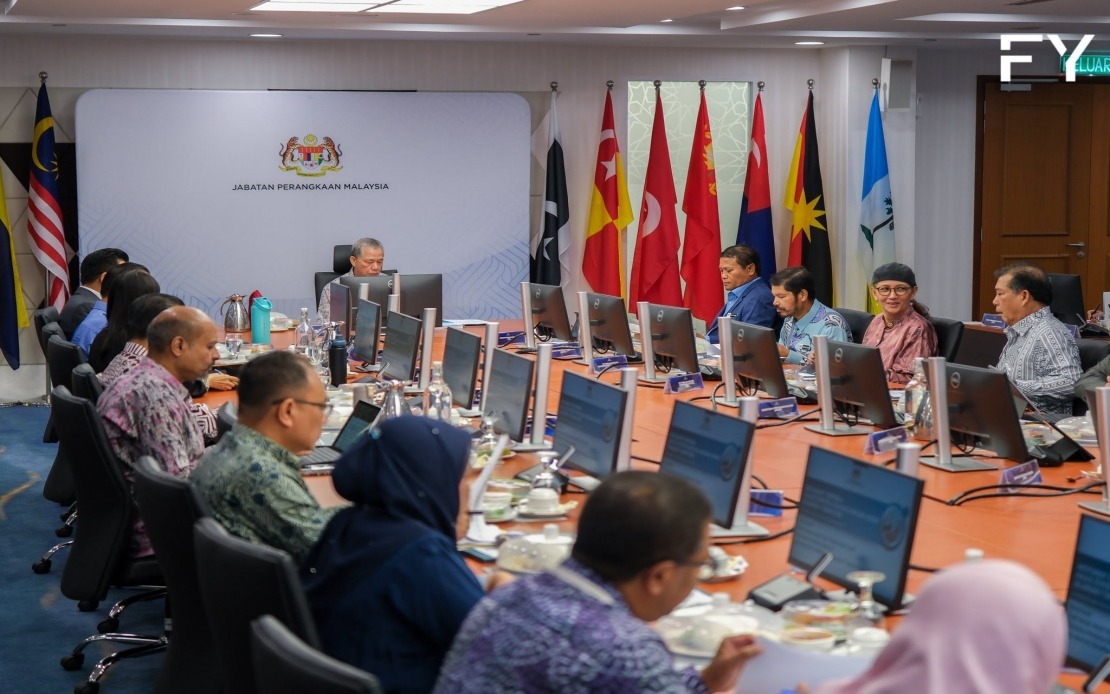
Malaysia's transformation into a data-driven economy will form the backbone of the government's ambitious 13th Malaysia Plan covering 2026 to 2030, according to Deputy Prime Minister Datuk Seri Fadillah Yusof. Speaking after chairing a high-level meeting of the National Statistics and Data Council, Fadillah stressed that robust data systems and artificial intelligence deployment are no longer optional extras but fundamental requirements for steering national policy and managing the complex challenges Malaysia faces in an increasingly uncertain world.
The government recognizes that information has transcended its traditional role as mere documentation, Fadillah emphasized. Today, data and official statistics function as strategic national assets that directly influence the quality and reach of public services while fortifying Malaysia's capacity to weather economic shocks, navigate geopolitical tensions, and capitalize on technological opportunities. This shift in perspective reflects a growing global consensus that nations managing information effectively gain competitive advantage in multiple domains simultaneously.
The urgency of this repositioning stems from converging pressures that no single ministry or agency can address in isolation. Economic uncertainties stemming from volatile commodity markets, accelerating digital transformation that renders yesterday's infrastructure obsolete, climate change imperatives requiring precise environmental monitoring, and the rapid advancement of artificial intelligence all demand governments possess real-time, high-quality intelligence to respond effectively. Malaysia's experience during recent economic cycles has demonstrated that reactive policymaking proves costlier than anticipatory, data-informed strategies that adjust course before crises fully materialize.
Fadillah highlighted Malaysia's recent economic resilience as evidence that data-centered policy frameworks deliver tangible results. The economy expanded by 5.4 per cent during the first quarter of 2026, a performance he attributed directly to development policies grounded in rigorous statistical analysis. This growth trajectory provides political cover for the government's continued investment in statistical infrastructure at a time when competing budget pressures tempt policymakers to defer institutional investments that lack immediate visible outcomes.
Successfully implementing the 13th Malaysia Plan requires three dimensions of data excellence that the government is targeting simultaneously: quality ensuring information reflects reality accurately, integrity preventing tampering or misuse, and timeliness enabling officials to act while circumstances remain relevant. These attributes directly enhance the planning, execution, monitoring and evaluation of development initiatives, multiplying the intended impact on citizens' lives. Without such rigor, even well-intentioned policies can misfire or produce uneven benefits across regions and demographic groups.
The National Statistics and Data Council meeting convened permanent members representing crucial government portfolios including works, health, communications, digital affairs and the economy. This institutional architecture reflects recognition that statistical excellence cannot reside exclusively within dedicated statistical agencies but must be embedded throughout government. The participation of Malaysia's chief statistician, Datuk Seri Dr Mohd Uzir Mahidin, alongside cabinet-level officials, signals that data governance claims space at senior policy tables rather than operating as a peripheral technical function.
Strengthening the National Statistical System demands what Fadillah termed strategic collaboration extending beyond government to encompass federal agencies, state administrations, private sector entities, universities and research institutions. This ecosystem perspective acknowledges that meaningful data integration increasingly requires actors who traditionally operated in separate silos to share information in standardized formats. Malaysian states, which retain constitutional authority over certain policy domains, must align their statistical methodologies with federal standards to enable genuine national-level analysis. Similarly, private companies increasingly possess valuable datasets that governments need for comprehensive economic intelligence.
The digital environment enables data integration at scales previously impossible but simultaneously introduces vulnerabilities. Fadillah stressed that consolidating information from diverse sources demands security measures, ethical frameworks and technical processes that protect citizen privacy while maximizing analytical utility. Malaysia's evolving data governance structures must navigate the tension between openness enabling innovation and protection preventing misuse. This balance represents genuine policy complexity that officials across Southeast Asia are grappling with as digital economies mature.
Artificial intelligence emerged from the council discussion as a multiplier amplifying human analysts' capability to discern patterns within massive datasets. Big data analytics combined with AI can accelerate decision-making timescales compressed by accelerating change, while enhancing comprehensiveness of policy options considered. For sectors including energy transition, climate adaptation, water resource management and sustainable development, AI-enhanced analysis can model complex scenarios and identify second-order consequences of proposed interventions that human review alone might overlook.
The council reviewed multiple concurrent initiatives demonstrating the systematic nature of Malaysia's data infrastructure overhaul. Standardizing official statistical definitions ensures consistency across government; strengthening data governance clarifies authority and responsibility; integrating administrative data creates longitudinal insights; developing specialized databases for science-technology-innovation talent, youth trajectories and national assets enables targeted interventions. Each initiative individually contributes incremental improvement; collectively they construct what Fadillah described as an integrated, high-integrity national data ecosystem capable of supporting sophisticated governance.
For Malaysia, this statistical modernization matters particularly given Southeast Asia's competitive dynamics. Neighboring economies increasingly position data capability and AI readiness as development hallmarks differentiating advanced from emerging regional performers. Thailand, Indonesia and Vietnam are simultaneously investing in similar infrastructure, creating a regional competency race where nations possessing superior statistical systems gain policy advantages. Malaysia's publicly committing to this pathway signals determination to compete at upper tiers of regional governance sophistication.
The 13th Malaysia Plan period 2026-2030 will test whether institutional commitments to data-driven policymaking translate into measurable outcomes. Success requires not merely hardware and software investments but cultural transformation wherein officials routinely expect statistical evidence before proposing policy interventions. Resistance from institutional cultures preferring intuition to analysis could impede progress regardless of technical capability. Fadillah's emphasis on collective responsibility distributed across multiple ministries suggests the government recognizes that sustainable change requires decentralized commitment rather than reliance on central directives.

