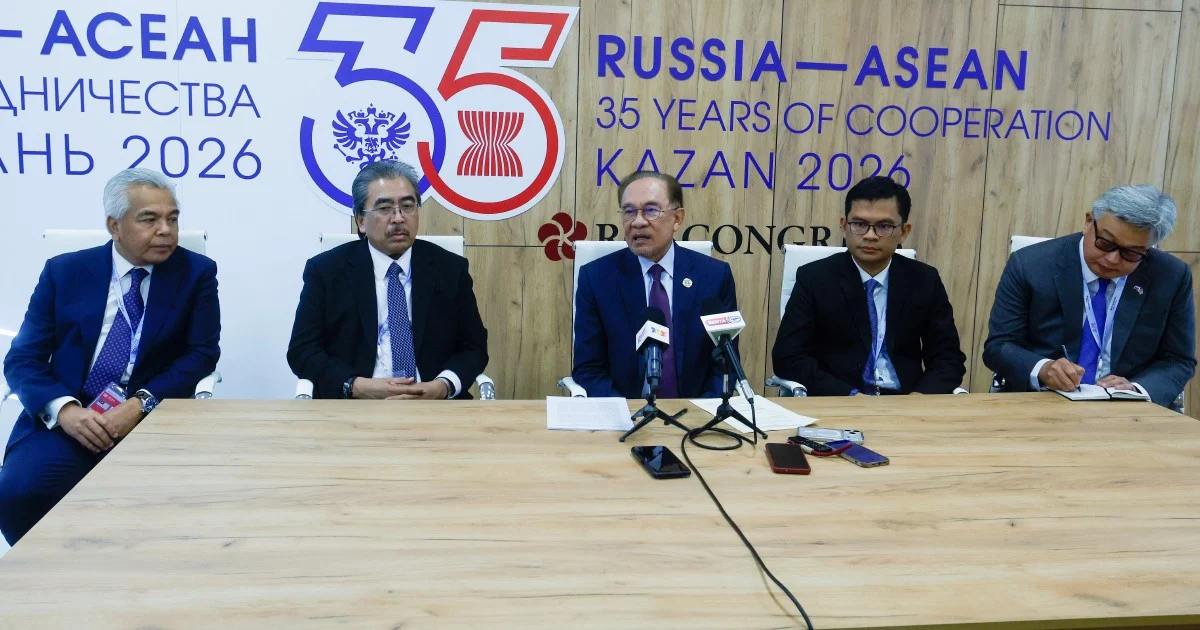
Prime Minister Datuk Seri Anwar Ibrahim has directed the relevant government agencies to expedite the implementation of visa-free travel arrangements for Russian tourists, viewing the initiative as a crucial lever for revitalising Malaysia's tourism economy. The directive, issued during his visit to Kazan, signals the administration's determination to tap into traditionally underutilised visitor sources and diversify the country's international arrivals beyond conventional markets.
The acceleration of visa facilitation for Russian nationals represents a strategic pivot in Malaysia's tourism positioning. Over the past decade, traditional source markets from Europe and North America have remained saturated, with many destinations competing aggressively for the same pool of travellers. Russian tourism, by contrast, has remained relatively underdeveloped for Malaysia despite the substantial purchasing power of affluent Russian visitors. Removing bureaucratic friction through visa-free entry addresses a tangible barrier that has deterred potential holidaymakers, particularly those seeking spontaneous travel or short leisure breaks.
From a macroeconomic perspective, the timing of this initiative aligns with Malaysia's broader recovery objectives following pandemic-induced disruptions. Tourism contributes approximately 6-7 per cent to the country's gross domestic product, and international arrivals directly correlate with foreign exchange inflows, hotel occupancy, and ancillary services revenue. Russian visitors typically fall into higher-spending categories, frequenting premium accommodations, dining establishments, and shopping destinations, meaning even moderate increases in visitor numbers translate into disproportionately positive economic outcomes.
The visa-free arrangement must navigate several implementation complexities that extend beyond simple administrative streamlining. Immigration authorities require robust counter-terrorism screening protocols, particularly when opening borders to nationals from countries subject to international sanctions or geopolitical scrutiny. Malaysia's success will depend on establishing security verification systems that operate efficiently without delaying legitimate travellers, a balance not all neighbouring nations have achieved effectively. Singapore's streamlined processes and Thailand's established Russian tourist infrastructure offer instructive benchmarks for the Malaysian government's planners.
Regional competition intensifies the urgency of Malaysia's move. Thailand has successfully cultivated substantial Russian tourism flows, with Russian visitors comprising one of the kingdom's largest international visitor segments, particularly in resort destinations and shopping hubs. The same applies increasingly to Vietnam and Cambodia, which have progressively eased visa requirements and established dedicated tourism marketing campaigns targeting Russian demographics. Malaysia's relative lateness in this strategy reflects previous policy priorities but presents an opportunity to carve a distinctive niche by pairing visa convenience with Malaysia's unique offerings: comparative religious and cultural diversity, distinct cuisines, and positioning as a business-tourism gateway.
The geopolitical dimensions warrant acknowledgment. Russia's international standing has shifted considerably since 2022, creating both opportunities and constraints for Malaysian tourism policy. Visa-free arrangements carry implicit diplomatic messaging; the initiative signals Malaysia's pragmatic approach to international relations and its unwillingness to subordinate economic interests to broader Western-aligned foreign policy narratives. This positioning resonates with Malaysia's stated non-aligned stance and its emphasis on South-South cooperation, particularly within ASEAN frameworks.
Implementation mechanics will determine the scheme's practical success. Authorities must establish processing protocols for Russian travellers seeking extensions, work permits, or business visas distinct from tourist arrangements. Digital infrastructure—online registration systems, mobile-friendly verification processes, and real-time coordination between immigration and security agencies—will require investment and testing. Malaysia's recent experience with the Malaysia Digital Economy Blueprint and MyTravelPass systems provides technological foundations, though scaling these platforms to accommodate predictable surge demand during peak holiday seasons demands careful capacity planning.
The initiative carries implications for Malaysia's broader travel marketing strategy. Dedicated promotional campaigns must target Russian-speaking demographics through appropriate channels, cultural messaging, and partnership arrangements with Russian travel agencies. The Malaysia Tourism Promotion Board will likely allocate budgets toward Russian media presence, influencer engagement, and travel trade show participation in major Russian cities. Such investments require sustained commitment, not merely one-time departmental allocations.
Stakeholder alignment proves critical to the scheme's realisation. Hotel operators, restaurant proprietors, transport companies, and retail businesses require advance notice and training to accommodate Russian visitors effectively, including language capabilities and cultural awareness programming. Provincial tourism boards, particularly in secondary destinations beyond Kuala Lumpur and Penang, should coordinate with federal authorities to position themselves as viable alternatives to heavily saturated primary destinations, thereby distributing economic benefits across regions.
The economic multiplier effects could extend beyond direct tourism spending. Russian investment capital may follow tourism expansion, particularly in real estate, hospitality development, and retirement community projects. Malaysian professionals in construction, architecture, and property management stand to benefit from increased demand, while new employment opportunities emerge in hospitality, tour guiding, and service sectors. These secondary and tertiary economic impacts, if realised, would justify the administrative efforts required for implementation.
Sustainability considerations merit attention as tourism volumes expand. Environmental pressures on marine ecosystems, particularly in popular beach destinations, intensify with higher visitor concentrations. Carrying capacity assessments and environmental impact evaluations should precede large-scale tourism growth, ensuring that economic gains do not impose unsustainable ecological costs. Malaysia's positioning as a responsible tourism destination with environmental credentials could differentiate it from regional competitors exploiting natural resources with minimal oversight.
The success or failure of this initiative will be measurable within 12-18 months of implementation. Statistical tracking of Russian visitor arrivals, average spending profiles, repeat visitation rates, and tourism sector employment figures will indicate whether visa-free arrangements translate into tangible economic benefits or remain an unused administrative option. The PM's directive essentially creates a accountability framework for relevant agencies to deliver measurable outcomes within defined timeframes.

