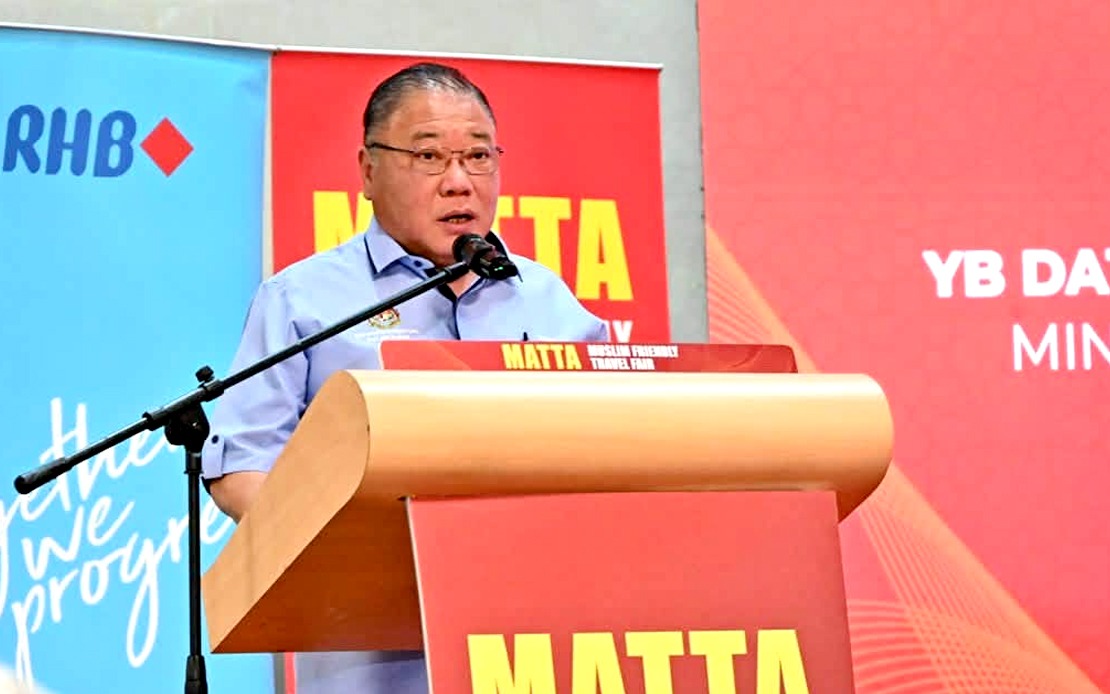
The Malaysian government is moving to establish guardrails around the umrah travel sector by introducing a floor price mechanism and mandatory service standards for all operators. Tourism, Arts and Culture Minister Datuk Seri Tiong King Sing outlined the initiative at the Malaysian Association of Tour and Travel Agents (MATTA) Muslim Friendly Travel Fair 2026, signalling serious intent to overhaul industry practices that have left pilgrims vulnerable to substandard experiences.
The underlying concern driving this regulatory shift is straightforward yet consequential: some umrah operators have been undercutting competitors to unsustainable levels, offering packages so cheap that they become economically viable only by slashing essential services. This race to the bottom has left Malaysian pilgrims in genuinely precarious situations—stranded abroad unable to complete their spiritual journey, or arriving at holy sites without the promised accommodation, meals, or transportation. Tiong acknowledged this bluntly, expressing his determination to prevent scenarios where pilgrims depart Malaysia for umrah but cannot afford the return journey, or reach their destination unable to fulfil their religious obligations.
Under the new framework, umrah travel companies will be prohibited from pricing packages below a government-set minimum threshold. Crucially, operators must simultaneously provide a transparent itemisation of services included at each price point. This dual requirement addresses both the symptom and the root cause of current abuses. While operators may continue to segment their offerings into tiered categories—Premium, Gold, Silver, and Platinum—each tier must maintain compliance with the minimum pricing floor established for its category. The approach preserves competition and market differentiation while preventing the exploitative undercutting that has characterised recent industry trends.
The development reflects consultation across multiple government entities, with Tiong indicating that meetings have involved Tabung Haji, the pilgrimage financing institution that manages millions of Malaysian Muslims' savings for umrah and hajj, and the Minister in the Prime Minister's Department responsible for religious affairs. This cross-agency coordination suggests the government views pilgrim protection as a matter touching on both consumer welfare and religious duty—two domains that warrant integrated governance in the Malaysian context.
For Malaysian consumers and families planning umrah, the practical implications are significant. Currently, pilgrims often lack reliable information about what services they are genuinely purchasing when they book an inexpensive package. Pricing below cost has allowed some operators to misrepresent inclusions or quietly reduce services once payments are secured. The new standardisation should create transparency that allows genuine price comparison and reduces the information asymmetry that has enabled predatory practices. Families will be able to assess whether a Silver package at operator A genuinely offers equivalent services to a Silver package at operator B.
The timing of this intervention also reflects Malaysia's broader strategic positioning in Muslim-friendly tourism. Tiong emphasised that regional and global competition for Muslim travellers has intensified sharply, with traditional competitors upgrading their offerings to capture market share. He cited Macau as an instructive example, noting the territory's recent expansion of halal dining options, Muslim-friendly hotel amenities, dedicated airport prayer facilities, and tailored travel information systems. If Malaysia allows its umrah sector to deteriorate through unchecked price competition and quality degradation, it risks losing not only pilgrim market share but also credibility as a Muslim-friendly destination more broadly.
The government's umrah initiative sits within a larger ecosystem-building effort around Muslim-Friendly Tourism and Hospitality (MFTH). This framing suggests that protecting umrah pilgrims is not merely a consumer protection exercise but integral to Malaysia's positioning as a destination of choice for Muslim travellers worldwide. A pilgrim whose umrah experience is undermined by poor service or service failures becomes a vocal detractor internationally, damaging Malaysia's reputation across multiple tourism segments. Conversely, pilgrims who complete meaningful spiritual journeys become ambassadors, recommending Malaysia to coreligionists globally and potentially returning for leisure travel.
The regulatory approach outlined by Tiong indicates that the government recognises market forces alone cannot solve this problem. Operators facing intense price competition have insufficient incentive to maintain service standards unilaterally; individual companies that attempt to maintain quality while competitors race downward simply lose customers. Minimum pricing mechanisms correct this collective action problem by establishing a level playing field where all operators face the same floor constraints. This allows responsible operators to compete on service quality and innovation rather than being undercut by unsustainable pricing.
Implementation will likely involve Tiong's ministry working with industry regulators and Tabung Haji to define the minimum price thresholds for each package category and to establish enforcement mechanisms. A central question will be how frequently price floors are adjusted to account for inflation and changing input costs. Another implementation challenge involves monitoring and enforcement—ensuring that operators genuinely deliver the services they claim at approved price points, and not merely reducing hidden costs through shoddy hotels, rushed itineraries, or inadequate support staff.
The umrah issue also illuminates broader regulatory gaps in Malaysia's travel and tourism sector. If umrah operators can operate with such limited oversight that exploitative pricing becomes widespread, similar vulnerabilities likely exist elsewhere in the travel industry. The government's decision to take firm action on umrah may catalyse broader sector-wide reforms and stronger consumer protections across package tourism generally.
For Malaysian pilgrims and their families, this development represents a government acknowledgment of their experiences and a commitment to elevate industry standards. The initiative will likely prove popular domestically, as umrah has become a significant life goal for many Malaysian Muslims, and stories of pilgrim hardship abroad resonate deeply. Internationally, it signals to Muslim travellers that Malaysia takes their welfare and religious experience seriously, positioning the country as a trustworthy custodian of the pilgrim experience in an increasingly commercialised umrah market.

