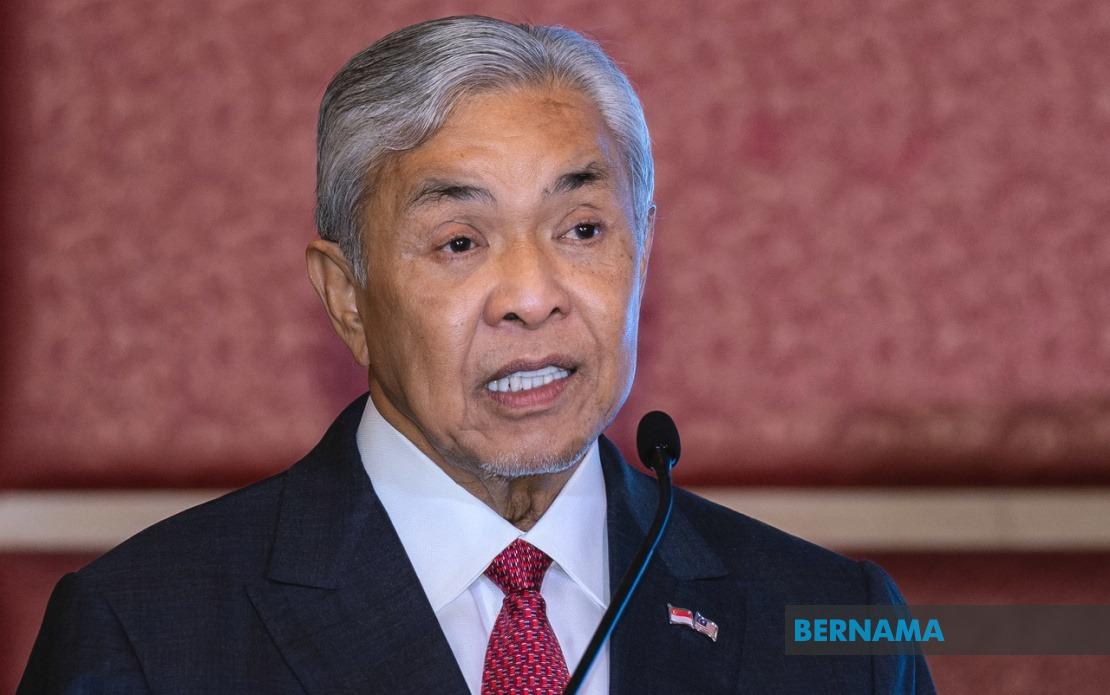
Malaysia is moving forward with plans to create a self-contained management system for refugees and asylum seekers, signalling a shift towards greater domestic control over this policy area. Deputy Prime Minister Datuk Seri Dr Ahmad Zahid Hamidi outlined the government's approach during a parliamentary session, emphasizing that the nation will no longer depend on international entities to administer refugee affairs within its borders. This declaration comes as Malaysia continues to host one of the largest refugee populations in Asia, with over 126,000 registered Rohingya refugees currently residing in the country.
The foundation for this new approach rests on National Security Council (NSC) Directive No. 23, formally adopted by Prime Minister Datuk Seri Anwar Ibrahim on June 14, 2023. This comprehensive policy framework undergoes regular revision to remain relevant to evolving circumstances, with the 2023 version representing the government's most current thinking on how to balance humanitarian considerations with national interests. Rather than viewing refugee management as purely a humanitarian or international relations matter, the government is repositioning it as a multifaceted issue requiring coordination across numerous domestic institutions.
The envisioned mechanism encompasses three distinct but interconnected pillars. First, it prioritizes efficient management and enforcement structures that establish clear procedures and accountability throughout the refugee registration and documentation process. Second, it emphasizes policy coordination that extends beyond security concerns to include access to essential welfare services and social infrastructure. Third, it maintains safeguarding measures aimed at protecting Malaysia's national security and territorial sovereignty. This tripartite approach reflects an attempt to reconcile competing policy objectives that have sometimes appeared in tension within public discourse.
Ahmad Zahid, who concurrently serves as Rural and Regional Development Minister, confirmed that the framework would extend tangible support to refugees deemed eligible under Malaysia's criteria. This includes access to healthcare facilities, both primary and secondary education for refugee children, and carefully regulated employment opportunities. The inclusion of employment access represents a pragmatic recognition that long-term refugee populations require economic participation and integration pathways, though the specifics of how employment authorization will function remain subject to further implementation details.
Underlying this policy framework is an acknowledgment that successful refugee management requires more than technical procedures and security measures. Ahmad Zahid articulated this perspective by noting that effective administration of refugee issues demands equilibrium between rigorous enforcement of national legislation and broader community responsibilities. This statement suggests the government recognizes that Malaysian society itself must embrace certain obligations toward refugee populations, moving beyond a purely restrictive or exclusionary stance.
However, the Deputy Prime Minister also identified what officials perceive as a significant obstacle to effective policy implementation: the existence of what he termed "enablers" among local Malaysian residents. These individuals, according to Ahmad Zahid, undermine government enforcement efforts through various private arrangements, including rental of accommodation to undocumented migrants, exploitation of refugee labour at below-market rates, and other informal transactions driven by personal financial gain. This characterization suggests that policy success depends not only on government action but also on community compliance and ethical business practices among Malaysian citizens and permanent residents.
The NSC Directive No. 23 represents an attempt at comprehensive institutional architecture. By design, it specifies the distinct functions and operational responsibilities assigned to every relevant ministry and government agency involved in refugee affairs. This systematic delineation aims to eliminate gaps in oversight, reduce duplication of effort, and establish clear lines of accountability. Ministries covering health, education, home affairs, labour, and other sectors each receive defined roles within the broader refugee management architecture. This institutional coordination has become increasingly important given the complexity of managing a refugee population exceeding 126,000 individuals across multiple urban and semi-urban areas.
For Malaysia's regional context, this policy evolution carries broader implications. As a middle-income nation already hosting refugee populations from Myanmar, Afghanistan, Pakistan, and other source countries, Malaysia's approach influences how other Southeast Asian governments view their own refugee obligations and policy frameworks. The emphasis on developing domestic capacity and capacity-building, rather than international burden-sharing, reflects Malaysia's conviction that neighbouring countries must develop robust national mechanisms even as regional cooperation mechanisms remain underdeveloped.
The parliamentary response that prompted Ahmad Zahid's statement came from Datuk Shamshulkahar Mohd Deli, representing the Jempol constituency, who specifically queried the government's progress in formulating comprehensive refugee policy following implementation of the Refugee Registration Document (DPP). This document has become central to Malaysia's refugee identification and management system, providing a form of identification that, while not constituting citizenship or travel authorization, establishes verified refugee status within Malaysia's administrative framework.
Government officials have indicated that the strengthened NSC Directive represents evolution informed by implementation experience. The 2023 revision incorporates lessons learned during the initial period following the directive's original adoption, incorporating feedback from agencies involved in direct refugee administration and frontline enforcement. This iterative approach suggests the government views refugee policy as a dynamic field requiring regular reassessment and refinement rather than a static framework set definitively at inception.
The emphasis on balancing enforcement with welfare provision poses implementation challenges that will likely persist. Creating pathways for eligible refugees to access healthcare and education requires establishing protocols that prevent abuse while remaining administratively manageable. Employment authorization similarly requires careful calibration to ensure refugee participation in the formal economy does not displace Malaysian workers or undercut wages in vulnerable sectors.
Looking ahead, the success of Malaysia's independent refugee management mechanism will depend substantially on sustained political commitment, adequate resource allocation to implementing agencies, and sustained investment in institutional capacity. International observers and humanitarian organizations will likely monitor whether the framework achieves its stated objective of providing refugees with dignified living conditions while simultaneously strengthening national security and sovereignty protection.

