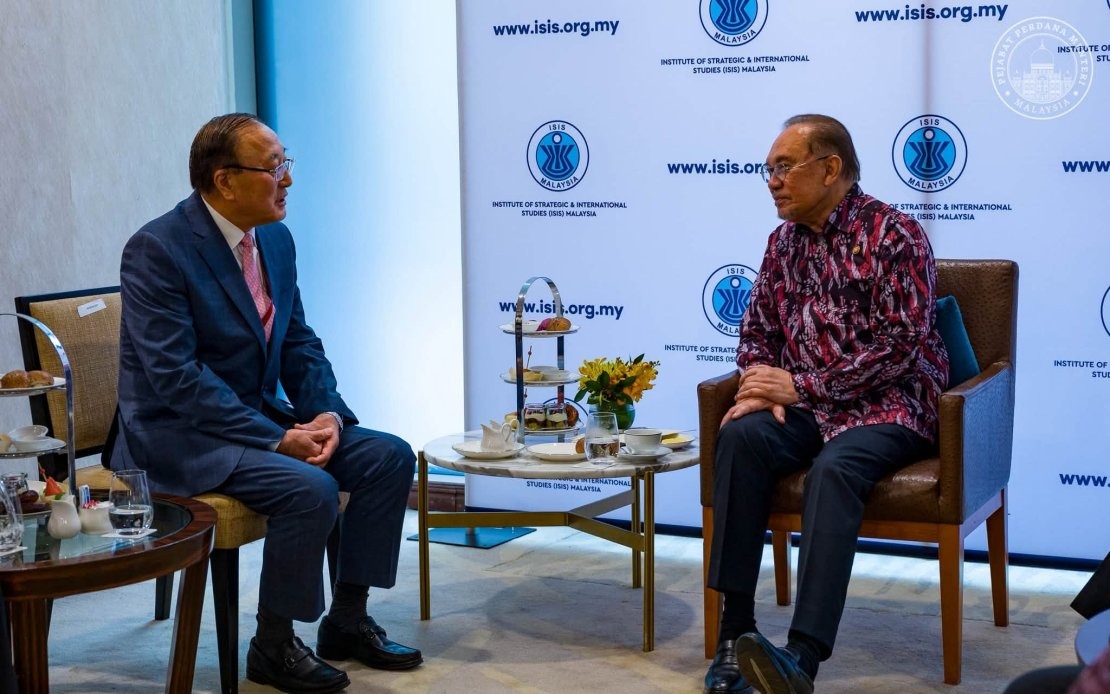
Malaysia is positioning itself for expanded collaboration with the Boao Forum for Asia across a diverse range of economic and technological domains, reflecting the country's commitment to strengthening regional partnerships amid an increasingly complex global environment. The announcement comes as Prime Minister Datuk Seri Anwar Ibrahim, who also holds the Finance Minister portfolio, received BFA secretary-general Zhang Jun at a meeting focused on navigating the mounting pressures facing Asia and the world at large.
The scope of Malaysia's intended cooperation with the BFA encompasses seven strategic pillars that collectively address both traditional economic concerns and emerging challenges of the 21st century. Trade and investment frameworks form the foundation of this partnership, areas where Malaysia has long sought to expand its regional role as a gateway between established and emerging markets. Complementing these traditional economic levers are initiatives in digital transformation and artificial intelligence, reflecting the government's recognition that technological advancement will determine competitive positioning in the coming decades.
Energy transition and food security represent particularly pressing concerns for Southeast Asia, a region vulnerable to climate volatility and dependent on complex supply chains. Malaysia's emphasis on collaborating with the BFA in these domains signals awareness that regional challenges require coordinated solutions rather than isolated national responses. The inclusion of education and talent development underscores the conviction that sustainable prosperity demands investment in human capital, ensuring the region's workforce remains competitive as industries evolve and labour market demands shift.
The timing of this commitment reflects broader geopolitical realities that have reshaped regional dynamics. Anwar's acknowledgment of "geopolitical uncertainties, economic pressures and rapid technological change" captures the multifaceted pressures confronting Malaysia and its neighbours. The South China Sea remains contested, global supply chains face persistent disruptions, and technological competition between major powers increasingly influences regional alignments. Within this context, Malaysia's strategy pivots toward inclusive regional cooperation, an approach that distinguishes it from zero-sum competition narratives that have historically fractured Asia.
The emphasis on "dialogue-based cooperation" carries particular weight given historical tensions and contemporary friction points within the region. Malaysia has traditionally positioned itself as a pragmatic middle power, capable of maintaining productive relationships across ideological and economic divides. This positioning allows the country to serve as a bridge between different regional camps while advancing its own development agenda. The BFA partnership potentially amplifies this role by providing institutional frameworks through which Malaysian interests can be advocated within a broader Asian context.
For Malaysian businesses and investors, the BFA deepening signals new opportunities to access insights into regional trends and potential partnerships with counterparts across Asia. The forum's membership extends beyond Southeast Asia to encompass the broader Asian geography, including major economies like China, India, and Japan. Enhanced cooperation channels could facilitate Malaysian participation in Belt and Road Initiative-related projects, access to development finance, and exposure to technological innovations being pioneered elsewhere in Asia.
From a domestic perspective, the government's commitment to collaboration in artificial intelligence and digital transformation addresses a critical gap in Malaysia's technological infrastructure. The country has ambitious plans to position itself as a digital economy hub within Southeast Asia, yet faces competition from Singapore, Vietnam, and Thailand in attracting tech talent and investment. BFA partnerships could accelerate knowledge transfer and provide access to intellectual resources that would otherwise require significant independent investment. Similarly, cooperation on energy transition aligns with Malaysia's transition away from fossil fuel dependency while addressing international climate commitments that carry both risks and opportunities for the country's energy sector.
Food security deserves particular attention given Malaysia's demographic realities and geographical constraints. The country imports substantial portions of its staple foods, leaving it vulnerable to global price fluctuations and supply disruptions. Regional cooperation through the BFA could lead to collaborative agricultural research, shared farming technologies, and coordinated approaches to managing regional food systems. Such initiatives become increasingly vital as climate change threatens traditional growing regions and global competition for agricultural resources intensifies.
The institutional weight behind this partnership should not be underestimated. The Boao Forum for Asia functions as Asia's equivalent to the World Economic Forum, bringing together political leaders, business executives, academics, and civil society figures for substantive dialogue on continental challenges. Malaysia's enhanced engagement positions the country and its representatives as active contributors to shaping regional discourse on critical issues. This visibility and influence, while intangible, carries real diplomatic and economic dividends over time.
Anwar's framing of cooperation as essential to "stability, prosperity and shared well-being" reflects a philosophy that regional security and economic development are inseparable. This perspective contrasts with approaches that prioritise narrow national interest at the expense of broader regional stability. Malaysia's embrace of inclusive cooperation mechanisms suggests confidence that the country's interests are best served through rules-based, multilateral frameworks rather than bilateral arrangements that might disadvantage smaller economies.
Looking ahead, the success of this partnership will depend on translating commitments into concrete initiatives with measurable outcomes. Establishing working groups, funding collaborative research, and creating platforms for business networking would transform rhetoric into tangible benefits for Malaysian stakeholders. The BFA has demonstrated capacity for such implementation in previous initiatives, suggesting genuine potential for meaningful collaboration.
The broader significance lies in Malaysia's strategic recalibration toward deepened Asian engagement. Rather than viewing regional integration as optional or peripheral to national development, the government increasingly recognises it as central to prosperity. This reorientation positions Malaysia to better leverage its geographical location, political stability, and economic sophistication for mutual benefit alongside neighbours facing similar regional and global pressures.

