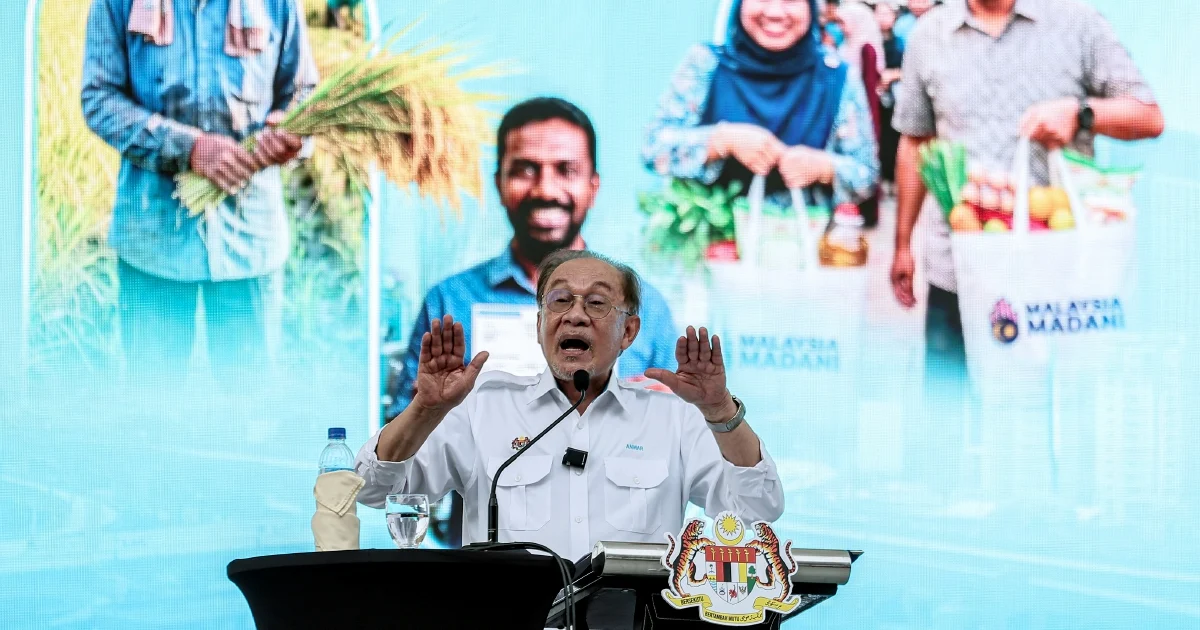
Prime Minister Anwar Ibrahim has unveiled a substantial upgrade to the government's commitment to grassroots security infrastructure, announcing that annual grants for Neighbourhood Watch Areas throughout Malaysia will rise to RM10,000 from the existing RM6,000 allocation. The enhanced funding, representing a 67 percent increase, will commence disbursement from January 1, 2027, signalling the administration's determination to strengthen community-led crime prevention mechanisms across the nation.
The decision to elevate support for Neighbourhood Watch Areas reflects broader policy priorities within the Malaysian government to empower local communities in maintaining public safety. Rather than relying solely on formal law enforcement structures, the initiative recognises that grassroots vigilance and neighbourhood cohesion form essential pillars of effective crime deterrence. By substantially increasing financial resources available to these volunteer-driven organisations, the government aims to enhance their operational capacity and visibility within residential areas, particularly in towns and suburbs where such groups play a crucial role in fostering neighbourhood security networks.
The timing of this announcement, made in Segamat, carries significance for local governance and community development planning. The January 2027 implementation date provides Neighbourhood Watch Area coordinators across all states adequate preparation time to integrate the additional funding into their operational frameworks. This advance notice enables groups to plan capital purchases, training initiatives, and expanded community engagement programmes that the augmented budget will now facilitate.
For many Malaysian neighbourhoods, these volunteer security groups serve as the frontline in building social cohesion and maintaining order without militarisation. Members typically conduct evening patrols, organise community awareness campaigns on safety issues, and liaise with police on local crime trends. The enhanced grant structure acknowledges that effective neighbourhood security requires sustained funding for essential items including uniforms, communication equipment, lighting infrastructure, and community event coordination that help maintain public presence and deter criminal activity.
The funding increase also reflects inflationary pressures and rising operational costs that neighbourhood watch organisations have absorbed over recent years. With the previous RM6,000 ceiling often proving insufficient to cover basic requirements, many groups supplemented allocations through membership fees or fundraising activities. The new RM10,000 threshold brings government support more closely aligned with the actual resource demands these organisations encounter, potentially reducing reliance on members' personal contributions and broadening accessibility to participation across different socioeconomic groups.
Regionally, Malaysia's investment in community-based security models distinguishes its approach within Southeast Asia. While larger urban centres benefit from advanced surveillance technology and expanded police forces, suburban and rural communities derive particular advantage from organised neighbourhood protection networks. Countries throughout the region have adopted similar frameworks, recognising that police resources remain finite and that citizen engagement multiplies preventive capacity. Malaysia's enhanced funding demonstrates confidence in this proven model whilst signalling responsiveness to field-level feedback about resource constraints.
The announcement also carries implications for local government administration and municipal planning. District councils and local authorities must now integrate processing and distribution of the increased grants into budget cycles and administrative workflows. Training and capacity-building programmes may require expansion to ensure that neighbourhood watch leaders can effectively utilise the augmented resources for maximum community benefit. Coordination between various state-level agencies and the federal government becomes increasingly important as funding quantities expand.
From a political perspective, the commitment to increase neighbourhood watch grants reinforces the government's emphasis on collaborative governance and shared responsibility for security. Rather than positioning the state as the sole custodian of order, this approach distributes agency across community structures, encouraging citizens to take active interest in their residential environment. Such decentralised security consciousness potentially generates broader civic engagement and strengthens social fabric in individual neighbourhoods.
The financial commitment also demonstrates proportionate allocation of public resources to preventive policing rather than exclusively reactive law enforcement. Communities where neighbourhood watch organisations maintain active presence typically experience reduced incident rates, partly through visual deterrence and partly through rapid information-sharing with official authorities. The government's willingness to invest RM10,000 per area annually suggests confidence that prevention-focused community engagement delivers positive returns on public expenditure through reduced crime and improved quality of life.
Looking forward, the implementation of this enhanced grant scheme will provide valuable data regarding optimal funding levels for neighbourhood security operations. As the January 2027 rollout progresses, government agencies can monitor how groups deploy the increased resources and measure outcomes in terms of community participation, crime reduction, and residents' perception of safety. This evidence base will inform potential future adjustments and could influence policy decisions regarding other community development initiatives requiring grassroots participation.

