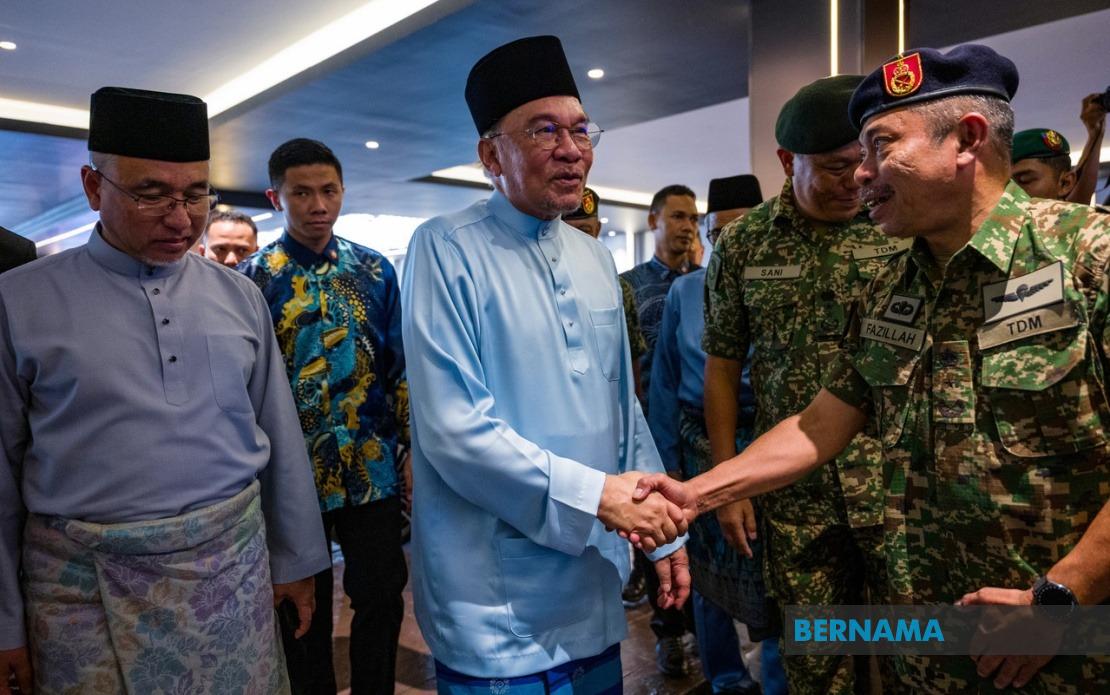
The Malaysian government is moving forward with plans to significantly expand its defence spending in the 2027 budget cycle, demonstrating a strategic commitment to upgrading the nation's military capabilities and supporting the men and women serving in uniform. Prime Minister Datuk Seri Anwar Ibrahim, who also holds the Finance Ministry portfolio, announced this initiative while addressing defence personnel at the Semarak Kenegaraan Programme with the Malaysian Armed Forces at Terendak Camp in Melaka, signalling the administration's intention to prioritise defence modernisation as a key policy objective.
Chief of Defence Force General Tan Sri Malek Razak Sulaiman welcomed the budgetary increase as evidence of substantive governmental backing for the armed forces' transformation agenda. The military leadership views the additional funding as recognition of the need to strengthen institutional capabilities, enhance operational effectiveness, and demonstrate tangible support for service members whose commitments underpin national security. By channelling increased resources toward defence infrastructure and equipment upgrades, the government aims to position the Malaysian Armed Forces as a more formidable and cohesive deterrent capable of addressing contemporary security challenges across the region.
The proposed budget expansion is designed to facilitate the systematic modernisation of military assets and equipment in accordance with the Malaysian Armed Forces' Future Force strategic development initiative. This comprehensive blueprint outlines the technological and operational upgrades necessary to maintain credible defence capabilities in an increasingly complex geopolitical environment. Rather than piecemeal investments scattered across multiple fiscal years, the budget increase enables strategic planners to pursue integrated, coherent upgrades that maximise the operational synergies between different service branches and improve overall force effectiveness.
Beyond hardware and technological advancement, the government is directing substantial attention toward the human dimension of military capability. Improved personnel welfare remains central to the budgetary strategy, reflecting recognition that well-supported service members perform their duties with greater dedication and effectiveness. The additional allocation encompasses concrete improvements to living conditions, including enhanced housing facilities, construction of new medical infrastructure, and maintenance of essential utilities such as reliable water supply systems across military installations nationwide.
For Malaysia's defence community, access to quality healthcare represents a particularly significant concern. The planned construction of a new military hospital addresses longstanding capacity constraints and signals commitment to ensuring that service members and their families receive appropriate medical care without lengthy delays or substandard facilities. Such investments in personnel welfare contribute to improved morale and retention, helping the armed forces attract and maintain qualified personnel in an increasingly competitive employment environment where skilled individuals possess multiple career options.
The initiative extends beyond material improvements to encompass structural reforms in military human resource management. The government has agreed in principle to streamline and accelerate the promotion process for Malaysian Armed Forces and Royal Malaysia Police personnel, aligning these advancement mechanisms with broader public service schemes. Faster career progression pathways reduce frustration among capable officers whose advancement had previously been constrained by bureaucratic delays, thereby improving institutional morale and creating clearer incentives for professional development and exemplary performance.
From a regional perspective, Malaysia's defence modernisation sends important signals about the nation's strategic priorities and commitment to maintaining credible deterrent capabilities. Southeast Asia faces evolving security challenges encompassing territorial disputes, maritime security concerns, and transnational threats that demand technologically sophisticated and operationally proficient armed forces. By investing substantially in equipment upgrades and personnel development, Malaysia reinforces its capacity to contribute meaningfully to regional stability and participate effectively in multilateral defence arrangements and security dialogues.
The budgetary commitment also reflects broader governmental recognition that defence spending represents not merely an expenditure category but rather a productive investment in national security infrastructure. Countries that allow military capabilities to atrophy through chronic under-investment face compounding disadvantages, as equipment becomes obsolete, personnel morale deteriorates, and operational readiness declines. By contrast, sustained, strategic investment in defence capabilities enables nations to project influence, deter potential adversaries, and protect their interests more effectively.
The timing of this announcement, coordinated through a ceremonial programme at a major military installation, underscores the political significance attached to defence priorities within the current administration. Military affairs typically attract bipartisan political consensus in Malaysia, yet explicit budgetary commitments require political will and fiscal discipline. The Prime Minister's personal presence at the Terendak Camp event and his direct announcement of increased allocations emphasise that defence modernisation represents not a peripheral concern but rather a central governmental priority commanding the attention of senior political leadership.
Looking ahead, the successful implementation of Budget 2027 defence increases will depend on effective project management, transparent procurement processes, and disciplined execution of modernisation initiatives. Malaysian defence planners must ensure that expanded budgetary resources translate into tangible operational improvements rather than being consumed by inefficiencies or corruption. International experience demonstrates that defence spending increases only produce intended security benefits when accompanied by robust accountability mechanisms and rigorous performance oversight.
The broader context of this budgetary initiative reflects evolving calculations about Malaysia's long-term security requirements and regional role. As geopolitical competition intensifies in Southeast Asia and advanced military technologies proliferate, nations must continuously reassess whether existing defence investments remain adequate. The government's proactive stance on defence modernisation suggests that Malaysian strategists have concluded that current capabilities require substantive enhancement to meet foreseeable challenges effectively.

