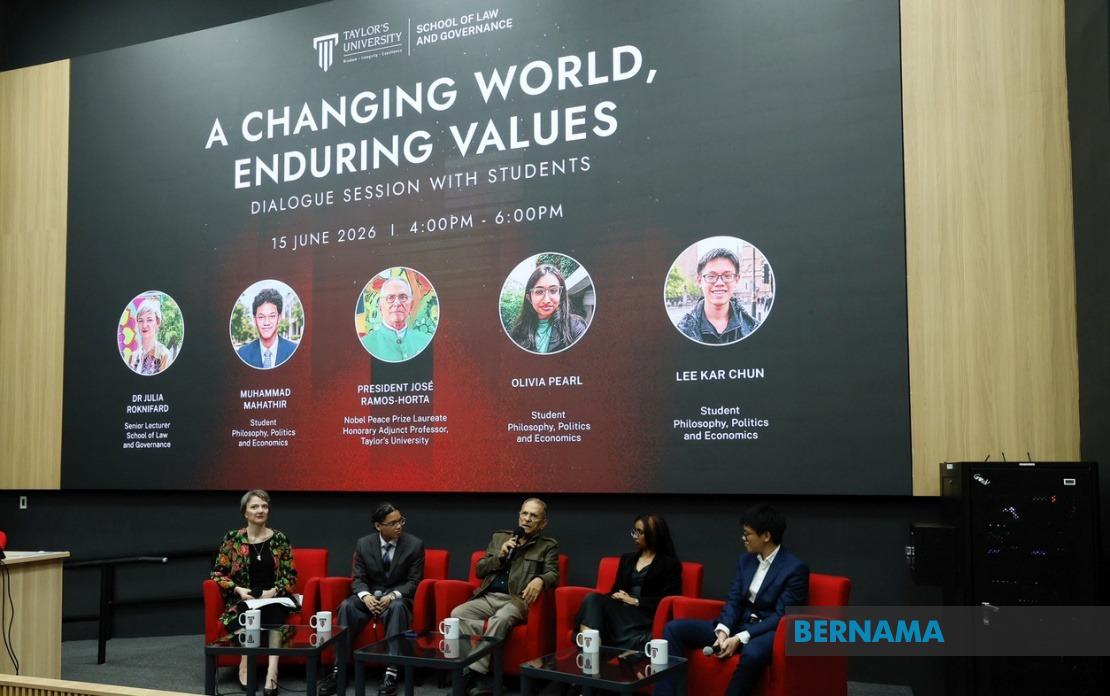
Timor-Leste President Jose Ramos-Horta delivered glowing remarks about his nation's relationship with Malaysia during a special five-day visit that began this week, characterising the bilateral diplomatic bonds as exceptionally strong. Speaking at Taylor's University in Petaling Jaya on Monday, the Nobel Prize Laureate highlighted Malaysia's consistent backing across multiple decades, positioning the neighbouring country as a key pillar of regional stability and cooperation in Southeast Asia.
Ramos-Horta, who brings both scholarly credentials as an Honorary Adjunct Professor at the university and a distinguished international profile, traced Malaysia's support back to the critical period surrounding Timor-Leste's emergence as an independent state. He emphasised that Malaysian assistance predated formal independence in 2002, extending back to the 1999 deployment of peacekeeping forces during a turbulent transitional phase. This historical continuity, he suggested, demonstrates a commitment transcending mere diplomatic protocol to reflect genuine partnership rooted in shared regional interests and humanitarian concerns.
The president offered particular commendation for the current Malaysian administration's contribution to regional prosperity and influence. He observed that Prime Minister Datuk Seri Anwar Ibrahim's strategic leadership has proven transformative, elevating Malaysia's economic profile and expanding its standing within the international community. Ramos-Horta framed this development as part of a broader trajectory of Malaysian achievement spanning decades, though he identified recent years as marking an especially dynamic period of growth and diplomatic prominence under present stewardship.
Ramos-Horta's visit coincided with recognition of Malaysia's journalistic community, and he seized the opportunity to offer encouragement ahead of National Journalists' Day celebrations. He articulated a conviction that well-informed societies possess the resilience necessary to maintain cohesion, foster unity, and navigate contemporary challenges effectively. This perspective reflects his background in both academia and journalism, fields where he has advocated for transparency and informed public discourse as foundations for democratic governance throughout his career.
A centrepiece of his engagement included addressing an audience of students and faculty at Taylor's University during a dialogue examining global transformation and enduring values. The discussion explored how nations navigate rapid change while maintaining core principles, a question bearing particular relevance for Timor-Leste as it charts its course within the Southeast Asian community and the international system more broadly. Ramos-Horta's willingness to engage university audiences underscores the educational dimension of presidential diplomacy and his commitment to cultivating understanding among younger generations.
The timing of Ramos-Horta's visit carries significance for Timor-Leste's ongoing integration into ASEAN structures. The country's accession as the bloc's eleventh member on October 26, 2025, represented a historic milestone, concluding a two-decade hiatus since the previous expansion and cementing Timor-Leste's position within the regional institutional framework. Malaysia's pivotal role during its 2024 ASEAN chairmanship in facilitating this membership achievement remains fresh in the collective memory and serves as a foundation for expanded cooperation across multiple domains.
Looking ahead, Ramos-Horta expressed considerable optimism regarding Timor-Leste's capacity to serve as ASEAN host nation in 2029. This responsibility demands substantial infrastructure development and institutional readiness, challenges the president acknowledged openly whilst projecting confidence in completion timelines. He emphasised his government's determination to accelerate construction and facility enhancement programmes, framing the forthcoming hosting obligation as both accountability and opportunity to demonstrate developmental progress to the regional community.
The president's gratitude for Malaysian support during the membership process appeared neither perfunctory nor ceremonial, but rather reflective of genuine appreciation for substantive assistance during a complex negotiation. Timor-Leste's final admission involved addressing concerns regarding capacity, governance, and readiness—matters on which Malaysia's experienced voice as a longstanding ASEAN member carried particular weight. This dimension of recent history illustrates how bilateral relationships operate within and contribute to multilateral frameworks, with individual state partnerships amplifying influence within regional institutions.
For Malaysia, Ramos-Horta's characterisation of relations as exceptionally good offers external validation of the government's regional diplomacy strategy. The assessment carries credibility given his standing as a global figure and serious analyst of international affairs, drawing authority from his Nobel Prize recognition and decades of engagement with questions of peace, governance, and development. His remarks suggest that Malaysia's investment in Southeast Asian relationships, particularly with newer or smaller member states, generates tangible returns in enhanced regional standing and goodwill.
The broader implication of Ramos-Horta's visit extends beyond bilateral ceremonial. It signals Timor-Leste's anchoring within a more stable regional order and its growing confidence in engaging peers as a full ASEAN participant rather than an aspirant candidate. Malaysia features centrally in this narrative as both historical supporter and contemporary partner, making the cultivation of these ties strategically logical for both governments. For Malaysian stakeholders tracking regional integration and Southeast Asian institutional dynamics, the positive characterisation from Timor-Leste's leadership underscores the returns on diplomatic investment and the continued relevance of regional cooperation mechanisms despite broader global uncertainties.