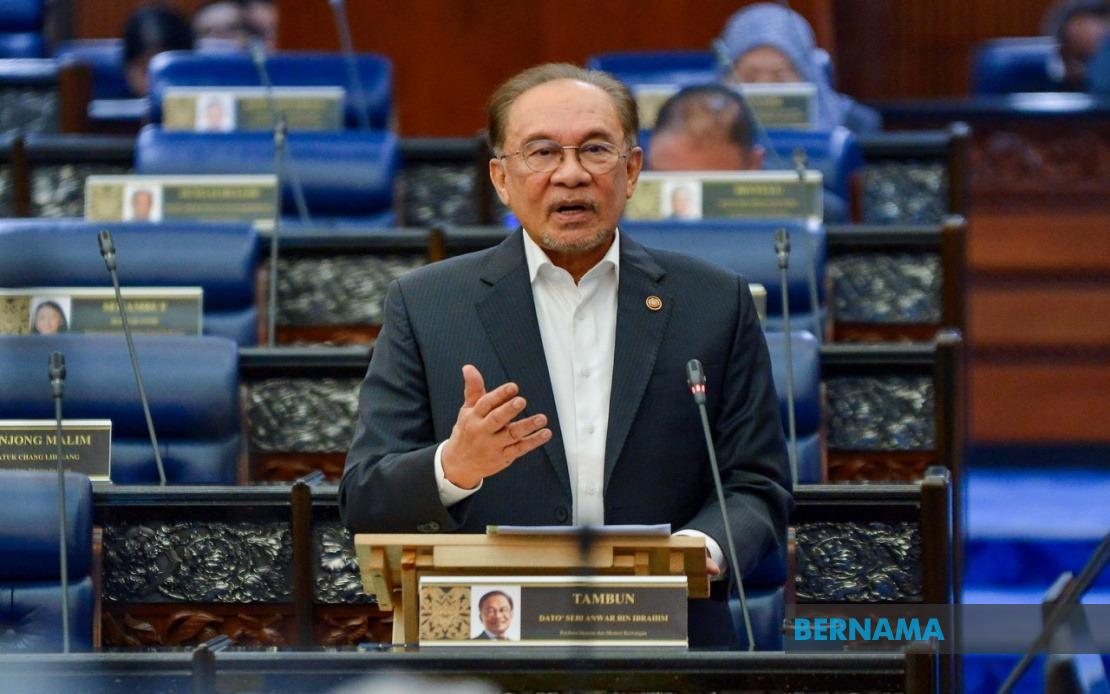
Prime Minister Datuk Seri Anwar Ibrahim has directed the Transport Ministry to accelerate discussions on leveraging ports along the Malaysia-Thailand border and in Penang to enhance cross-border infrastructure and streamline logistics operations in the frontier region. The directive follows strategic talks between Anwar and Thai Prime Minister Anutin Charnvirakul during the latter's official visit to Malaysia, where transport connectivity emerged as a key area for bilateral cooperation.
The focus on port infrastructure reflects both governments' recognition that efficient maritime and multimodal transport links are essential for unlocking economic potential in border areas. During Ministerial Question Time in the Dewan Rakyat, Anwar outlined how port usage is integral to a broader vision of integrated border development that extends beyond shipping to encompass rail networks and tourism corridors. The strategic approach signals a departure from siloed infrastructure projects toward a comprehensive regional economic framework.
Among the facilities slated for enhanced utilisation are the Sanglang port and the Perlis Inland Port (PIP), both positioned to serve as gateways for goods movement and commerce between the two nations. These ports represent existing capacity that can be activated more fully through coordinated policy and investment. The Sanglang facility, located in Kedah, offers direct coastal access, while PIP provides landlocked businesses with competitive alternatives to conventional maritime hubs, reducing transport times and logistics costs for traders in the interior.
The emphasis on port development aligns with Malaysia's broader infrastructure ambitions under the Twelfth Malaysia Plan and regional integration initiatives. By maximising port utilisation, both Malaysia and Thailand can capitalise on growing Southeast Asian trade volumes and position themselves as preferred trade corridors for goods flowing between the Andaman Sea and the Strait of Malacca. This approach also reduces pressure on congested ports elsewhere in the region.
Beyond ports, Anwar highlighted the complementary role of railway infrastructure in the bilateral transport corridor strategy. Recent developments have included the inauguration of new rail routes, which the Prime Minister noted had been a subject of discussion with Anutin. Railways offer significant efficiency gains for heavy cargo and bulk commodities, particularly in border trade where volume and consistency are high. Integrating rail with port facilities creates a seamless logistics ecosystem that attracts multinational shippers and reduces modal transfer costs.
The dialogue between Anwar and Anutin reflects deepening engagement on regional economic matters. Thailand's leadership has similarly prioritised connectivity investments as part of its Eastern Economic Corridor initiative, making bilateral alignment on transport policy particularly valuable. When both nations move in coordinated fashion on infrastructure, private investors gain confidence in cross-border commercial ventures, spurring business investment and job creation in peripheral communities.
Tourism considerations also featured prominently in Anwar's remarks, indicating that border infrastructure development is envisioned as a catalyst for broader economic activity beyond pure goods movement. Enhanced transport links facilitate tourist flows between Malaysia and Thailand, supporting hotels, restaurants, attractions, and service industries on both sides of the frontier. The three-pronged approach—logistics, rail, and tourism—demonstrates holistic thinking about regional development rather than treating transport as a purely commercial matter.
For Malaysian readers, particularly those in northern states like Kedah, Perlis, and Penang, the implications are substantial. Enhanced port and transport infrastructure typically generates employment in warehousing, handling, and value-added services. Small and medium enterprises gain access to larger markets through more efficient distribution channels, while local consumers benefit from reduced trade costs that may translate into lower prices for imported goods and greater product variety.
The Transport Ministry now carries responsibility for translating this high-level political commitment into concrete action. Officials must coordinate with port authorities, railway operators, and Thai counterparts to identify specific bottlenecks, harmonise customs procedures, and potentially renegotiate port tariffs to encourage usage. Feasibility studies may be required to assess capacity expansion and technology upgrades at facilities like PIP, which may require infrastructure investment or operational reforms.
Singapore and other regional hubs have demonstrated that well-managed ports with efficient customs systems can become dominant trade gateways. Malaysia possesses geographic advantages as a meeting point between the Andaman Sea and the Strait of Malacca, but realising that potential requires sustained commitment to infrastructure quality and competitive pricing. The government's focus on border ports suggests awareness of this untapped advantage.
Longer-term, expanded port utilisation could shift Malaysia's economic geography, distributing opportunities to northern regions that historically lag southern manufacturing and service hubs. This regional rebalancing would align with federal development objectives and reduce inequality across states. For Thailand, improved logistics reduce export costs and strengthen its position as a regional trade hub, benefiting its manufacturers and service exporters.
The initiative also positions both nations to benefit from rising Chinese investment flowing through Southeast Asia, particularly under the Regional Comprehensive Economic Partnership (RCEP). Enhanced border infrastructure makes Malaysia and Thailand more attractive locations for processing and transshipment of Chinese goods destined for ASEAN and beyond. Competitors like Vietnam have invested heavily in this space; Malaysia cannot afford to lag.
As the Transport Ministry pursues these discussions, stakeholders will monitor whether commitments translate into funded projects with clear timelines. Public-private partnerships may be necessary given the capital requirements of modern port operations. The success of this initiative will ultimately depend on whether Malaysia and Thailand can harmonise regulations, align pricing policies, and commit resources to maintaining and upgrading facilities—a test of political will that extends beyond rhetoric into implementation.

